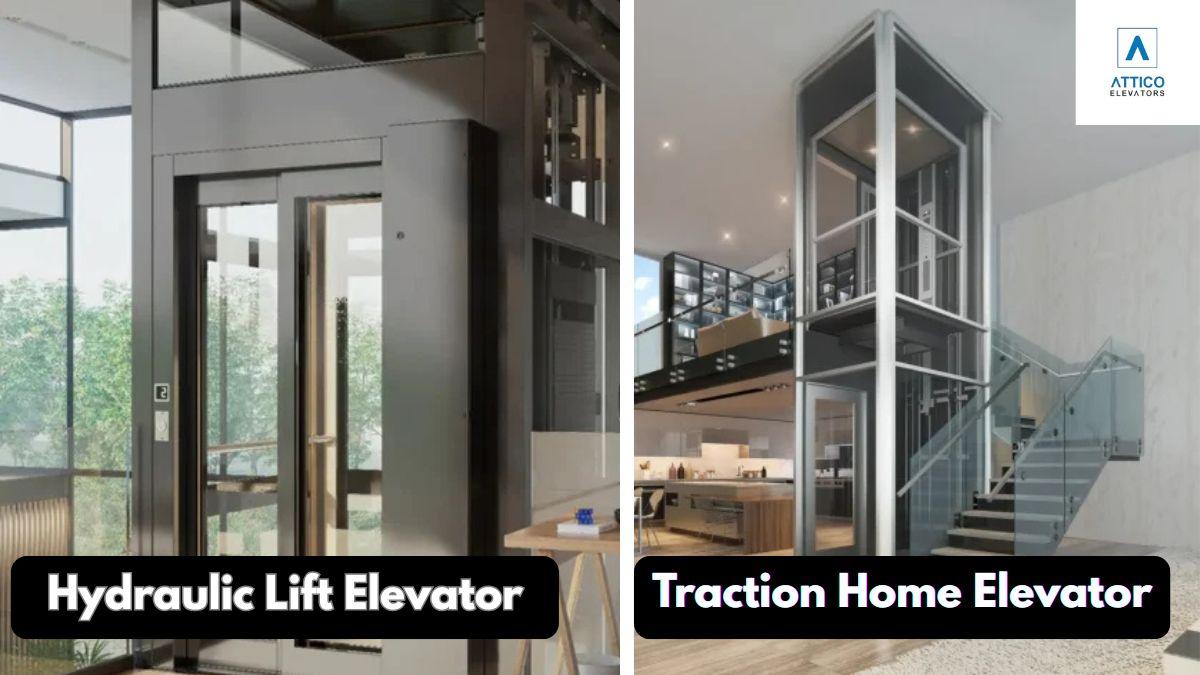
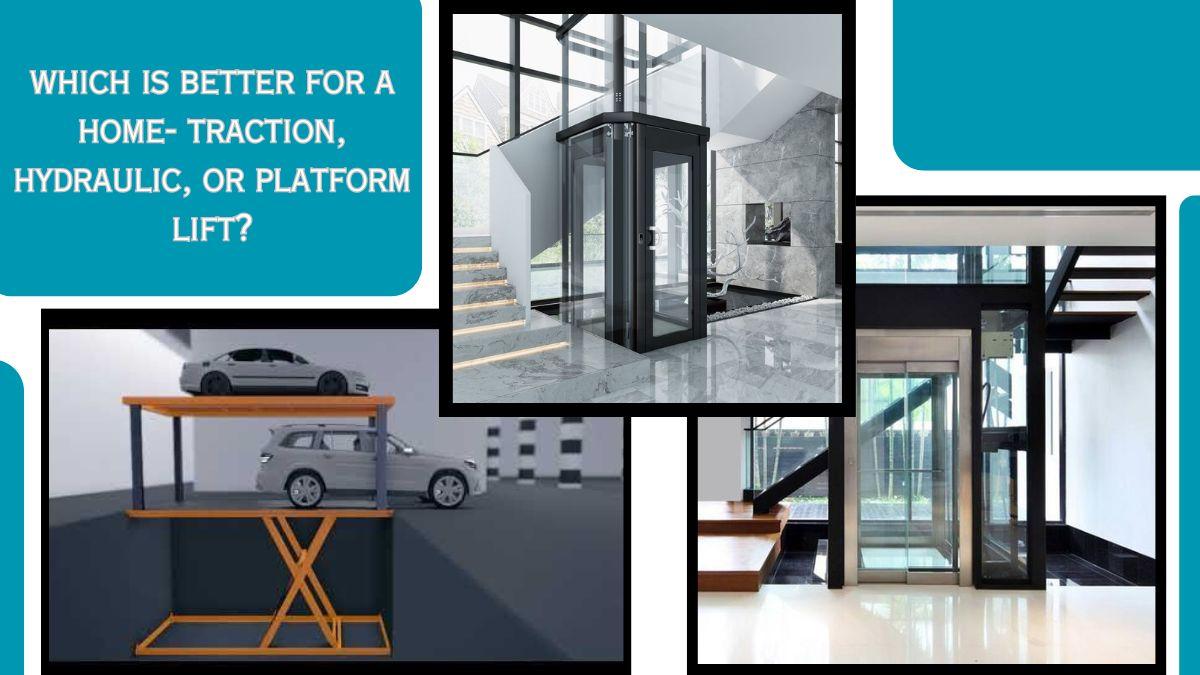
• Which is Better for a Home- Traction, Hydraulic, or Platform Lift?

    There are several technologies and specifications of home elevators that have their own advantages, and the best choice depends on your usage, space, and expectations.

    Traction Elevators
    These are known as the most advanced and premium options. They work using a motor and counterweight system and are known for:

    Smooth and silent movement
    High energy efficiency
    Long lifespan
    Suitable for multi-storey homes (2–6 floors)
    They are ideal for villas, duplexes, and luxury residences.

    Hydraulic Elevators
    Hydraulic lifts use fluid pressure to raise the cabin. They are:

    Good for low-rise homes (2–3 floors)
    Easier to install in existing structures
    Require minimal overhead space
    Slightly higher energy consumption than traction
    They are perfect for retrofit projects where space is limited.

    Platform Lifts
    Best for accessibility rather than speed or luxury. These are:

    Ideal for wheelchair users and elderly residents
    Space-efficient
    Simple in design
    Mainly for 1–2 floor travel
    They are more functional than luxurious.

    If you want luxury + performance + efficiency, traction is best.
    If you want easy installation in an old house, go hydraulic.
    If you want accessibility with minimum space, choose a platform.

    An expert site assessment is the best way to determine which type of home elevator is ideal for your space.

    https://atticoelevators.com/types-of-home-elevator-lift-in-india/

    #homeelevators #tractionlift #hydraulicelevator #platformlift #residentiallift #homeimprovementtips #liftinstallation
    Which is Better for a Home- Traction, Hydraulic, or Platform Lift? There are several technologies and specifications of home elevators that have their own advantages, and the best choice depends on your usage, space, and expectations. Traction Elevators These are known as the most advanced and premium options. They work using a motor and counterweight system and are known for: Smooth and silent movement High energy efficiency Long lifespan Suitable for multi-storey homes (2–6 floors) They are ideal for villas, duplexes, and luxury residences. Hydraulic Elevators Hydraulic lifts use fluid pressure to raise the cabin. They are: Good for low-rise homes (2–3 floors) Easier to install in existing structures Require minimal overhead space Slightly higher energy consumption than traction They are perfect for retrofit projects where space is limited. Platform Lifts Best for accessibility rather than speed or luxury. These are: Ideal for wheelchair users and elderly residents Space-efficient Simple in design Mainly for 1–2 floor travel They are more functional than luxurious. If you want luxury + performance + efficiency, traction is best. If you want easy installation in an old house, go hydraulic. If you want accessibility with minimum space, choose a platform. An expert site assessment is the best way to determine which type of home elevator is ideal for your space. https://atticoelevators.com/types-of-home-elevator-lift-in-india/ #homeelevators #tractionlift #hydraulicelevator #platformlift #residentiallift #homeimprovementtips #liftinstallation
    0 Comentários 0 Compartilhamentos 72 Visualizações 0 Anterior

  • Which Type of Home Elevator is Best for Me?

    The best type of home elevator for you depends on three main factors: available space, building structure, and how you plan to use the lift. Each home is different, and the right solution is always based on practical needs rather than just appearance.

    If you have a multi-storey home (duplex, villa, or bungalow) and want smooth, premium performance, a traction home elevator is usually the best choice. It uses a counterweight system that provides quiet operation, low energy consumption, and long-term reliability. It is ideal for 2–6 floors and is considered a premium solution.

    If your home has limited space or you are installing the lift in an already-built structure, a hydraulic home elevator can be a good option. It requires minimal overhead and is easier to retrofit, especially for low-rise applications.

    If your main priority is accessibility, especially for elderly family members or wheelchair users, then a platform lift is often the most suitable. It requires the least civil work and can be installed in very compact areas.

    If you prioritize luxury, glass or panoramic home elevators are the preferred choice.

    In short, there is no single “best” elevator for every home- the best home elevator is the one that fits your space, lifestyle, safety needs, and long-term usage goals. A professional site assessment will always give you the most accurate guidance.

    https://atticoelevators.com/our-products/home-elevators/

    #homeelevator #besthomeelevator #elevatortypes #residentialelevators #hydraulicelevator #mrlhomeelevator #gearedelevator #gearlesselevator #pneumaticelevator #homeliftguide
    Which Type of Home Elevator is Best for Me? The best type of home elevator for you depends on three main factors: available space, building structure, and how you plan to use the lift. Each home is different, and the right solution is always based on practical needs rather than just appearance. If you have a multi-storey home (duplex, villa, or bungalow) and want smooth, premium performance, a traction home elevator is usually the best choice. It uses a counterweight system that provides quiet operation, low energy consumption, and long-term reliability. It is ideal for 2–6 floors and is considered a premium solution. If your home has limited space or you are installing the lift in an already-built structure, a hydraulic home elevator can be a good option. It requires minimal overhead and is easier to retrofit, especially for low-rise applications. If your main priority is accessibility, especially for elderly family members or wheelchair users, then a platform lift is often the most suitable. It requires the least civil work and can be installed in very compact areas. If you prioritize luxury, glass or panoramic home elevators are the preferred choice. In short, there is no single “best” elevator for every home- the best home elevator is the one that fits your space, lifestyle, safety needs, and long-term usage goals. A professional site assessment will always give you the most accurate guidance. https://atticoelevators.com/our-products/home-elevators/ #homeelevator #besthomeelevator #elevatortypes #residentialelevators #hydraulicelevator #mrlhomeelevator #gearedelevator #gearlesselevator #pneumaticelevator #homeliftguide
    0 Comentários 0 Compartilhamentos 149 Visualizações 0 Anterior
  • Which Villa Elevator - Hydraulic or Gearless is Best for Your Villa???


    The best elevator for your villa will depend on available space, budget and lifestyle. Hydraulic Elevator and gearless (traction) home elevators are the two most widely available options. Below is a simple solution to help you determine the right elevator for your villa:

    1. Operating Method:

    Hydraulic Elevator: Operates off a piston and hydraulic fluid, which will allow the elevator to move up and down smoothly.

    Gearless Elevator: Operates off ropes (or belts) on a counterweight and motor, which will allow the cabin to quietly and efficiently move up and down.

    2. Space Requirements:

    Hydraulic: Requires a machine room, and space for the piston to fit above or below the elevator cab.

    Gearless: Smaller in design, and often machine-room-less (MRL)- which may or may not have a machine room and have less space to accommodate, which can make placing into your villa easier.

    3. Speed and Efficiency:

    Hydraulic: Slower ride as they are mainly recommended for villas with two to five levels.

    Gearless: Faster ride, efficient with energy use, and smooth ride, and typically better suited for taller villa structures.

    4. Maintenance:

    Hydraulic: Requires oil checks and maintaining, you'll have to check the piston regularly, if not continuously.

    Gearless: You'll have to check the rope and motor, but will be a less frequent maintenance issue. Though, both should be of low maintenance.

    https://atticoelevators.com/our-products/hydraulic-lift-for-home/

    #villaelevator #hydraulicelevator #gearlesselevator #homeelevators #luxuryvillalift #smarthomedesign #elevatorforvilla #modernhomeelevator #villaupgrade
    Which Villa Elevator - Hydraulic or Gearless is Best for Your Villa??? The best elevator for your villa will depend on available space, budget and lifestyle. Hydraulic Elevator and gearless (traction) home elevators are the two most widely available options. Below is a simple solution to help you determine the right elevator for your villa: 1. Operating Method: Hydraulic Elevator: Operates off a piston and hydraulic fluid, which will allow the elevator to move up and down smoothly. Gearless Elevator: Operates off ropes (or belts) on a counterweight and motor, which will allow the cabin to quietly and efficiently move up and down. 2. Space Requirements: Hydraulic: Requires a machine room, and space for the piston to fit above or below the elevator cab. Gearless: Smaller in design, and often machine-room-less (MRL)- which may or may not have a machine room and have less space to accommodate, which can make placing into your villa easier. 3. Speed and Efficiency: Hydraulic: Slower ride as they are mainly recommended for villas with two to five levels. Gearless: Faster ride, efficient with energy use, and smooth ride, and typically better suited for taller villa structures. 4. Maintenance: Hydraulic: Requires oil checks and maintaining, you'll have to check the piston regularly, if not continuously. Gearless: You'll have to check the rope and motor, but will be a less frequent maintenance issue. Though, both should be of low maintenance. https://atticoelevators.com/our-products/hydraulic-lift-for-home/ #villaelevator #hydraulicelevator #gearlesselevator #homeelevators #luxuryvillalift #smarthomedesign #elevatorforvilla #modernhomeelevator #villaupgrade
    0 Comentários 0 Compartilhamentos 835 Visualizações 0 Anterior
  • What is the Difference Between Hydraulic and Traction Home Elevators?


    Home elevators offer the convenience of smooth movement from one floor to another, especially in multi-story buildings. Hydraulic and traction elevators are the two general categories and vary in the operation mechanism, space, speed, maintenance, and cost.

    1. Mechanism:

    Hydraulic Elevators: These use a piston of hydraulic fluid to pull the elevator up and down. Think of it as a ginormous syringe gliding the cabin smoothly.

    Traction Elevators: These use steel ropes or belts suspended from a counterweight and a motor. The motor wraps up the ropes, pulling the cabin up or down effectively.

    2.Space Requirements:

    Hydraulic: Requires a machine room and a sufficient area for the piston which usually exists below the elevator shaft.

    Traction: Takes less space and modern MRL elevator's traction lifts do not require an individual machine room.

    3. Speed and Height:
    Hydraulic: Slower, for 2–5 floors.

    Traction: More speed and power efficient; recommended for taller buildings.

    4. Maintenance:
    Hydraulic: Requires oil leak and piston checks on a regular basis.

    Traction: Needs rope and motor checks but is otherwise cleaner to look after.

    5. Cost:
    Hydraulic: Less initial installation cost but slightly higher running cost.

    Traction: Higher initial cost but more efficient and cost-effective in the long term.

    Summary:

    If you want a budget lift for a low-rise residential home, then choose hydraulic elevators. If you want speed, efficiency, and a tall building, choose traction.

    https://atticoelevators.com/our-products/traction-home-elevator/

    #homeelevator #hydraulicelevator #tractionelevator #elevatorcomparison #homedesign #elevatorsystem #elevatorinstallation
    What is the Difference Between Hydraulic and Traction Home Elevators? Home elevators offer the convenience of smooth movement from one floor to another, especially in multi-story buildings. Hydraulic and traction elevators are the two general categories and vary in the operation mechanism, space, speed, maintenance, and cost. 1. Mechanism: Hydraulic Elevators: These use a piston of hydraulic fluid to pull the elevator up and down. Think of it as a ginormous syringe gliding the cabin smoothly. Traction Elevators: These use steel ropes or belts suspended from a counterweight and a motor. The motor wraps up the ropes, pulling the cabin up or down effectively. 2.Space Requirements: Hydraulic: Requires a machine room and a sufficient area for the piston which usually exists below the elevator shaft. Traction: Takes less space and modern MRL elevator's traction lifts do not require an individual machine room. 3. Speed and Height: Hydraulic: Slower, for 2–5 floors. Traction: More speed and power efficient; recommended for taller buildings. 4. Maintenance: Hydraulic: Requires oil leak and piston checks on a regular basis. Traction: Needs rope and motor checks but is otherwise cleaner to look after. 5. Cost: Hydraulic: Less initial installation cost but slightly higher running cost. Traction: Higher initial cost but more efficient and cost-effective in the long term. Summary: If you want a budget lift for a low-rise residential home, then choose hydraulic elevators. If you want speed, efficiency, and a tall building, choose traction. https://atticoelevators.com/our-products/traction-home-elevator/ #homeelevator #hydraulicelevator #tractionelevator #elevatorcomparison #homedesign #elevatorsystem #elevatorinstallation
    0 Comentários 0 Compartilhamentos 798 Visualizações 0 Anterior