



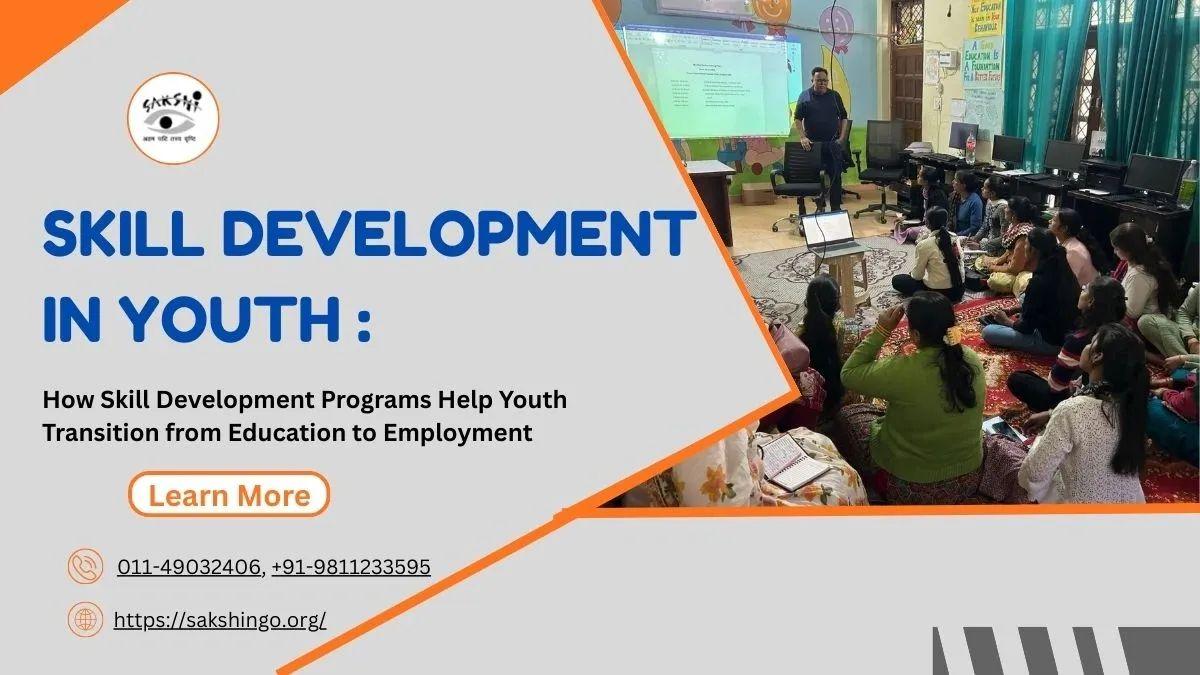
Is Skill Development Programs really worth it for a youth career?
Skill development has emerged as a powerful tool for social and economic transformation, especially for youth and women from underserved communities. In today’s evolving job market, academic education alone is often not enough. Practical skills, digital literacy, communication ability, and workplace readiness are essential for securing stable employment.
Skill development programs by NGOs like Sakshi NGO focus on bridging this gap by offering training that aligns with real industry needs. These programs are designed to be accessible, community-based, and inclusive, allowing participants to learn without disrupting their daily responsibilities. From tailoring and garment production to digital literacy and life skills, the training equips individuals with job-ready capabilities.
What makes these initiatives impactful is their focus beyond training, these include placement support, career guidance, and continuous mentoring. This ensures that learning leads to actual livelihood opportunities. For women, such programs create pathways to financial independence and confidence. For youth, they reduce unemployment and uncertainty about the future.
By investing in skill development, NGOs help individuals unlock their potential, strengthen families, and contribute meaningfully to the workforce. Skill training is not just about employment, it is about dignity, stability, and long-term empowerment.
https://sakshingo.org/portfolio/skill-development/
#skilldevelopment #skilldevelopmentprograms #youthempowerment #womenempowerment #careerbuilding #livelihoodgeneration #ngoindia
Skill development has emerged as a powerful tool for social and economic transformation, especially for youth and women from underserved communities. In today’s evolving job market, academic education alone is often not enough. Practical skills, digital literacy, communication ability, and workplace readiness are essential for securing stable employment.
Skill development programs by NGOs like Sakshi NGO focus on bridging this gap by offering training that aligns with real industry needs. These programs are designed to be accessible, community-based, and inclusive, allowing participants to learn without disrupting their daily responsibilities. From tailoring and garment production to digital literacy and life skills, the training equips individuals with job-ready capabilities.
What makes these initiatives impactful is their focus beyond training, these include placement support, career guidance, and continuous mentoring. This ensures that learning leads to actual livelihood opportunities. For women, such programs create pathways to financial independence and confidence. For youth, they reduce unemployment and uncertainty about the future.
By investing in skill development, NGOs help individuals unlock their potential, strengthen families, and contribute meaningfully to the workforce. Skill training is not just about employment, it is about dignity, stability, and long-term empowerment.
https://sakshingo.org/portfolio/skill-development/
#skilldevelopment #skilldevelopmentprograms #youthempowerment #womenempowerment #careerbuilding #livelihoodgeneration #ngoindia
Is Skill Development Programs really worth it for a youth career?
Skill development has emerged as a powerful tool for social and economic transformation, especially for youth and women from underserved communities. In today’s evolving job market, academic education alone is often not enough. Practical skills, digital literacy, communication ability, and workplace readiness are essential for securing stable employment.
Skill development programs by NGOs like Sakshi NGO focus on bridging this gap by offering training that aligns with real industry needs. These programs are designed to be accessible, community-based, and inclusive, allowing participants to learn without disrupting their daily responsibilities. From tailoring and garment production to digital literacy and life skills, the training equips individuals with job-ready capabilities.
What makes these initiatives impactful is their focus beyond training, these include placement support, career guidance, and continuous mentoring. This ensures that learning leads to actual livelihood opportunities. For women, such programs create pathways to financial independence and confidence. For youth, they reduce unemployment and uncertainty about the future.
By investing in skill development, NGOs help individuals unlock their potential, strengthen families, and contribute meaningfully to the workforce. Skill training is not just about employment, it is about dignity, stability, and long-term empowerment.
https://sakshingo.org/portfolio/skill-development/
#skilldevelopment #skilldevelopmentprograms #youthempowerment #womenempowerment #careerbuilding #livelihoodgeneration #ngoindia
0 Commentarios
0 Acciones
23 Views
0 Vista previa


 English
 Arabic
 French
 Portuguese
 Deutsch
 Turkish
 Dutch
Dutch
 Italiano
 Russian
 Romaian
 Portuguese (Brazil)
 Greek
Greek