


How Do Government Policies Impact Rice Export in India?
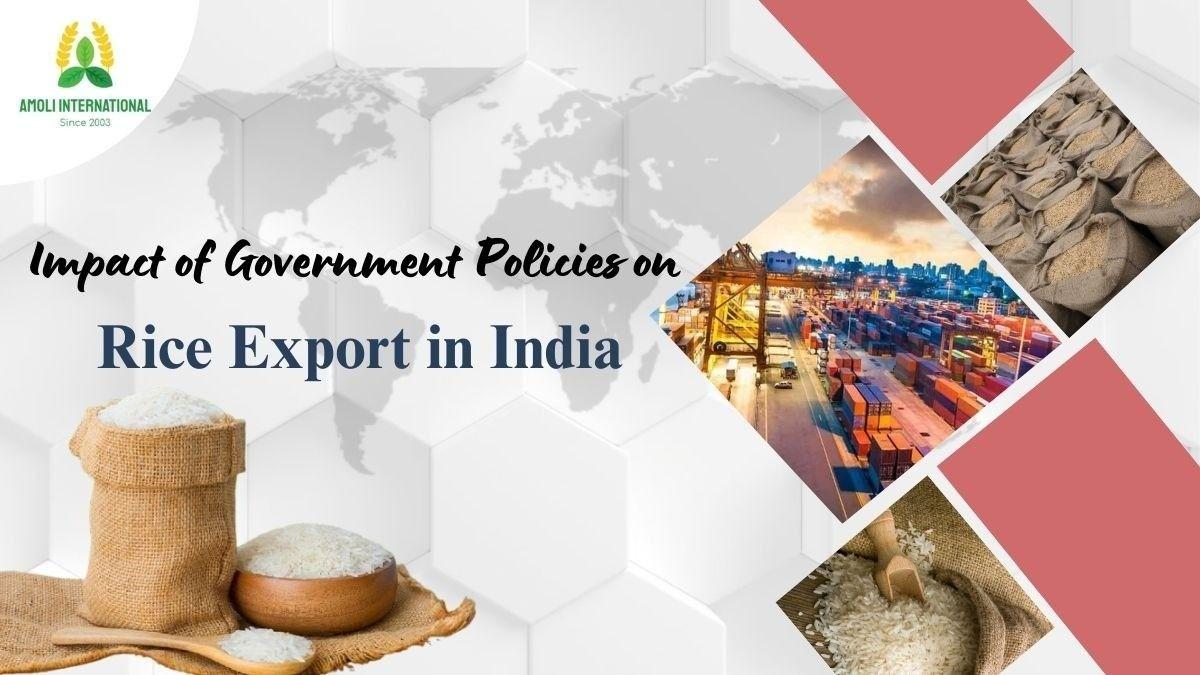
India is one of the world’s largest exporters of basmati rice and non-basmati rice, supplying major markets such as the Middle East, Africa, and Europe. Government policies play a crucial role in shaping rice export from India by influencing production, pricing, and global trade relations.
From time to time, the government introduces export restrictions to control domestic prices and ensure food security. For instance, the Minimum Export Price (MEP) on basmati rice affected export volumes before being relaxed to boost international competitiveness. Such policy shifts directly impact exporters and overseas buyers.
Supportive measures like Minimum Support Price (MSP), fertilizer subsidies, and logistics incentives help farmers and exporters remain competitive. At the same time, strict quality regulations monitored by APEDA ensure Indian rice meets international standards, strengthening India’s credibility in global markets.
Trade agreements and tariff policies further affect access to international buyers. While export bans can raise global prices, relaxed policies increase supply and stabilize markets.
Overall, a balanced policy approach is essential to support farmers, protect domestic needs, and sustain growth in rice export in India through global trade platforms like Amoli International.
https://www.linkedin.com/pulse/impact-government-policies-rice-export-india-amoliinternational-nk4yc/
#riceexportfromindia #indianriceexport #basmatiriceexport #nonbasmatirice #riceexportpolicy #governmentpolicies #agricultureexport #indianagriculture #globalricemarket #b2bexport #amoliinternational
India is one of the world’s largest exporters of basmati rice and non-basmati rice, supplying major markets such as the Middle East, Africa, and Europe. Government policies play a crucial role in shaping rice export from India by influencing production, pricing, and global trade relations.
From time to time, the government introduces export restrictions to control domestic prices and ensure food security. For instance, the Minimum Export Price (MEP) on basmati rice affected export volumes before being relaxed to boost international competitiveness. Such policy shifts directly impact exporters and overseas buyers.
Supportive measures like Minimum Support Price (MSP), fertilizer subsidies, and logistics incentives help farmers and exporters remain competitive. At the same time, strict quality regulations monitored by APEDA ensure Indian rice meets international standards, strengthening India’s credibility in global markets.
Trade agreements and tariff policies further affect access to international buyers. While export bans can raise global prices, relaxed policies increase supply and stabilize markets.
Overall, a balanced policy approach is essential to support farmers, protect domestic needs, and sustain growth in rice export in India through global trade platforms like Amoli International.
https://www.linkedin.com/pulse/impact-government-policies-rice-export-india-amoliinternational-nk4yc/
#riceexportfromindia #indianriceexport #basmatiriceexport #nonbasmatirice #riceexportpolicy #governmentpolicies #agricultureexport #indianagriculture #globalricemarket #b2bexport #amoliinternational
How Do Government Policies Impact Rice Export in India?
India is one of the world’s largest exporters of basmati rice and non-basmati rice, supplying major markets such as the Middle East, Africa, and Europe. Government policies play a crucial role in shaping rice export from India by influencing production, pricing, and global trade relations.
From time to time, the government introduces export restrictions to control domestic prices and ensure food security. For instance, the Minimum Export Price (MEP) on basmati rice affected export volumes before being relaxed to boost international competitiveness. Such policy shifts directly impact exporters and overseas buyers.
Supportive measures like Minimum Support Price (MSP), fertilizer subsidies, and logistics incentives help farmers and exporters remain competitive. At the same time, strict quality regulations monitored by APEDA ensure Indian rice meets international standards, strengthening India’s credibility in global markets.
Trade agreements and tariff policies further affect access to international buyers. While export bans can raise global prices, relaxed policies increase supply and stabilize markets.
Overall, a balanced policy approach is essential to support farmers, protect domestic needs, and sustain growth in rice export in India through global trade platforms like Amoli International.
https://www.linkedin.com/pulse/impact-government-policies-rice-export-india-amoliinternational-nk4yc/
#riceexportfromindia #indianriceexport #basmatiriceexport #nonbasmatirice #riceexportpolicy #governmentpolicies #agricultureexport #indianagriculture #globalricemarket #b2bexport #amoliinternational
0 Comments
0 Shares
11 Views
0 Reviews

 Arabic
 French
 Spanish
 Portuguese
 Deutsch
 Turkish
 Dutch
Dutch
 Italiano
 Russian
 Romaian
 Portuguese (Brazil)
 Greek
Greek