


Coconut Oil Market Current Dynamics and Long Term Industry Projections
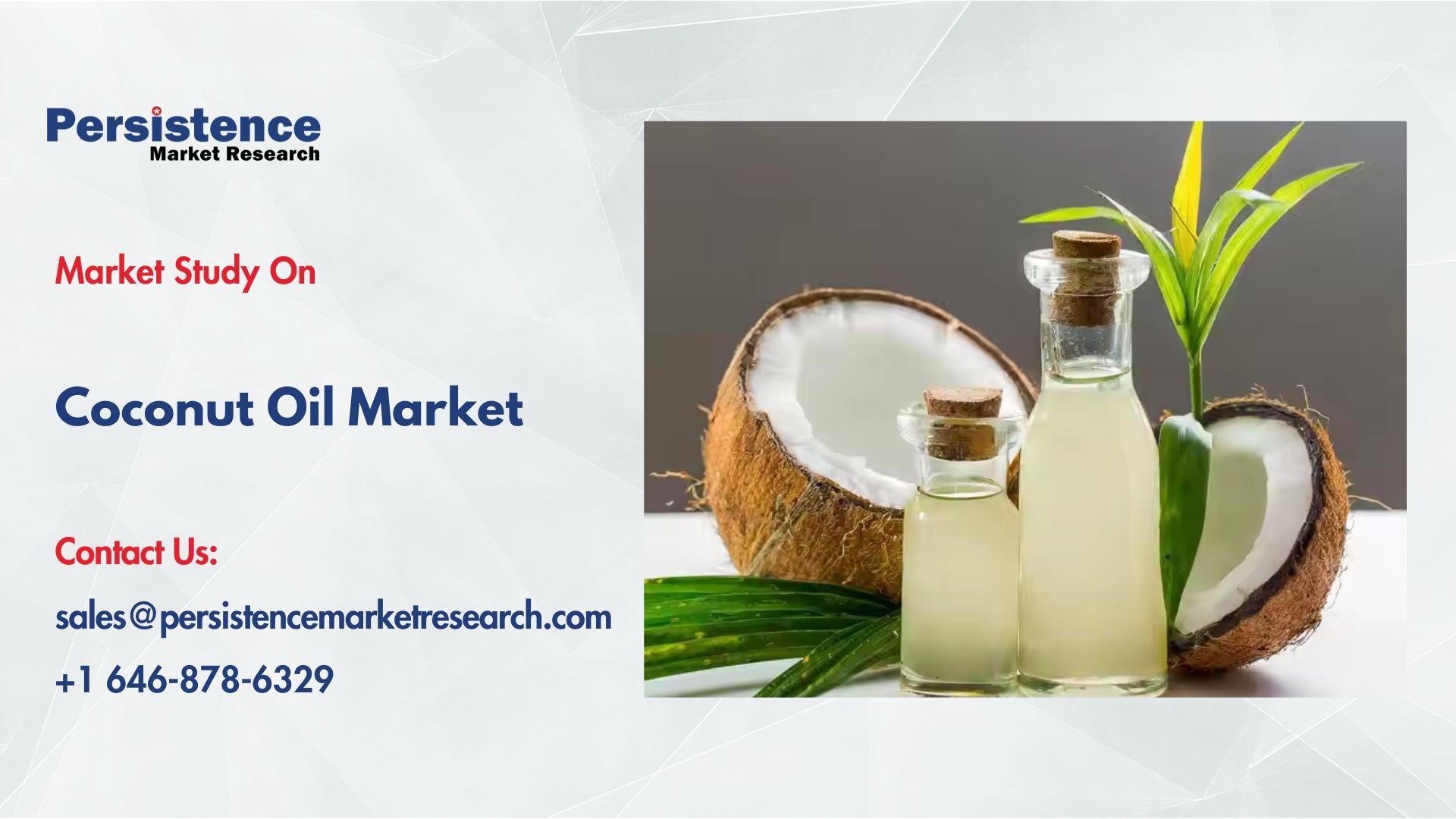
The global coconut oil market continues to demonstrate steady and resilient growth, supported by expanding applications across food and beverage, personal care, pharmaceuticals, and industrial sectors. In 2026, the global coconut oil market size is likely to be valued at approximately US$4.9 billion. Over the forecast period from 2026 to 2033, the market is projected to reach a valuation of US$6.8 billion, registering a compound annual growth rate (CAGR) of 4.8%. This sustained expansion reflects increasing consumer awareness of natural and plant-based products, along with rising demand for functional ingredients that offer nutritional, cosmetic, and therapeutic benefits.
Market growth is primarily driven by shifting dietary preferences toward healthier fats, growing adoption of coconut oil in vegan and ketogenic diets, and rising utilization in skincare and haircare formulations. Coconut oil’s perceived benefits, including its antimicrobial properties, high oxidative stability, and moisturizing characteristics, have reinforced its acceptance across diverse end-use industries. In addition, emerging economies are witnessing higher per capita consumption of edible oils, while developed markets continue to drive demand through premium, organic, and cold-pressed coconut oil products.
Supply-side dynamics also play a crucial role in shaping the market outlook. Investments in improved coconut farming practices, better extraction technologies, and enhanced supply chain management have contributed to consistent production levels. At the same time, manufacturers are focusing on product differentiation through quality certifications, sustainability claims, and value-added variants such as virgin and extra virgin coconut oil. These factors collectively underpin the positive growth trajectory anticipated for the global coconut oil market through 2033.
Get Your FREE Sample Report Instantly – Click Now: https://www.persistencemarketresearch.com/samples/17233
Segmentation Analysis
By Type
By type, the global coconut oil market is segmented into virgin coconut oil, refined coconut oil, and organic coconut oil. Virgin coconut oil accounts for a significant share of the overall market, driven by its minimal processing, higher nutrient retention, and strong positioning as a premium and health-oriented product. Consumers increasingly associate virgin coconut oil with superior quality, better flavor, and enhanced health benefits, which has contributed to its dominance in both household and commercial applications.
Refined coconut oil continues to maintain a substantial presence, particularly in large-scale food processing, bakery, and confectionery industries. Its neutral taste, longer shelf life, and cost-effectiveness make it suitable for mass production environments. Meanwhile, the organic coconut oil segment is expected to witness the fastest growth over the forecast period, supported by rising demand for certified organic products, clean-label trends, and increasing regulatory emphasis on organic farming practices. The growing willingness of consumers to pay a premium for sustainably sourced and chemical-free products further accelerates the adoption of organic coconut oil.
By Vehicle/Product/Service Type
Based on product and application type, the market is categorized into food and beverage, personal care and cosmetics, pharmaceuticals, and industrial uses. The food and beverage segment remains the largest contributor to market revenue, driven by the widespread use of coconut oil in cooking, baking, and processed foods. Its stability at high temperatures and compatibility with various cuisines have reinforced its demand among both consumers and foodservice providers.
The personal care and cosmetics segment is experiencing robust growth, fueled by increasing incorporation of coconut oil in skincare creams, lotions, soaps, shampoos, and hair oils. Manufacturers are leveraging coconut oil’s natural emollient and antimicrobial properties to formulate products that align with consumer preferences for natural and chemical-free cosmetics. The pharmaceutical segment, although smaller in comparison, is gaining traction due to coconut oil’s use as a carrier oil in medicinal formulations and nutraceuticals. Industrial applications, including bio-based lubricants and oleochemicals, are also emerging as a niche but promising area of demand.
By Propulsion/Technology/Channel
From a technology and distribution channel perspective, the market is segmented into conventional retail, online retail, and direct-to-business supply chains. Conventional retail channels, including supermarkets and specialty stores, continue to account for a major share due to their established consumer reach and trust. However, online retail channels are registering the fastest growth, driven by increased digital adoption, wider product availability, and the convenience of home delivery.
Technological advancements in extraction, cold-press processing, and quality testing are enhancing product consistency and shelf life. In addition, digital platforms and data-driven supply chain technologies are enabling manufacturers to optimize inventory management, forecast demand more accurately, and improve traceability from farm to consumer.
Need Tailored Insights? Request Customization Now: https://www.persistencemarketresearch.com/request-customization/17233
Regional Insights
Regionally, the global coconut oil market is segmented into Asia Pacific, North America, Europe, Latin America, and the Middle East & Africa. Asia Pacific dominates the global market, accounting for the largest share in terms of both production and consumption. Countries such as the Philippines, Indonesia, and India are major coconut producers, benefiting from favorable climatic conditions, established agricultural infrastructure, and a strong domestic consumption base. The region’s leadership is further reinforced by its role as a key exporter of coconut oil to international markets.
North America represents a significant and mature market, driven by high consumer awareness of health and wellness products. The growing popularity of plant-based diets, coupled with strong demand for organic and non-GMO coconut oil, supports steady growth across the United States and Canada. Europe also holds a considerable market share, with demand fueled by clean-label trends, regulatory support for sustainable sourcing, and widespread use of coconut oil in cosmetics and personal care products.
The fastest-growing region over the forecast period is expected to be Latin America, supported by rising disposable incomes, increasing health consciousness, and expanding retail infrastructure. Additionally, the Middle East & Africa region is witnessing gradual growth, driven by urbanization, changing dietary habits, and increased penetration of packaged food products.
Unique Features and Innovations in the Market
The modern coconut oil market is increasingly defined by innovation, differentiation, and technology-driven improvements. One of the key differentiating features of contemporary coconut oil solutions is the emphasis on purity, traceability, and sustainability. Manufacturers are investing in advanced cold-press and centrifuge extraction technologies to preserve nutritional integrity while minimizing processing losses.
Digital technologies such as artificial intelligence and the Internet of Things (IoT) are playing an expanding role in plantation management and supply chain optimization. AI-powered analytics are being used to predict crop yields, monitor weather patterns, and optimize harvesting schedules, thereby improving productivity and reducing supply volatility. IoT-enabled sensors support quality control by monitoring storage conditions, temperature, and humidity, ensuring consistent product quality throughout the distribution network.
Blockchain-based traceability solutions are also gaining attention, enabling end consumers to verify product origin, farming practices, and certification status. While 5G adoption is still at a nascent stage in agricultural supply chains, its potential to enable real-time data transmission and remote monitoring is expected to further enhance operational efficiency and transparency in the coming years.
Market Highlights
The adoption of coconut oil across industries is driven by a combination of health, economic, and sustainability-related factors. Businesses are increasingly incorporating coconut oil into their product portfolios due to its multifunctional properties, natural positioning, and compatibility with clean-label strategies. For food manufacturers, coconut oil offers a stable and versatile alternative to trans fats and partially hydrogenated oils, aligning with regulatory restrictions and consumer demand for healthier ingredients.
In the personal care industry, coconut oil supports cost-effective formulation while meeting consumer expectations for natural and ethically sourced products. Sustainability considerations are also shaping market dynamics, with stakeholders focusing on responsible farming, fair trade practices, and reduced environmental impact. Regulatory frameworks supporting organic certification, food safety standards, and labeling transparency further reinforce market credibility and consumer trust.
Cost reduction through process optimization and economies of scale remains a key highlight, particularly for large manufacturers with integrated supply chains. At the same time, premiumization strategies allow companies to maintain margins by offering differentiated, value-added products.
Secure Your Full Report – Proceed to Checkout: https://www.persistencemarketresearch.com/checkout/17233
Key Players and Competitive Landscape
The global coconut oil market is moderately fragmented, with a mix of multinational corporations and regional producers competing on quality, price, and brand positioning. Leading players include Cargill, Incorporated, which leverages its global sourcing network and processing capabilities to ensure consistent supply and quality. The company focuses on sustainability initiatives and long-term partnerships with coconut farmers.
Archer Daniels Midland Company plays a significant role through its diversified edible oil portfolio and strong distribution presence. Its strategy emphasizes innovation, traceability, and alignment with evolving food regulations. Bunge Limited continues to strengthen its position by investing in processing efficiency and expanding its presence in high-growth regions.
Marico Limited is a prominent player, particularly in the Asia Pacific region, with strong brand equity in consumer coconut oil products. The company focuses on product innovation, marketing, and penetration into rural and semi-urban markets. PT. Sambu Group and Celebes Coconut Corporation are key regional producers, benefiting from proximity to raw material sources and export-oriented strategies.
Competitive strategies across the market include capacity expansion, mergers and acquisitions, new product launches, and certification-driven differentiation. Companies are also investing in digital transformation and sustainability reporting to enhance transparency and stakeholder engagement.
Looking ahead, future opportunities in the coconut oil market are expected to arise from expanding applications in functional foods, nutraceuticals, and bio-based industrial products. Evolving technology, including precision agriculture and advanced analytics, will continue to shape production efficiency and quality standards. Regulatory developments related to food safety, labeling, and environmental sustainability are likely to influence market structure and competitive dynamics, reinforcing the importance of compliance and innovation.
Explore the Latest Trending Research Reports:

 English
 Arabic
 French
 Spanish
 Portuguese
 Turkish
 Dutch
Dutch
 Italiano
 Russian
 Romaian
 Portuguese (Brazil)
 Greek
Greek