


5 Signs Your Body Needs Traditional Thai Massage for Flexibility
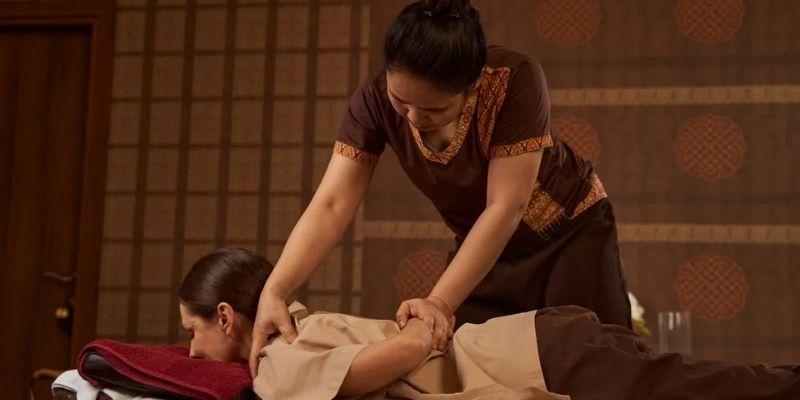
Flexibility does not disappear overnight. It fades quietly through small adaptations the body makes to stress, repetition, and limited movement variety. Many people only notice the loss when daily actions feel heavier or when stiffness becomes a constant background sensation. Traditional Thai massage offers a structured way to restore flexibility by combining assisted stretching, rhythmic pressure, and mindful body awareness.
Rather than treating flexibility as an isolated physical trait, Thai massage views it as a reflection of how well the body moves as a connected system. When movement becomes restricted, subtle signs begin to surface long before pain appears.
When movement starts to feel effortful rather than fluid
One of the earliest indicators of reduced flexibility is the feeling that everyday movements require more effort. Bending to tie shoes, reaching overhead, or turning the torso may feel stiff rather than smooth. These sensations suggest that muscles and connective tissues are losing elasticity due to limited range usage.
Traditional Thai massage works with these patterns by guiding the body through passive stretches that mimic natural movement arcs. The therapist uses hands, forearms, and body weight to create steady, supported stretches that encourage tissues to lengthen safely. This approach allows flexibility to return gradually without forcing the body into positions it is not ready to hold on its own.
As tissues adapt, movement often begins to feel lighter and more coordinated.
Subtle stiffness that lingers even without pain
Stiffness does not always announce itself with discomfort. Many people experience a constant sense of tightness in the hips, back, or shoulders that does not qualify as pain but limits ease of motion. This lingering restriction often results from shortened muscles and reduced joint play.
In a Thai Massage in Chennai setting where traditional techniques are practiced with precision, the therapy focuses on opening these restricted pathways. Stretching is combined with pressure along energy lines that correspond with muscle chains. This combination helps release tension held deep within the body rather than only at the surface.
Over time, this process supports improved joint mobility and reduces the feeling of being physically compressed.
Postural patterns that no longer feel natural
Posture is shaped by flexibility. When muscles shorten or weaken unevenly, the body compensates by adjusting alignment. Rounded shoulders, a forward head position, or a tilted pelvis are often signs that flexibility loss is influencing posture.
Traditional Thai massage addresses posture indirectly by restoring balance between opposing muscle groups. Assisted stretches help lengthen tight areas while rhythmic pressure awakens underused muscles. This rebalancing allows the body to return toward a more neutral alignment without conscious correction.
As posture improves, breathing often becomes easier and movement efficiency increases, reflecting a deeper level of flexibility restoration.
Reduced awareness of how the body moves
Another sign that flexibility is declining is a loss of movement awareness. When the body becomes stiff, movements tend to feel segmented rather than connected. This disconnect can lead to awkward transitions between positions or a sense that the body is not responding smoothly.
Thai massage enhances proprioception, the body’s ability to sense position and movement. Through guided stretches and sustained contact, the nervous system receives clearer feedback about joint angles and muscle length. This awareness helps the body move with greater coordination.
In a Thai Massage in Anna Nagar environment that emphasizes mindful pacing and assisted movement, clients often rediscover a sense of control and confidence in their physical capabilities.
Difficulty relaxing into rest positions
Flexibility influences how comfortably the body rests. Difficulty sitting cross legged, lying flat without support, or remaining still without shifting are signs that tissues are resisting relaxation. This resistance often reflects chronic shortening of muscles that are rarely taken through their full range.
Traditional Thai massage supports relaxation by easing these restrictions through progressive stretching. Rather than asking the body to relax on its own, the therapy creates conditions where relaxation becomes possible. As muscles lengthen, the nervous system receives signals of safety, allowing deeper release.
This combination of physical and neurological relaxation often carries into daily life, improving sleep quality and reducing restlessness.
Assisted movement as a pathway to flexibility
Unlike self directed stretching, Thai massage relies on assisted movement. The therapist moves the body through ranges that may be difficult to access independently. This assistance allows flexibility gains without strain, making it suitable for individuals who feel stuck in their movement patterns.
Assisted stretching also reveals hidden restrictions. When the body is guided, it becomes easier to notice where movement stops or feels guarded. These insights help tailor the session to areas that need attention, creating a more effective flexibility focused experience.
Le Bliss Spa integrates traditional Thai massage with an understanding of body mechanics, allowing assisted movement to feel supportive rather than invasive.
Flexibility as a whole body experience
Flexibility is not limited to isolated muscles. It reflects how well the body coordinates movement across joints, fascia, and breath. Traditional Thai massage addresses this interconnectedness by working from feet to head, ensuring that flexibility improvements are distributed evenly.
This whole body approach prevents imbalances that can occur when only one area is stretched repeatedly. As flexibility improves globally, movement feels more integrated and less effortful.
Over time, this integration supports better posture, smoother transitions, and a greater sense of physical ease.
Restoring alignment through rhythmic stretching
Rhythm plays a key role in Thai massage. The steady pace of stretches and pressure helps the nervous system anticipate movement, reducing reflexive resistance. This rhythmic quality allows deeper stretches without triggering protective muscle contraction.
As alignment improves, the body begins to move in a more economical way. Energy expenditure decreases, and movements feel less forced. These changes often indicate that flexibility is returning at a foundational level rather than as a temporary gain.
Listening to the body’s early signals
The signs that the body needs flexibility support are often subtle. Paying attention to stiffness, posture changes, and movement awareness can prevent these patterns from developing into pain or injury. Traditional Thai massage offers a proactive way to respond to these signals.
By combining assisted stretching, mindful pressure, and whole body awareness, the therapy helps restore natural movement patterns. Flexibility becomes not just about range of motion, but about comfort, balance, and ease.

 English
 Arabic
 French
 Spanish
 Portuguese
 Deutsch
 Turkish
 Dutch
Dutch
 Italiano
 Romaian
 Portuguese (Brazil)
 Greek
Greek