


Solar Photovoltaic (PV) Market Size, Share and Growth Forecast 2026-2034
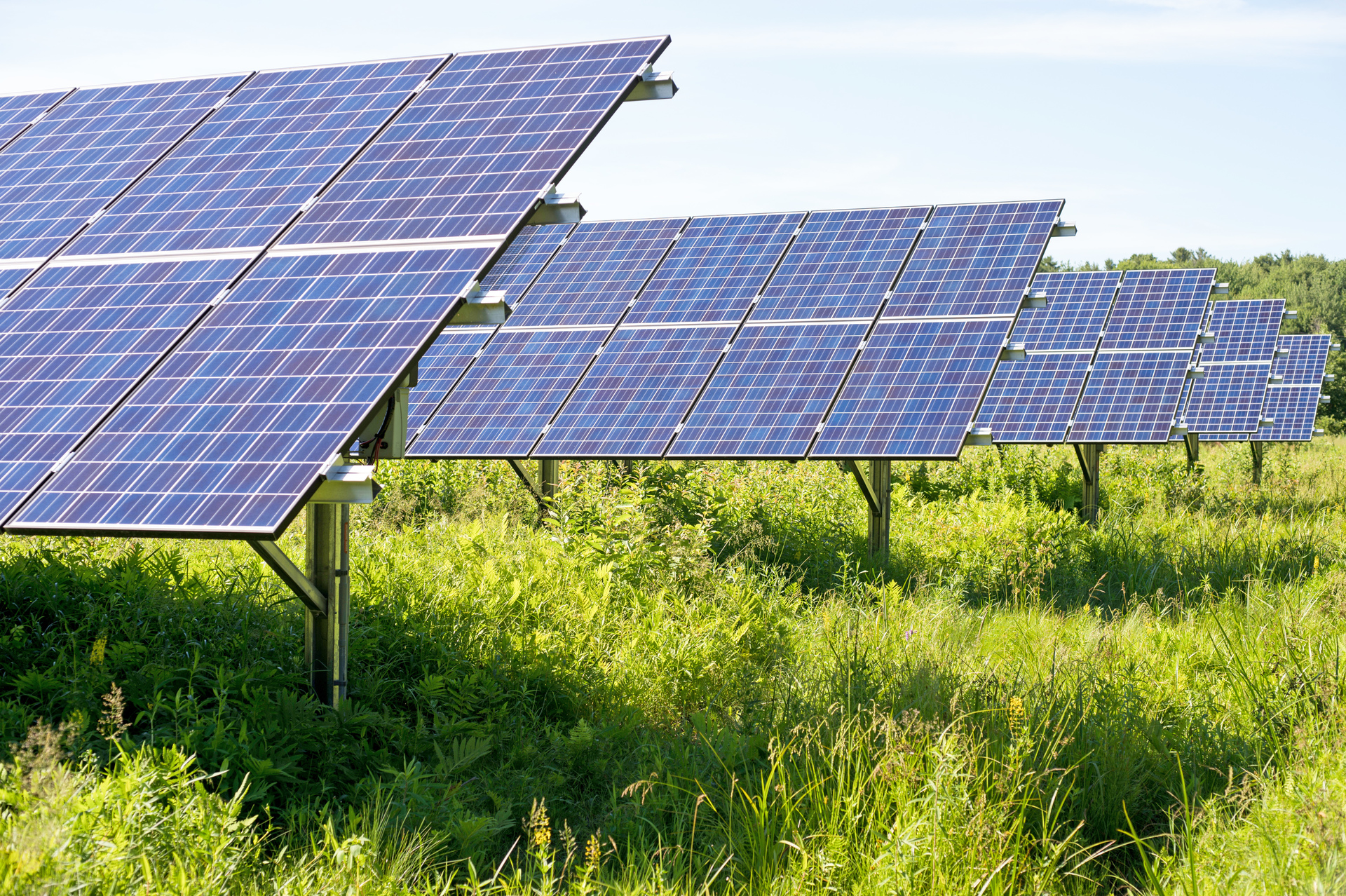
Market Overview:
The solar photovoltaic (pv) market is experiencing rapid growth, driven by Favorable Government Policies and Incentives, Falling System Costs and Enhanced Competitiveness and Surging Demand for Utility-Scale and Distributed Energy. According to IMARC Group's latest research publication, "Solar Photovoltaic (PV) Market : Global Industry Trends, Share, Size, Growth, Opportunity and Forecast 2026-2034", The global solar photovoltaic (PV) market size was valued at 1,585.1 TWh in 2025. Looking forward, IMARC Group estimates the market to reach 5,009.6 TWh by 2034, exhibiting a CAGR of 13.64% during 2026-2034.
This detailed analysis primarily encompasses industry size, business trends, market share, key growth factors, and regional forecasts. The report offers a comprehensive overview and integrates research findings, market assessments, and data from different sources. It also includes pivotal market dynamics like drivers and challenges, while also highlighting growth opportunities, financial insights, technological improvements, emerging trends, and innovations. Besides this, the report provides regional market evaluation, along with a competitive landscape analysis.
Download a sample PDF of this report: https://www.imarcgroup.com/solar-photovoltaic-market/requestsample
Our report includes:
- Market Dynamics
- Market Trends And Market Outlook
- Competitive Analysis
- Industry Segmentation
- Strategic Recommendations
Growth Factors in the Solar Photovoltaic (PV) Industry:
-
Favorable Government Policies and Incentives
In 2025, government support has transitioned from simple subsidies to massive industrial strategies. The U.S. Inflation Reduction Act (IRA) and the EU's Net-Zero Industry Act have catalyzed over $500 billion in private investment by providing long-term tax credits for both manufacturing and deployment. Countries like India and China have implemented "zero-carbon factory" certifications and aggressive feed-in tariffs, ensuring that solar is not just an environmental choice but the most economically stable investment. These policies have created a "regulatory bridge" that allows utilities to plan decade-long infrastructure projects with high confidence, driving the global annual installation rate toward 655 GW in 2025.
-
Falling System Costs and Enhanced Competitiveness
The cost of solar power has reached an all-time low in 2025, frequently dropping below $0.02 per kWh in high-irradiation regions. This competitiveness is fueled by a massive manufacturing overcapacity that has pushed module prices to record lows, alongside breakthroughs in Perovskite-Silicon tandem cells which have achieved lab efficiencies exceeding 33%. These innovations allow for higher energy density, meaning fewer panels are required to produce the same amount of power. Consequently, the Levelized Cost of Electricity (LCOE) for solar is now significantly lower than that of new coal or gas-fired plants in nearly every major global market.
-
Surging Demand for Utility-Scale and Distributed Energy
As digitalization and AI data centers drive global electricity demand up by 3% annually, solar is being repositioned as a "baseload" source. In 2025, the focus has shifted toward large-scale Virtual Power Plants (VPPs) where thousands of distributed rooftop systems are networked to support the grid. Emerging economies in Southeast Asia and Africa are bypassing traditional grid infrastructure altogether, using solar as the foundation for decentralized microgrids. This surge is driven by a global push for energy sovereignty, as nations seek to reduce their reliance on imported fossil fuels in favor of domestic, infinite solar resources.
Key Trends in the Solar Photovoltaic (PV) Market
-
Shift Toward High-Efficiency N-Type (TOPCon and HJT) Modules
The most dominant technological shift in 2025 is the rapid obsolescence of traditional P-type PERC cells in favor of N-type technologies, specifically TOPCon (Tunnel Oxide Passivated Contact) and HJT (Heterojunction). N-type modules now account for over 70% of new manufacturing capacity due to their superior temperature coefficients and lower annual degradation (approx. 0.4%). TOPCon has become the industry mainstream because it allows manufacturers to upgrade existing lines with minimal investment. These modules offer a 23%+ mass-production efficiency, providing developers with significantly higher energy yields over the 25-to-30-year lifespan of a project compared to older technologies.
-
Growth of Hybrid Solar Systems with "Long-Duration" Storage
In 2025, solar is rarely deployed in isolation; "Solar-plus-Storage" has become the standard for utility-scale bids. Global demand for these hybrid systems is expected to surpass 70 GWh this year. The trend is moving beyond short-term lithium-ion batteries toward Long-Duration Energy Storage (LDES), such as iron-flow or solid-state batteries, which can discharge power for 8 to 24 hours. This integration allows solar plants to provide a "firm" power product that competes directly with natural gas peaking plants. AI-driven energy management systems now optimize battery charging and discharging in real-time based on weather forecasts and grid pricing, maximizing the economic return of every photon captured.
-
Expansion of Floating Solar (FPV) and Agrivoltaics
With land-use conflicts rising, Floating Photovoltaics (FPV)—or "floatovoltaics"—is seeing a market explosion, with a CAGR of 27.4% through 2025. By installing panels on reservoirs and irrigation canals, developers avoid high land-acquisition costs (saving up to $200,000 per MW) while benefiting from a 5–15% efficiency boost due to the water’s natural cooling effect. Similarly, Agrivoltaics—the dual use of land for solar and agriculture—is scaling rapidly in Europe and China. These systems use elevated, tracking panels that allow crops to grow underneath, protecting them from extreme heat while providing farmers with a secondary, stable revenue stream from electricity sales.
Our comprehensive solar photovoltaic (PV) market outlook reflects both short-term tactical and long-term strategic planning. This analysis is essential for stakeholders aiming to navigate the complexities of the solar photovoltaic (PV) market and capitalize on emerging opportunities.
Leading Companies Operating in the Global Solar Photovoltaic (PV) Industry:
- Acciona
- Canadian Solar
- First Solar
- JA Solar Technology Co. Ltd.
- Jinko Solar Co., Ltd.
- KYOCERA Corporation
- LONGi Green Energy Technology Co. Ltd.
- Renesola
- Sharp Corporation
- Tata Power Solar Systems Ltd.
- TCL Electronics
- Trinasolar
- Wuxi Suntech Power Co., Ltd.
Solar Photovoltaic (PV) Market Report Segmentation:
By Type:
- Thin Film
- Multi-Si
- Mono-Si
On the basis of type, the market has been divided into thin film, multi-Si, and mono-Si.
By Grid Type:
- On-Grid
- Off-Grid
On-grid represents the largest segment due to its ability to provide a consistent energy supply by connecting to the utility grid, facilitating the sale of excess electricity generated.
By Deployment:
- Ground-mounted
- Rooftop Solar
Ground-mounted represents the largest segment due to its scalability and efficiency advantages, allowing for optimal solar panel orientation and exposure to sunlight.
By End User:
- Residential
- Commercial
- Utility
Utility represents the largest segment as large-scale solar installations are increasingly adopted by utilities to meet renewable energy targets and supply electricity on a mass scale.
Regional Insights:
- North America (United States, Canada)
- Asia Pacific (China, Japan, India, South Korea, Australia, Indonesia, Others)
- Europe (Germany, France, United Kingdom, Italy, Spain, Russia, Others)
- Latin America (Brazil, Mexico, Others)
- Middle East and Africa
Asia Pacific’s dominance in the solar photovoltaic (PV) market is attributed to the rising implementation of stringent regulations encouraging individuals and businesses to invest in renewable energy sources.
Note: If you require specific details, data, or insights that are not currently included in the scope of this report, we are happy to accommodate your request. As part of our customization service, we will gather and provide the additional information you need, tailored to your specific requirements. Please let us know your exact needs, and we will ensure the report is updated accordingly to meet your expectations.
About Us:
IMARC Group is a global management consulting firm that helps the world’s most ambitious changemakers to create a lasting impact. The company provide a comprehensive suite of market entry and expansion services. IMARC offerings include thorough market assessment, feasibility studies, company incorporation assistance, factory setup support, regulatory approvals and licensing navigation, branding, marketing and sales strategies, competitive landscape and benchmarking analyses, pricing and cost research, and procurement research.
Contact Us:
IMARC Group
134 N 4th St. Brooklyn, NY 11249, USA
Email: sales@imarcgroup.com
Tel No:(D) +91 120 433 0800
United States: +1–201971–6302

 English
 Arabic
 French
 Spanish
 Portuguese
 Deutsch
 Turkish
 Dutch
Dutch
 Italiano
 Russian
 Romaian
 Portuguese (Brazil)