


Automotive Bearing Market tracks investment inflows into advanced bearing testing laboratories
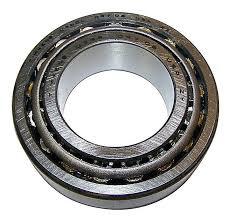
The automotive bearing market is tracking increased investment inflows into advanced bearing testing laboratories as manufacturers strengthen quality assurance and performance validation capabilities. Bearings are safety critical components used in high stress automotive applications, requiring extensive testing to ensure durability, reliability, and compliance with regulatory and OEM requirements. Expanded testing infrastructure supports accurate evaluation across varied operating conditions and vehicle platforms.
These investments reflect the rising importance of validation as automotive technologies evolve.
Drivers Behind Laboratory Investments
Several factors are driving investment in advanced bearing testing laboratories. Stricter regulatory requirements, expanded certification standards, and higher OEM performance expectations are increasing testing complexity. Electrification, automation, and higher vehicle speeds introduce new operating conditions that require detailed evaluation.
Manufacturers are responding by upgrading laboratories to support comprehensive mechanical, thermal, and endurance testing.
Scope of Advanced Testing Capabilities
Modern testing laboratories are equipped to assess load capacity, fatigue life, vibration behavior, noise levels, and lubrication performance. Environmental chambers simulate temperature extremes, humidity, and contamination exposure. High speed test rigs evaluate bearing performance under demanding rotational conditions.
These capabilities enable thorough validation before components enter mass production.
Support for Product Development
Advanced laboratories play a critical role in product development cycles. Early stage testing identifies design improvements, material suitability, and performance limits. Simulation models are validated through physical testing, reducing development risks and improving time to market.
Close integration between design teams and testing facilities supports efficient iteration and refinement.
OEM and Regulatory Compliance
Testing laboratories support compliance with OEM specifications and regulatory standards across global markets. Bearings must meet defined criteria for safety, durability, and reliability. Accredited testing facilities provide documented evidence required for component approval and certification.
Independent verification enhances confidence among OEMs and regulatory authorities.
Regional Investment Trends
Asia Pacific is witnessing significant laboratory investment driven by expanding automotive production and export oriented manufacturing. Europe emphasizes advanced validation to meet stringent safety and environmental regulations. North America focuses on performance testing aligned with commercial vehicle, electric vehicle, and high speed application requirements.
Regional priorities shape the type and scale of laboratory capabilities being developed.
Impact on Supplier Qualification
Access to advanced testing laboratories strengthens supplier qualification and competitiveness. OEMs increasingly prefer suppliers with in-house or accredited testing capabilities, as this supports faster validation and consistent quality.
Suppliers lacking robust testing infrastructure may face challenges in meeting evolving qualification requirements.
Cost and Resource Considerations
Establishing and maintaining advanced testing laboratories requires substantial capital investment and skilled personnel. Specialized equipment, calibration, and data management systems contribute to operational costs. However, long term benefits include reduced warranty risks, improved product reliability, and enhanced customer trust.
Manufacturers view testing investment as a strategic enabler rather than a cost burden.
Integration of Digital Tools
Digital technologies enhance laboratory efficiency and data utilization. Automated data capture, analytics platforms, and digital reporting support accurate performance assessment and traceability. Integration with design and manufacturing systems enables closed loop feedback, improving overall product quality.
Digitalization also supports remote monitoring and collaboration across global teams.
Role in Innovation and Technology Advancement
Testing laboratories facilitate innovation by enabling evaluation of new materials, coatings, and lubrication solutions. As bearing designs evolve to meet electrification and efficiency requirements, laboratories provide controlled environments to validate performance improvements.
This capability supports continuous technological advancement within the automotive bearing market.
Long Term Industry Implications
Rising investment in testing infrastructure contributes to higher industry standards and improved component reliability. Consistent validation reduces field failures and supports vehicle safety objectives. Enhanced testing capabilities also support faster adoption of new automotive technologies.
Over time, advanced laboratories strengthen supply chain resilience and competitiveness.
Conclusion
Investment inflows into advanced bearing testing laboratories are shaping quality and compliance practices within the automotive bearing market. Driven by regulatory scrutiny, OEM expectations, and evolving vehicle technologies, manufacturers are expanding validation capabilities across regions. Comprehensive testing supports product development, certification, and supplier qualification while enabling innovation. Despite high capital requirements, laboratories deliver long term benefits through improved reliability, reduced risk, and enhanced market credibility. As automotive systems grow more complex, advanced testing infrastructure remains essential to ensuring safe, durable, and compliant bearing solutions worldwide.

 Arabic
 French
 Spanish
 Portuguese
 Deutsch
 Turkish
 Dutch
Dutch
 Italiano
 Russian
 Romaian
 Portuguese (Brazil)
 Greek
Greek