English
 Arabic
 French
 Spanish
 Portuguese
 Deutsch
 Turkish
 Dutch
Dutch
 Italiano
 Russian
 Romaian
 Portuguese (Brazil)
 Greek
Greek

Top PROGRAMMABLE LOGIC CONTROLLERS Automation Guide by Campus Component
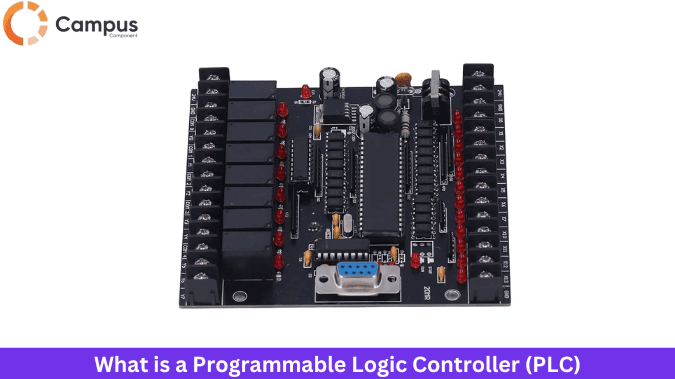
In modern industrial automation, understanding PROGRAMMABLE LOGIC CONTROLLERS is essential for engineers, technicians, and automation enthusiasts. At Campus Component, we simplify complex automation concepts so learners and professionals can easily grasp them and apply them in real-world electrical systems. A PLC acts as the digital brain of industrial automation, receiving signals from sensors, switches, and electrical devices, then processing the programmed logic to control machines, motors, relays, and actuators. This intelligent system replaces traditional relay panels, offering greater flexibility, efficiency, and reliability in electrical control systems.
The architecture of a PLC includes major components such as the CPU, memory unit, power supply, input/output modules, and communication interfaces. These components work together to scan inputs, execute programmed instructions, and control outputs in real time. Through communication protocols like Ethernet, Modbus, and Profibus, PLCs can interact with SCADA systems, HMIs, and other automation equipment. This makes PLCs the backbone of smart factories, renewable energy plants, and modern industrial operations:-https://www.campuscomponent.com/blogs/post/programmable-logic-controllers
In modern industrial automation, understanding PROGRAMMABLE LOGIC CONTROLLERS is essential for engineers, technicians, and automation enthusiasts. At Campus Component, we simplify complex automation concepts so learners and professionals can easily grasp them and apply them in real-world electrical systems. A PLC acts as the digital brain of industrial automation, receiving signals from sensors, switches, and electrical devices, then processing the programmed logic to control machines, motors, relays, and actuators. This intelligent system replaces traditional relay panels, offering greater flexibility, efficiency, and reliability in electrical control systems.
The architecture of a PLC includes major components such as the CPU, memory unit, power supply, input/output modules, and communication interfaces. These components work together to scan inputs, execute programmed instructions, and control outputs in real time. Through communication protocols like Ethernet, Modbus, and Profibus, PLCs can interact with SCADA systems, HMIs, and other automation equipment. This makes PLCs the backbone of smart factories, renewable energy plants, and modern industrial operations:-https://www.campuscomponent.com/blogs/post/programmable-logic-controllers
Top PROGRAMMABLE LOGIC CONTROLLERS Automation Guide by Campus Component
In modern industrial automation, understanding PROGRAMMABLE LOGIC CONTROLLERS is essential for engineers, technicians, and automation enthusiasts. At Campus Component, we simplify complex automation concepts so learners and professionals can easily grasp them and apply them in real-world electrical systems. A PLC acts as the digital brain of industrial automation, receiving signals from sensors, switches, and electrical devices, then processing the programmed logic to control machines, motors, relays, and actuators. This intelligent system replaces traditional relay panels, offering greater flexibility, efficiency, and reliability in electrical control systems.
The architecture of a PLC includes major components such as the CPU, memory unit, power supply, input/output modules, and communication interfaces. These components work together to scan inputs, execute programmed instructions, and control outputs in real time. Through communication protocols like Ethernet, Modbus, and Profibus, PLCs can interact with SCADA systems, HMIs, and other automation equipment. This makes PLCs the backbone of smart factories, renewable energy plants, and modern industrial operations:-https://www.campuscomponent.com/blogs/post/programmable-logic-controllers
·14 Views
·0 voorbeeld