


Carbon Offset Market Supply Challenges Impact Project Development
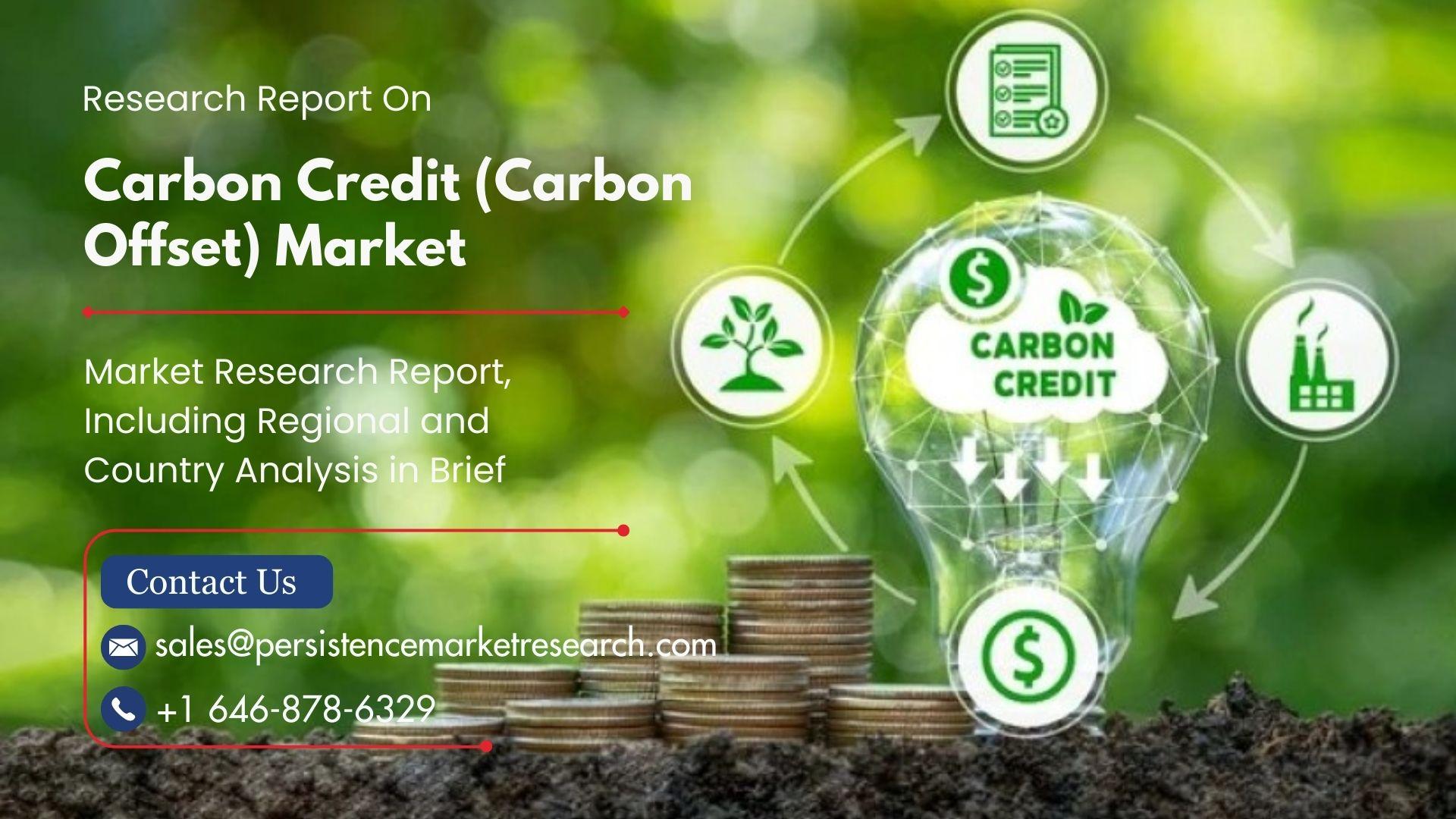
Introduction: Carbon Credits as a Cornerstone of Climate Strategy
The global fight against climate change has moved beyond policy discussions into measurable, market-driven actions. Among the most impactful tools enabling emissions reduction is the carbon credit, also known as a carbon offset. Carbon credits allow organizations to compensate for unavoidable emissions by investing in projects that reduce or remove greenhouse gases elsewhere. As governments, corporations, and investors align with net-zero commitments, the carbon credit market has emerged as a critical mechanism linking environmental responsibility with economic value.
Market Overview: Scale, Growth, and Long-Term Potential
The carbon credit (carbon offset) market has expanded rapidly over the past decade, driven by regulatory pressure and voluntary corporate action. According to the Persistence Market Research report, the global carbon credit market is expected to reach a valuation of US$ 1,260.3 billion in 2026 and is projected to surge to US$ 2,838.8 billion by 2033. This remarkable expansion reflects a strong compound annual growth rate (CAGR) of 12.3% between 2026 and 2033, highlighting the accelerating monetization of emissions reduction and climate mitigation initiatives across the globe.
What Is the Carbon Credit Market and How Does It Work?
The carbon credit market is a system that enables companies and governments to trade credits representing one metric ton of carbon dioxide or its equivalent reduced or removed from the atmosphere. These credits are generated by projects such as renewable energy, reforestation, methane capture, and energy efficiency improvements. Organizations that exceed emissions limits or pursue voluntary climate goals purchase credits to offset their carbon footprint. Strategically, this market incentivizes low-carbon innovation, channels capital into sustainable projects, and provides flexibility for industries transitioning toward net-zero operations while maintaining economic competitiveness.
Get Your FREE Sample Report Instantly – Click Now
Types of Carbon Markets: Compliance vs. Voluntary
The carbon credit market is broadly divided into compliance and voluntary segments. Compliance markets are regulated systems established by governments or international frameworks, such as emissions trading schemes (ETS), where companies must hold sufficient credits to cover their emissions. These markets are legally binding and play a vital role in national and regional climate policies.
In contrast, voluntary carbon markets allow organizations and individuals to purchase carbon credits without regulatory obligation. These markets are driven by corporate sustainability goals, brand reputation, and investor expectations. While voluntary markets offer flexibility and innovation, they also require robust verification standards to ensure credibility and prevent greenwashing.
Key Growth Drivers: Policy, Corporate Commitments, and ESG Pressure
One of the strongest drivers of the carbon credit market is the global policy push toward decarbonization. Governments worldwide are introducing carbon pricing mechanisms, emissions caps, and climate disclosure mandates, making carbon credits an integral part of compliance strategies. International agreements and national net-zero targets are reinforcing long-term demand for credible carbon offsets.
Corporate climate commitments are another powerful growth catalyst. Multinational companies across energy, manufacturing, technology, aviation, and consumer goods sectors are pledging carbon neutrality or net-zero emissions. For many, carbon credits provide a transitional solution while internal decarbonization technologies mature. Additionally, rising environmental, social, and governance (ESG) expectations from investors and financial institutions are pushing companies to actively participate in carbon markets.
Project Types: Where Carbon Credits Are Generated
Carbon credits originate from a wide range of project categories, each contributing differently to emissions reduction. Renewable energy projects, such as wind, solar, and hydroelectric power, replace fossil fuel-based energy generation. Forestry and land-use projects, including afforestation, reforestation, and avoided deforestation, sequester carbon naturally while supporting biodiversity.
Other important project types include methane capture from landfills and agriculture, industrial energy efficiency improvements, and emerging carbon removal technologies like direct air capture. The diversity of project types enhances market resilience but also necessitates strong monitoring, reporting, and verification frameworks to maintain trust.
Regional Insights: Global Participation and Market Leadership
Europe remains a dominant force in the carbon credit market, largely due to its well-established compliance systems and aggressive climate policies. The European Union Emissions Trading System (EU ETS) has become a benchmark for regulated carbon markets, influencing global carbon pricing mechanisms.
North America is witnessing strong growth in both compliance and voluntary markets, driven by corporate net-zero commitments and increasing state-level climate regulations. Meanwhile, Asia Pacific is emerging as a major growth hub, particularly in China and India, where large-scale renewable energy and forestry projects generate substantial carbon credits. Latin America and Africa also play critical roles as project development regions, offering vast natural resources suitable for carbon sequestration initiatives.
Technology and Transparency: Strengthening Market Credibility
Technology is playing an increasingly important role in shaping the future of the carbon credit market. Digital platforms, blockchain-based registries, and AI-driven monitoring tools are enhancing transparency, traceability, and efficiency in carbon credit issuance and trading. These technologies help reduce fraud risks, improve data accuracy, and build confidence among buyers and investors.
Remote sensing, satellite imagery, and real-time data analytics are also improving the verification of project outcomes, particularly in forestry and land-use projects. As scrutiny over carbon credit quality intensifies, technology-enabled transparency will be essential for sustaining long-term market growth.
Challenges and Criticisms: Quality, Integrity, and Standardization
Despite its strong growth outlook, the carbon credit market faces several challenges. Concerns around additionality, permanence, and double counting have raised questions about the true environmental impact of some carbon offset projects. Inconsistent standards and varying methodologies across registries can create confusion and undermine market confidence.
Addressing these challenges requires stronger global coordination, standardized verification frameworks, and greater accountability from project developers and credit buyers. Regulatory oversight and independent audits will play a crucial role in enhancing market integrity and ensuring that carbon credits deliver real and measurable climate benefits.
Future Outlook: Carbon Credits in a Net-Zero Economy
Looking ahead, the carbon credit market is expected to evolve from a supplementary climate tool into a core component of global decarbonization strategies. As carbon pricing mechanisms expand and climate disclosure becomes mandatory, demand for high-quality carbon credits is likely to intensify. Innovations in carbon removal technologies and nature-based solutions will further diversify supply and attract long-term investment.
With the market projected to grow from US$ 1,260.3 billion in 2026 to US$ 2,838.8 billion by 2033 at a CAGR of 12.3%, carbon credits are set to play a defining role in aligning economic growth with environmental sustainability.
Conclusion: A Market Shaping the Climate Transition
The carbon credit (carbon offset) market represents a powerful intersection of finance, policy, and environmental stewardship. While challenges remain, its rapid expansion underscores the global commitment to climate action and sustainable development. As standards improve and transparency increases, carbon credits will continue to enable businesses and governments to bridge the gap between today’s emissions realities and tomorrow’s net-zero ambitions.
Explore the Latest Trending Research Reports:

 Arabic
 French
 Spanish
 Portuguese
 Deutsch
 Turkish
 Dutch
Dutch
 Italiano
 Russian
 Romaian
 Portuguese (Brazil)
 Greek
Greek