


Die Attach Materials Market Outlook Shows Strong Demand from Advanced Packaging
Introduction: The Critical Role of Die Attach Materials in Electronics
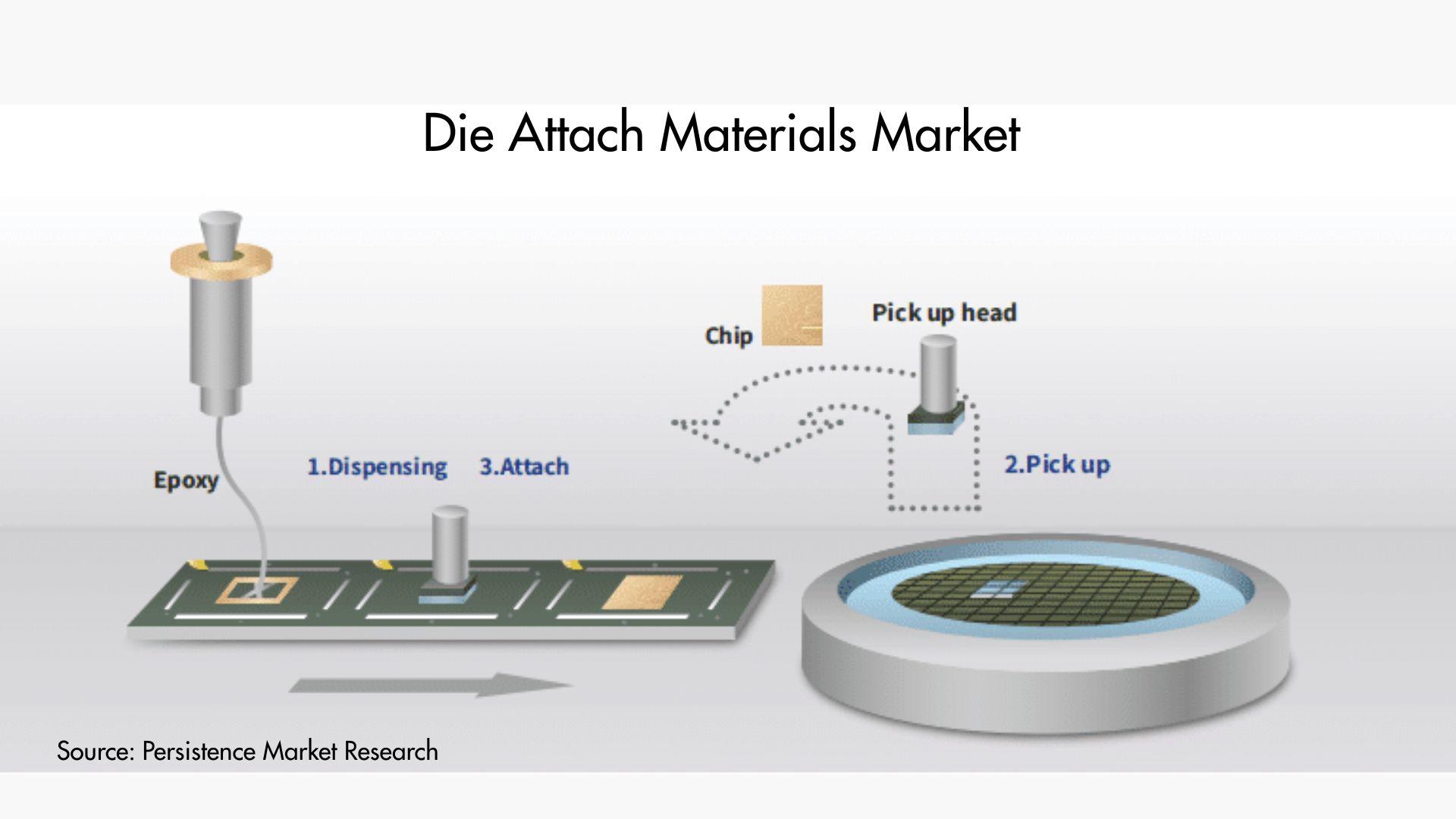
Die attach materials play a vital role in the semiconductor and electronics industry by bonding silicon chips (dies) to substrates or lead frames within electronic packages. These materials ensure mechanical stability, thermal conductivity, and electrical performance of semiconductor devices. As electronic components become smaller, faster, and more powerful, the importance of reliable and high-performance die attach materials has increased significantly. From consumer electronics and automotive systems to industrial automation and renewable energy applications, die attach materials are fundamental to modern technology, making their market growth closely linked to global electronics demand.
Market Overview: Current Size and Future Growth Potential
The die attach materials market is witnessing strong momentum, supported by rapid advancements in semiconductor manufacturing and rising demand for high-performance electronic devices. According to a report by Persistence Market Research, the global die attach materials market is expected to be valued at approximately US$ 2.0 billion in 2026. Over the forecast period, the market is projected to grow substantially and reach nearly US$ 4.5 billion by 2033. This expansion reflects a robust compound annual growth rate (CAGR) of 12.3% between 2026 and 2033, highlighting the increasing adoption of advanced packaging technologies and the growing complexity of electronic components across industries.
What Are Die Attach Materials and Why Are They Important?
Die attach materials are specialized adhesives or bonding agents used to secure semiconductor dies to packaging substrates or lead frames within electronic devices. Their importance lies in their ability to provide strong mechanical bonding while efficiently dissipating heat generated during device operation. As electronic devices continue to shrink in size while increasing in power density, effective thermal management has become critical. Die attach materials help prevent overheating, improve device reliability, and extend product lifespan. They also contribute to electrical performance by maintaining stable connections under extreme operating conditions. With applications ranging from smartphones and laptops to electric vehicles and power modules, die attach materials are indispensable for ensuring performance, durability, and safety in modern electronics.
Get Your FREE Sample Report Instantly – Click Now
Key Growth Drivers: Semiconductor Expansion and Miniaturization
One of the primary drivers of the die attach materials market is the rapid expansion of the global semiconductor industry. Increasing demand for integrated circuits, sensors, and power devices across consumer electronics, automotive, and industrial sectors has created a strong need for advanced packaging solutions. As semiconductor devices become more compact and multifunctional, die attach materials must meet higher standards for thermal conductivity, reliability, and compatibility with advanced substrates.
Miniaturization is another crucial factor influencing market growth. The push toward smaller and thinner electronic components has led manufacturers to adopt innovative die attach solutions capable of performing under tighter tolerances and higher thermal loads. This trend is particularly evident in smartphones, wearable devices, and medical electronics, where space constraints and performance requirements are extremely demanding.
Material Types: Epoxy, Solder, and Silver Sintering
The die attach materials market includes several material types, each designed for specific performance requirements. Epoxy-based die attach materials are widely used due to their cost-effectiveness, strong adhesion, and versatility. They are commonly applied in consumer electronics and low- to mid-power applications where moderate thermal performance is sufficient.
Solder-based die attach materials are preferred in high-power and automotive applications due to their excellent thermal and electrical conductivity. These materials provide robust performance under high temperatures and harsh operating conditions, making them ideal for power electronics and automotive control units.
Silver sintering materials represent an advanced segment of the market, offering superior thermal conductivity and reliability. Although more expensive, silver sintering is increasingly adopted in high-performance applications such as electric vehicles, renewable energy systems, and aerospace electronics, where long-term reliability and thermal efficiency are critical.
Application Analysis: Consumer Electronics, Automotive, and Industrial Uses
Consumer electronics remain a major application area for die attach materials, driven by continuous innovation in smartphones, tablets, laptops, and wearable devices. The growing demand for faster processors, improved battery efficiency, and compact designs has increased the need for high-quality die attach solutions that support thermal management and device longevity.
The automotive sector is emerging as a high-growth application area, particularly with the rise of electric vehicles (EVs) and advanced driver-assistance systems (ADAS). Power modules, inverters, and battery management systems rely heavily on die attach materials that can withstand high temperatures, vibrations, and long operating lifetimes. As vehicle electrification accelerates, the demand for reliable die attach materials is expected to grow significantly.
Industrial electronics, including automation systems, robotics, and power control equipment, also contribute to market expansion. These applications require materials that deliver consistent performance under demanding environmental conditions, further supporting the adoption of advanced die attach technologies.
Regional Insights: Strong Growth Across Asia Pacific and Beyond
Asia Pacific dominates the die attach materials market, supported by the presence of major semiconductor manufacturing hubs in China, Taiwan, South Korea, and Japan. The region benefits from strong electronics production, expanding automotive manufacturing, and increasing investments in advanced packaging technologies. Rising consumer electronics demand and government support for semiconductor self-sufficiency further strengthen market growth in this region.
North America and Europe also hold significant market shares, driven by technological innovation, strong automotive industries, and growing investments in electric mobility and renewable energy. These regions are at the forefront of adopting advanced die attach solutions for high-performance and safety-critical applications.
Technological Advancements: Supporting Next-Generation Packaging
Technological innovation is a key factor shaping the future of the die attach materials market. The development of materials with higher thermal conductivity, lower void formation, and improved reliability is enabling next-generation semiconductor packaging. Advanced packaging techniques such as system-in-package (SiP), chip-scale packaging, and 3D packaging rely heavily on improved die attach performance.
Manufacturers are also focusing on environmentally friendly formulations and lead-free materials to comply with global environmental regulations. These innovations not only enhance performance but also align with sustainability goals, making them attractive to electronics manufacturers worldwide.
Challenges: Cost and Process Complexity
Despite strong growth prospects, the die attach materials market faces certain challenges. High material costs, especially for advanced solutions like silver sintering, can limit adoption in cost-sensitive applications. Additionally, process complexity and the need for precise application techniques require specialized equipment and expertise, which may pose barriers for smaller manufacturers.
However, ongoing research and development efforts aimed at cost reduction and process optimization are expected to mitigate these challenges over time.
Future Outlook: A Market Driven by High-Performance Electronics
The future of the die attach materials market looks highly promising, supported by rapid advancements in electronics, increasing power density requirements, and the global shift toward electric mobility and renewable energy. With the market expected to grow from US$ 2.0 billion in 2026 to US$ 4.5 billion by 2033 at a CAGR of 12.3%, opportunities for material innovation and application expansion are substantial.
As electronic devices continue to evolve, die attach materials will remain a critical enabler of performance, reliability, and efficiency. Companies that invest in advanced material technologies and align with emerging industry needs are well-positioned to capitalize on the strong growth trajectory of this essential market.
Explore the Latest Trending Research Reports:

 Arabic
 French
 Spanish
 Portuguese
 Deutsch
 Turkish
 Dutch
Dutch
 Italiano
 Russian
 Romaian
 Portuguese (Brazil)
 Greek
Greek