


The PBX Phone System Blueprint: Scalable Tech for Canadian SMBs
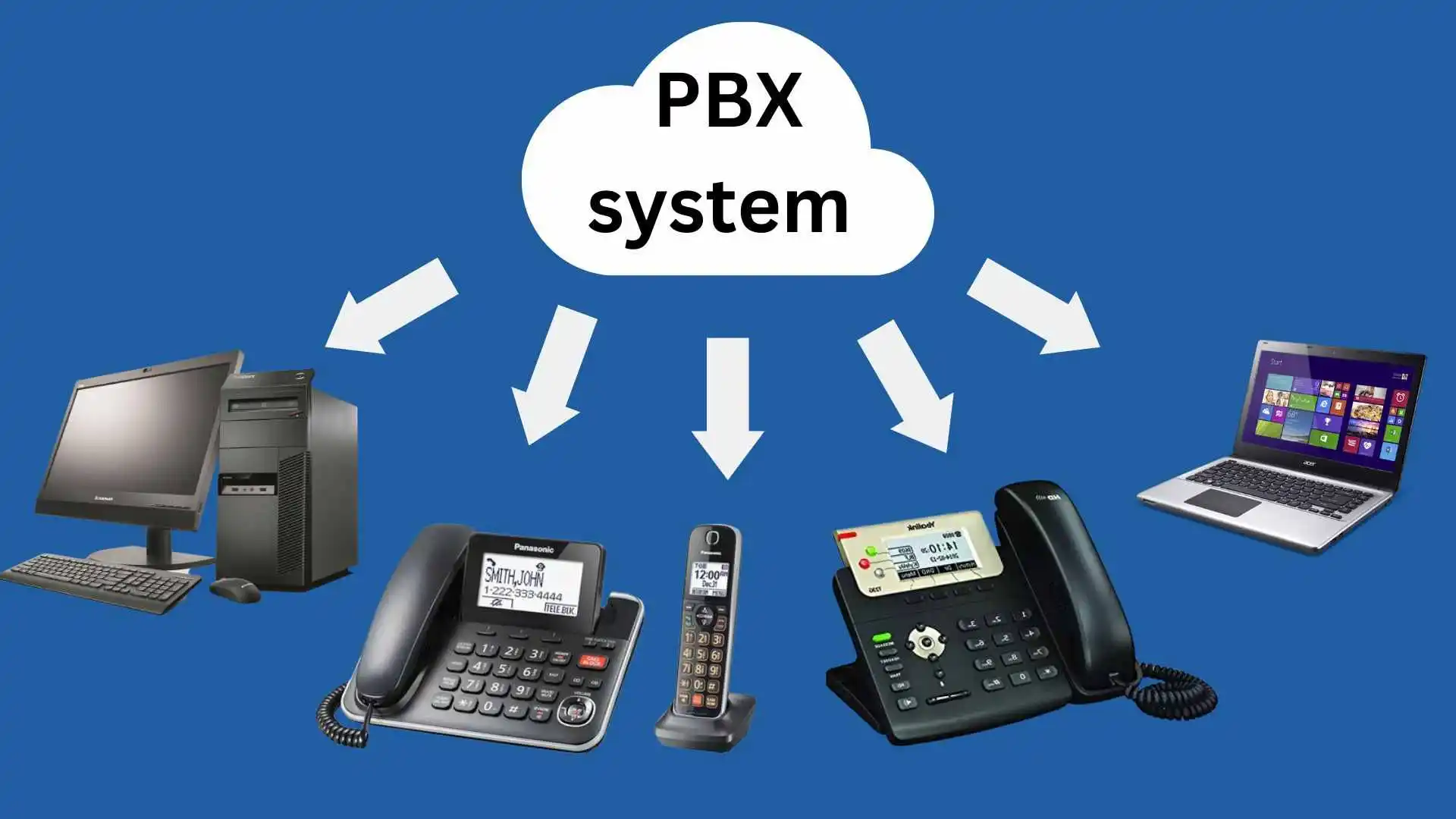
Let’s be blunt. Most business owners think of their phone system as a utility, like water or electricity. You pay the bill, you pick up the receiver, and it works. But if you are sitting in a C-suite office in Toronto or managing a growing tech hub in Vancouver, that line of thinking is costing you a fortune. Your phone system isn't just a dial tone. It is the central nervous system of your client interactions.
The term PBX, Private Branch Exchange, sounds like something from a dusty 1970s telecommunications manual. In a way, it is. But the tech has evolved so violently over the last five years that the PBX you knew is dead. The modern version is a powerhouse of data, AI, and global connectivity.
The Simple "No-Nonsense" Definition
A PBX is a private telephone network used within a company. Users of the PBX phone system can communicate internally (within their company) and externally (with the outside world), using different communication channels like Voice over IP, ISDN, or analog.
Think of it as a smart traffic cop. Instead of every desk needing a direct, expensive line to the public phone company, the PBX acts as a central hub. It routes calls efficiently. It handles the "extensions." It makes sure that when a customer calls your main line, they get to the right person without you paying for 50 individual phone lines from a carrier.
The Forensic Evolution: From Copper to Cloud
I’ve seen the industry shift from massive, room-sized hardware racks to software that lives entirely in a data centre in Montreal. We used to rely on the PSTN (Public Switched Telephone Network). It was reliable, sure, but it was as flexible as a brick.
Today, the Canadian market is dominated by IP PBX and Hosted PBX. According to recent data, the Canadian call control market is the fastest-growing segment in North America, with a massive shift toward cloud-based solutions expected through 2030. If you are still anchored to a physical box in your basement, you are lagging.
How it Actually Works (The Executive Summary)
The core of a PBX system is the "switch."
-
Inbound: A call hits your main business number.
-
Logic: The PBX checks the rules you set. Is it after hours? Is there an auto-attendant?
-
Routing: The call is "switched" to a specific extension, a mobile app, or a voicemail-to-email service.
-
Outbound: Your employees dial out. The PBX chooses the cheapest path, often using PBX business phone systems to connect them to the public network.
The 4 Main Types of PBX Systems in 2026
You have choices. But let's be honest: not all choices are good. Choosing the wrong infrastructure is a three-year mistake that will haunt your IT budget.
1. Traditional Analog PBX
This is the dinosaur. It uses physical copper wires. It’s stable because it doesn't need the internet. However, it is a nightmare to scale. Want to add a new employee? You might need a technician to literally run a new wire through the ceiling.
-
Verdict: Avoid unless you are in a remote area of the Yukon with zero stable web access.
2. On-Premise IP PBX
This is the "pro" choice for companies that want total control. It uses your internal data network (LAN) to route calls. It’s basically a server in your office.
-
Pros: You own it. No monthly "per user" fees. Tighter security if you have the right IT team.
-
Cons: High CAPEX. You pay for the hardware upfront. You are also responsible if it breaks.
3. Hosted / Cloud PBX (The Industry Standard)
The provider, like those found in our list of best business phone providers in Canada, owns the hardware. You just plug in your phones or open an app on your laptop.
-
Pros: Zero maintenance. Updates happen automatically. You can scale from 5 to 500 users in a single afternoon.
-
Cons: You need a solid internet connection.
4. Hybrid PBX
A middle ground. You keep some legacy lines for emergency backup but use the cloud for everything else. It’s a transition strategy for big firms with heavy legacy investments.
Why Canadian CXOs are Aggressively Migrating to the Cloud
The Canadian business landscape is unique. We deal with vast distances, high roaming costs, and strict privacy laws.
1. The Death of the "Desk"
98% of employees now want hybrid work options. A traditional PBX can't handle a salesperson working from a coffee shop in Calgary while the office is in Ottawa. Cloud PBX systems use "Softphones." Your business line lives on your iPhone. Your clients never know you aren't at your desk.
2. PIPEDA and Data Residency
Canadian privacy laws like the Personal Information Protection and Electronic Documents Act (PIPEDA) are non-negotiable. When you use a PBX, you are transmitting sensitive client data. Top-tier providers now offer Canadian data residency, ensuring your call logs and recordings never leave our borders. This is a critical check for any legal or healthcare firm.
3. Cost Rationalization
Traditional landlines are a money pit. Switching to an IP-based system can reduce monthly bills by 50% to 70%. For a new startup, eliminating the need for on-site hardware can slash initial communication costs by up to 90%. That is capital you can reinvest into your core product.
Features That Actually Drive ROI
Don't get distracted by "bells and whistles." Focus on what moves the needle for your bottom line.
Unified Communications (UCaaS)
Modern PBX isn't just voice. It's video conferencing, instant messaging, and SMS all in one window. When your team doesn't have to jump between five different apps to talk to each other, productivity spikes. Statistics show that UCaaS users report a 30% reduction in conferencing tool costs alone.
AI-Powered Analytics
In 2026, if your PBX isn't analyzing your calls, you're flying blind. Modern systems use AI to:
-
Transcribe every call in real-time.
-
Perform "Sentiment Analysis" to see if a customer is getting angry.
-
Provide "Live Coaching" to new sales reps during the call.
CRM Integration
Your phone should talk to your CRM. When a client calls, their entire history should pop up on your screen immediately. No more "Let me find your account." That saves 30-60 seconds per call. Multiply that by 1,000 calls a month, and you’ve just bought back a full work week.
PBX vs. VoIP: Let's End the Confusion
I hear this every day: "Do I want a PBX or do I want VoIP?" It’s a trick question.
-
VoIP (Voice over Internet Protocol) is the technology that transmits your voice over the web.
-
PBX (Private Branch Exchange) is the system that manages your calls.
Most modern PBX systems use VoIP. It’s like asking, "Do I want a car or do I want an engine?" You want both. Specifically, you want an IP-PBX.
Common Pitfalls to Avoid (The "Forensic" Warning)
I've seen multi-million dollar firms cripple their operations because they didn't do their homework.
-
Ignoring Bandwidth: You can have the best PBX system in the world, but if your office internet is a sluggish 10 Mbps connection shared by 50 people, your calls will sound like robots underwater. You need a dedicated "Voice VLAN" to prioritize phone traffic.
-
Lack of Redundancy: If the internet goes down, does your business stop? A professional setup has a "failover." If the office net dies, calls should automatically route to employee cell phones.
-
Security Gaps: VoIP systems are internet-facing. That means they are targets for hackers. Use strong encryption (TLS/SRTP) and multi-factor authentication. If your provider doesn't mention security in the first five minutes, walk away.
The Financial Breakdown: CAPEX vs. OPEX
Let's talk about money. Executives love OPEX (Operational Expenditure) because it’s predictable.
-
On-Premise: You spend $10,000 today. You own it. But in 5 years, it's obsolete. You also pay an IT guy $80/hour to fix it when it glitches.
-
Cloud: You pay $25 per user, per month. No big upfront check. If the tech evolves next year, your provider upgrades the software for free.
For most Canadian SMBs, the Cloud model is the clear winner for cash flow management.
How to Migration Without the Headache
Transitioning doesn't have to be a nightmare. Here is the blueprint:
-
Audit your current usage: How many lines do you actually use? Most firms over-provision.
-
Test your network: Ensure your latency is under 100ms and jitter is under 30ms.
-
Port your numbers: You can keep your local 416, 604, or 514 numbers. This is a CRTC-mandated right in Canada.
-
Phased rollout: Start with one department. Get the kinks out. Then move the rest.
Frequently Asked Questions (FAQ)
Is a PBX system expensive to maintain?
It depends on the type. Traditional and On-Premise systems require significant maintenance and hardware updates. Cloud PBX systems have zero maintenance costs for the end-user, as the provider handles all backend work.
Can I use my existing phones with a new PBX?
Often, yes. If you have "SIP-compliant" IP phones, they can usually be reprogrammed. If you have old analog phones, you might need an "ATA adapter," though it's usually better to just upgrade to modern hardware for better voice quality.
Does PBX work for remote employees?
Absolutely. This is the primary reason for the shift to Hosted PBX. Remote workers simply use a mobile app or a laptop "Web Dialer" that functions exactly like their office desk phone.
What happens to my PBX if the power goes out?
If you have an on-premise system with no backup power, it goes down. If you have a Cloud PBX, the "brain" of the system is in a secure data centre. Calls will still go to your voicemail or can be automatically forwarded to mobile devices that have battery power.
Final Thoughts: The Verdict for 2026
The "Private Branch Exchange" has come a long way from the manual switchboards of the past. It is now the foundation of the modern, agile enterprise. For Canadian business owners, the message is clear: the transition to IP-based, cloud-hosted systems isn't just a trend, it's a survival requirement.
You need a system that scales as fast as you do, protects your data under Canadian law, and integrates with the tools your team uses every day. Don't settle for a legacy dial tone when you can have a unified communication powerhouse.
If you’re ready to stop guessing and start optimizing, look at the solutions offered by CanComCo. Whether you need a robust PBX business phone system or want to compare the best business phone providers in Canada, we provide the forensic expertise to get it right the first time.

 English
 Arabic
 French
 Spanish
 Portuguese
 Deutsch
 Turkish
 Dutch
Dutch
 Italiano
 Romaian
 Portuguese (Brazil)
 Greek
Greek