


Global Aerospace and Defense Springs Market Expected to Reach US$511.3 Mn by 2031
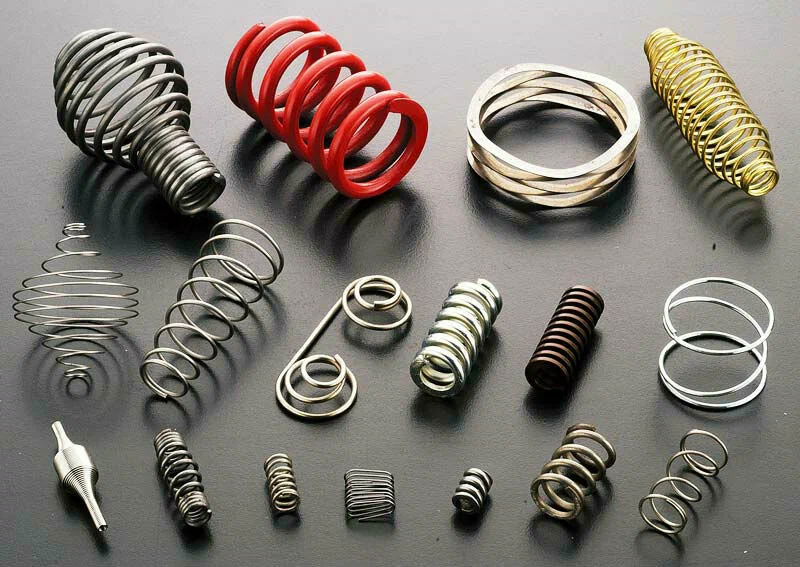
The global Aerospace and Defense Springs Market is poised for steady and sustained growth over the coming years, reflecting the broader expansion of the aerospace and defense industry worldwide. According to industry analysis, the market is estimated to increase from US$ 331.2 million in 2024 to US$ 511.3 million by 2031, registering a compound annual growth rate (CAGR) of 6.4% during the forecast period from 2024 to 2031. This growth trajectory underscores the critical role that high-performance springs play in modern aircraft, spacecraft, and defense platforms, where precision, reliability, and durability are paramount.
Aerospace and defense springs are essential mechanical components used in a wide range of applications, including landing gear systems, engine assemblies, flight control mechanisms, braking systems, seat actuation systems, missiles, and naval equipment. These springs are designed to operate under extreme environmental conditions such as high temperature variations, vibration, corrosion, and mechanical stress, making material selection and engineering expertise critical factors in their development.
Several key drivers are contributing to the expansion of the aerospace and defense springs market. One of the most significant factors is the rising production of commercial aircraft, fueled by growing air passenger traffic, fleet modernization programs, and the replacement of aging aircraft with fuel-efficient models. In parallel, increasing global defense expenditure, particularly in emerging economies, is driving demand for advanced military aircraft, helicopters, unmanned aerial vehicles (UAVs), and missile systems, all of which rely on specialized spring components.
Technological advancements in materials science, such as the adoption of high-performance alloys, titanium, and corrosion-resistant stainless steels, are further enhancing the performance and lifespan of aerospace and defense springs. Additionally, stricter safety regulations and quality standards imposed by aviation authorities and defense agencies are compelling manufacturers to invest in precision engineering, testing, and certification, thereby elevating the overall value of the market.
Segmentation Analysis
By Type
By type, the aerospace and defense springs market is segmented into compression springs, extension springs, torsion springs, constant force springs, and special-purpose springs. Among these, compression springs account for a significant share of the market due to their extensive use in landing gear systems, shock absorption mechanisms, engine components, and braking assemblies. Their ability to store mechanical energy and resist compressive forces makes them indispensable in both commercial and military aerospace platforms.
Torsion springs are also witnessing notable growth, particularly in control surfaces, hinges, and actuation systems where rotational force is required. These springs are increasingly being used in advanced aircraft designs that emphasize lightweight structures and precise motion control. Meanwhile, extension springs continue to find applications in seat systems, door mechanisms, and maintenance access panels.
The fastest-growing segment within this category is special-purpose and custom-engineered springs. As aircraft and defense platforms become more complex and application-specific, demand is rising for springs designed to meet unique load, temperature, and fatigue requirements. This trend is encouraging manufacturers to offer highly customized solutions tailored to specific aerospace and defense programs.
By Vehicle, Product, or Service Type
Based on vehicle and product type, the market can be broadly categorized into commercial aircraft, military aircraft, helicopters, space vehicles, missiles, and naval defense systems. Commercial aircraft represent a substantial portion of demand, supported by large-scale production programs from major original equipment manufacturers (OEMs) and their tier-one suppliers. The steady growth in narrow-body and wide-body aircraft deliveries continues to generate consistent demand for high-quality spring components.
The military aircraft and defense systems segment is projected to experience strong growth during the forecast period. Rising geopolitical tensions, modernization of air forces, and increased investments in next-generation fighter jets, transport aircraft, and unmanned systems are driving the need for durable and high-performance springs. Missiles and space vehicles, although smaller in volume, require highly specialized springs that can withstand extreme conditions, contributing to higher value per unit and technological sophistication.
Helicopters, used extensively for defense, emergency medical services, offshore operations, and law enforcement, also represent an important application area. The growing use of helicopters in both civilian and military roles is supporting stable demand for aerospace-grade springs across multiple subsystems.
By Propulsion, Technology, or Channel
From a technology and propulsion perspective, the market is influenced by the transition toward more efficient and electrified aircraft systems. While traditional mechanical systems remain dominant, there is a gradual integration of electromechanical actuators and hybrid propulsion architectures, which require springs with enhanced precision, fatigue resistance, and compatibility with electronic control systems.
In terms of distribution channels, OEM supply agreements dominate the market, as aerospace and defense springs are often designed and manufactured in close collaboration with aircraft and defense system manufacturers. The aftermarket segment also plays a vital role, particularly in maintenance, repair, and overhaul (MRO) activities, where replacement of worn or damaged springs is essential to ensure operational safety and compliance with regulatory standards.
✅ Discover Exclusive Data – Request Your Free Sample: https://www.persistencemarketresearch.com/samples/34901
Regional Insights
Geographically, North America holds a leading position in the aerospace and defense springs market. The region benefits from a strong presence of major aircraft manufacturers, defense contractors, and a well-established supply chain for aerospace components. High defense spending, continuous investment in research and development, and the presence of stringent quality standards have created a favorable environment for the adoption of advanced spring technologies.
Europe represents another significant market, supported by a robust aerospace manufacturing base, including commercial aircraft, helicopters, and defense systems. Collaborative defense programs, such as multinational fighter aircraft and space initiatives, are driving demand for specialized and high-performance spring components across the region.
The Asia-Pacific region is expected to be the fastest-growing market during the forecast period. Rapid growth in air travel, expansion of domestic aircraft manufacturing capabilities, and increasing defense budgets in countries such as China, India, Japan, and South Korea are key factors driving market growth. Government initiatives to promote indigenous defense production and reduce reliance on imports are further stimulating demand for locally manufactured aerospace and defense springs.
Other regions, including the Middle East and Latin America, are also witnessing gradual growth, driven by fleet expansion, defense procurement programs, and investments in aerospace infrastructure.
Unique Features and Innovations in the Market
Modern aerospace and defense springs are distinguished by their advanced material composition, precision manufacturing, and rigorous testing protocols. Manufacturers are increasingly utilizing high-strength alloys, superalloys, and titanium-based materials to achieve superior performance in terms of fatigue life, corrosion resistance, and weight reduction.
The integration of digital technologies is also transforming the market. Advanced computer-aided design (CAD) and simulation tools enable engineers to optimize spring designs for specific load conditions and operational environments. Artificial intelligence and data analytics are being used to predict fatigue behavior, reduce development cycles, and enhance quality assurance processes.
The adoption of Industry 4.0 principles, including IoT-enabled manufacturing equipment and real-time monitoring systems, is improving production efficiency and traceability. These technologies allow manufacturers to ensure consistent quality, comply with aerospace certification requirements, and respond quickly to changing customer specifications. While 5G technology is still in its early stages of adoption in aerospace manufacturing, it is expected to enhance connectivity and data exchange across production facilities in the future.
Market Highlights
The aerospace and defense springs market is characterized by several key highlights that are driving adoption across industries. One of the primary reasons for increased adoption is the critical role of springs in ensuring safety, reliability, and performance of aerospace and defense systems. As aircraft and defense platforms become more sophisticated, the demand for precision-engineered components continues to rise.
Regulatory compliance is another major factor influencing the market. Aviation authorities and defense agencies impose stringent standards related to material quality, manufacturing processes, and component performance. Compliance with these regulations not only ensures safety but also enhances the credibility and competitiveness of manufacturers in the global market.
Cost reduction and sustainability are also emerging as important considerations. Lightweight spring designs contribute to overall weight reduction in aircraft, leading to improved fuel efficiency and lower emissions. Additionally, advancements in manufacturing processes are enabling more efficient use of materials and energy, aligning with broader sustainability goals within the aerospace and defense sector.
Key Players and Competitive Landscape
The aerospace and defense springs market is moderately consolidated, with several established players competing alongside specialized manufacturers. Leading companies in the market include MW Industries, Lesjöfors Group, Barnes Group, NHK Spring Co., Ltd., Sogefi Group, Bal Seal Engineering, Helical Products Company, and Lee Spring Company.
MW Industries is recognized for its extensive portfolio of precision-engineered components and its strong presence in aerospace and defense applications. The company focuses on innovation, customization, and close collaboration with OEMs to meet complex design requirements. Lesjöfors Group leverages its global manufacturing footprint and expertise in high-performance spring solutions to serve both commercial and military aerospace customers.
Barnes Group benefits from its diversified industrial capabilities and emphasis on advanced manufacturing technologies, enabling it to deliver high-quality and reliable spring components. NHK Spring Co., Ltd. is known for its strong engineering capabilities and focus on lightweight and high-durability spring solutions, particularly in applications requiring high fatigue resistance.
Sogefi Group and Bal Seal Engineering emphasize material innovation and precision sealing and spring technologies, catering to demanding aerospace and defense environments. Meanwhile, companies such as Helical Products Company and Lee Spring Company are recognized for their specialization in custom spring solutions and their ability to respond quickly to niche and low-volume requirements.
Strategic initiatives across the competitive landscape include investments in research and development, expansion of manufacturing capabilities, adoption of digital manufacturing technologies, and strengthening of relationships with aerospace OEMs and defense contractors.
Future Opportunities and Growth Prospects
Looking ahead, the aerospace and defense springs market is expected to benefit from long-term growth opportunities driven by evolving technology, increasing defense modernization programs, and the continued expansion of global air travel. The development of next-generation aircraft, including electric and hybrid-electric platforms, will create new requirements for advanced spring designs capable of supporting innovative propulsion and control systems.
Regulatory frameworks will continue to shape the industry, pushing manufacturers toward higher standards of quality, traceability, and sustainability. Companies that invest in advanced materials, digital engineering, and smart manufacturing solutions are likely to gain a competitive advantage in this evolving market.
Overall, the aerospace and defense springs market is positioned for robust growth through 2031, supported by strong demand fundamentals, technological innovation, and the critical importance of precision components in ensuring the safety and performance of aerospace and defense systems worldwide.

 English
 Arabic
 French
 Spanish
 Portuguese
 Deutsch
 Turkish
 Dutch
Dutch
 Italiano
 Romaian
 Portuguese (Brazil)
 Greek
Greek