


Canada Solar Photovoltaic System Market Growth Supported by Government Incentives
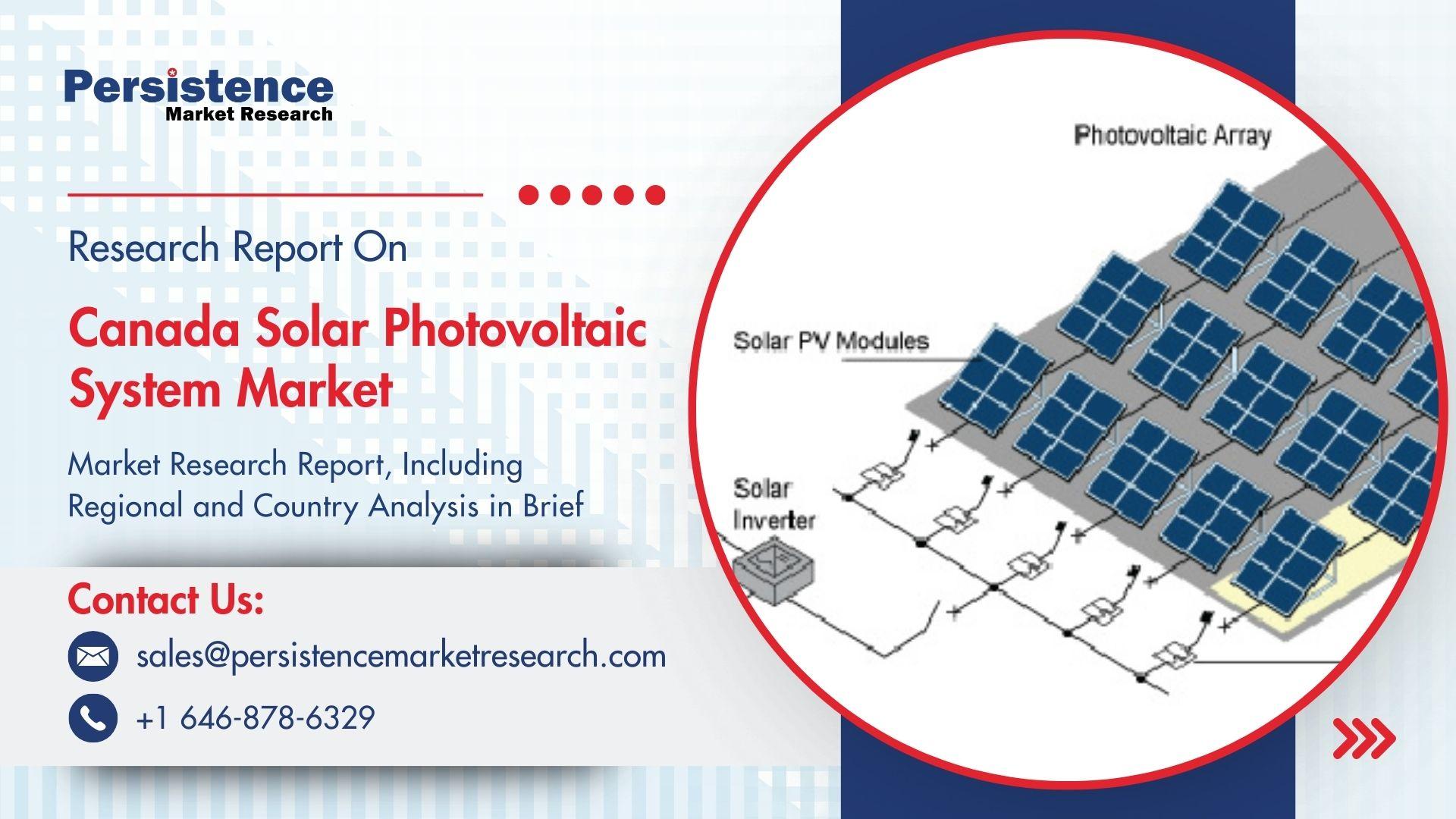
Introduction: Canada’s Transition Toward Clean Solar Energy
Canada’s energy landscape is undergoing a steady transformation as the country accelerates its transition toward renewable and low-carbon power sources. While hydropower has traditionally dominated Canada’s renewable mix, solar photovoltaic (PV) systems are rapidly emerging as a critical pillar of the nation’s clean energy strategy. Declining solar panel costs, supportive government policies, and growing awareness about climate change are driving adoption across residential, commercial, and utility-scale segments. As provinces strengthen their decarbonization commitments, the Canada solar photovoltaic system market is gaining strong momentum and positioning itself as a long-term growth opportunity.
Market Overview: Strong Growth Outlook for Solar PV in Canada
The Canada solar photovoltaic system market is witnessing robust expansion, supported by favorable policy frameworks and increasing investments in clean energy infrastructure. According to the Persistence Market Research report, the market size for solar photovoltaic systems in Canada is estimated to reach US$ 13.2 billion by the end of 2031, rising significantly from US$ 6.1 billion recorded in 2024. This sharp increase reflects the country’s growing reliance on solar energy to meet electricity demand sustainably. Over the forecast period from 2024 to 2031, the market is expected to register a healthy compound annual growth rate (CAGR) of 11.7%, highlighting strong long-term confidence in solar PV deployment across the nation.
Why Is Solar Energy Growing Rapidly in Canada?
Solar energy is growing rapidly in Canada due to a combination of economic, environmental, and policy-driven factors. Technological advancements have significantly reduced the cost of solar panels, making installations more affordable for households and businesses. At the same time, federal and provincial governments are offering incentives, tax credits, and net metering programs that improve return on investment for solar adopters. Canada’s commitment to achieving net-zero emissions by 2050 has further accelerated renewable energy adoption. Additionally, improvements in solar efficiency make PV systems viable even in colder climates, driving widespread interest across provinces.
Get Your FREE Sample Report Instantly – Click Now
Key Growth Drivers: Policies, Incentives, and Sustainability Goals
Government support remains one of the most influential drivers of the Canada solar photovoltaic system market. Federal initiatives such as investment tax credits, clean energy funding programs, and carbon pricing mechanisms are encouraging both public and private investments in solar infrastructure. Provincial governments are also playing a crucial role by introducing renewable energy targets and facilitating grid integration for distributed solar systems.
Sustainability goals are another major catalyst. Businesses are increasingly adopting solar PV systems to reduce carbon footprints, stabilize energy costs, and align with environmental, social, and governance (ESG) commitments. For homeowners, rising electricity prices and the desire for energy independence are making rooftop solar installations more attractive than ever.
Residential Solar PV Market: Rising Adoption Among Homeowners
The residential segment is becoming a vital component of the Canada solar photovoltaic system market. Homeowners across provinces such as Ontario, Alberta, and British Columbia are investing in rooftop solar systems to offset electricity bills and reduce reliance on conventional power sources. Net metering policies allow surplus electricity generated by residential systems to be fed back into the grid, providing financial benefits and improving system payback periods.
In addition, advancements in energy storage technologies are enhancing the appeal of residential solar PV. Battery systems allow homeowners to store excess solar energy for later use, improving reliability and resilience during grid outages. This trend is expected to further accelerate residential solar adoption over the coming years.
Commercial and Industrial Segment: Solar as a Cost-Saving Strategy
Commercial and industrial (C&I) users represent a significant growth segment within the Canada solar photovoltaic system market. Manufacturing facilities, warehouses, office buildings, and retail complexes are increasingly deploying solar PV systems to manage rising operational energy costs. For businesses with large rooftops or open land, solar installations offer an effective way to generate clean electricity at scale.
Corporate sustainability commitments are also influencing adoption. Many Canadian companies are setting renewable energy targets and turning to on-site solar generation as a visible and measurable way to achieve them. Power purchase agreements (PPAs) and leasing models are further reducing upfront costs, making solar PV accessible to a broader range of commercial users.
Utility-Scale Solar: Expanding Canada’s Renewable Capacity
Utility-scale solar projects are playing a growing role in Canada’s renewable energy expansion. Large solar farms are being developed to support grid-level electricity generation, particularly in provinces seeking to diversify energy sources and reduce emissions. While Canada’s solar capacity remains smaller compared to wind and hydro, utility-scale solar is gaining traction due to improved efficiency and declining capital costs.
These projects are often supported by long-term power contracts and government-backed procurement programs, providing stable revenue streams for developers. As grid modernization continues and energy storage solutions improve, utility-scale solar is expected to become an increasingly important contributor to Canada’s clean energy mix.
Technological Advancements Shaping the Market
Technological innovation is strengthening the growth prospects of the Canada solar photovoltaic system market. Modern PV panels offer higher efficiency rates, better performance in low-light conditions, and improved durability in extreme weather. These advancements are particularly important in Canada’s diverse climate, where solar systems must perform reliably across varying temperatures.
Smart inverters, digital monitoring tools, and advanced energy management systems are also enhancing system performance and grid compatibility. These technologies enable real-time tracking of energy production and consumption, allowing users to optimize efficiency and reduce energy waste.
Regional Dynamics: Provincial Contributions to Market Growth
Ontario remains a key contributor to the Canada solar photovoltaic system market due to its established renewable energy programs and large population base. Alberta is also emerging as a strong growth region, driven by its competitive electricity market and increasing corporate renewable energy procurement. British Columbia, while traditionally reliant on hydropower, is gradually expanding its solar footprint to diversify energy sources.
Other provinces are also exploring solar opportunities, particularly in remote and off-grid communities where solar PV systems can reduce dependence on diesel generators. These regional dynamics collectively support the nationwide expansion of solar energy adoption.
Challenges and Market Constraints
Despite strong growth potential, the Canada solar photovoltaic system market faces certain challenges. Seasonal variations in sunlight can affect energy generation, particularly during winter months. Grid integration and infrastructure limitations in some regions may also slow project deployment. Additionally, upfront installation costs, although declining, can still be a barrier for some consumers.
However, ongoing advancements in energy storage, supportive financing models, and continued policy backing are helping to address these challenges and improve overall market viability.
Future Outlook: A Bright Solar Path for Canada
The future of the Canada solar photovoltaic system market looks promising as the country continues its transition toward a low-carbon economy. With the market expected to grow from US$ 6.1 billion in 2024 to US$ 13.2 billion by 2031 at a CAGR of 11.7%, solar PV systems are set to play an increasingly central role in Canada’s energy mix. Continued innovation, strong policy support, and rising demand for clean energy will ensure that solar power remains a key driver of sustainable growth in the years ahead.
Explore the Latest Trending Research Reports:

 English
 Arabic
 French
 Spanish
 Portuguese
 Deutsch
 Turkish
 Dutch
Dutch
 Italiano
 Romaian
 Portuguese (Brazil)
 Greek
Greek