


E-House Solutions Gain Traction as Industries Seek Flexible Power Systems
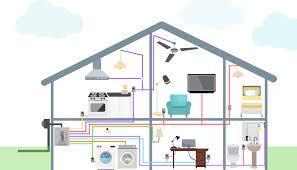
The global energy landscape is undergoing a profound transformation as industries, utilities, and governments accelerate investments in reliable, flexible, and scalable power infrastructure. Against this backdrop, the E-house (Electrical House) market is emerging as a critical enabler of modern power distribution, offering prefabricated, modular substations that address the limitations of conventional brick-and-mortar facilities.
The global E-house market size is estimated at US$1.8 billion in 2025 and is projected to reach US$2.7 billion by 2032, expanding at a compound annual growth rate (CAGR) of 6.2% during the forecast period. This steady growth reflects rising demand across utilities, oil & gas, mining, renewable energy, and data center sectors seeking cost-effective and rapidly deployable power solutions.
Understanding E-House Solutions
An E-house, also known as a power house or modular substation, is a prefabricated enclosure that integrates electrical equipment such as switchgear, transformers, protection systems, and control panels within a factory-assembled structure. These units are transported to project sites and commissioned quickly, significantly reducing construction timelines and project risks.
Unlike traditional substations that require extensive civil works, E-houses offer a plug-and-play approach, enabling faster deployment, improved safety, and better quality control. Their modular nature also allows easy scalability, making them well suited for dynamic energy environments and remote locations.
Global E-House Market Overview
The rising complexity of power distribution networks is a major catalyst for E-house adoption. Aging grid infrastructure, increasing power demand, and integration of distributed energy resources are pushing utilities and industrial operators to modernize their electrical systems.
The market’s growth trajectory is reinforced by the following macro-level trends:
- Accelerating grid modernization initiatives
- Rising investments in renewable energy projects
- Expansion of oil & gas and mining operations
- Rapid growth of data centers and industrial automation
- Increasing preference for modular and prefabricated infrastructure
As energy systems become more decentralized and digitalized, E-houses are proving indispensable in ensuring reliable and resilient power distribution.
Key Market Drivers
Rising Demand for Modular and Prefabricated Power Infrastructure
One of the primary drivers of the E-house market is the global shift toward modular construction. Industries are increasingly favoring prefabricated solutions to reduce project delays, labor dependency, and cost overruns. E-houses allow most of the engineering, assembly, and testing to occur in controlled factory environments, minimizing on-site uncertainties.
This approach is particularly beneficial for projects in remote or harsh environments, where skilled labor availability and construction logistics can be challenging.
Grid Modernization and Distributed Energy Integration
Utilities worldwide are investing heavily in grid upgrades to accommodate renewable energy sources, electric vehicle charging infrastructure, and distributed generation systems. E-houses play a critical role in these modernization programs by offering flexible substations capable of supporting smart grid technologies, advanced monitoring, and automation.
Their compact footprint and adaptability make E-houses ideal for urban substations and network expansion projects where space constraints are a concern.
Growth of Renewable Energy Projects
The global transition toward clean energy is significantly boosting demand for E-house solutions. Solar, wind, and hybrid power projects require substations that can manage variable power generation, integrate energy storage systems, and ensure grid stability.
E-houses provide a reliable and scalable solution for renewable energy developers, enabling faster project commissioning and simplified grid interconnection. This is a key reason why the renewable energy application segment is the fastest growing within the E-house market.
Expansion of Data Centers and Digital Infrastructure
The rapid rise of artificial intelligence, cloud computing, and hyperscale data centers is creating unprecedented demand for reliable and uninterrupted power supply. Data centers require highly resilient electrical infrastructure with redundancy, safety, and fast deployment capabilities.
E-houses offer an attractive solution by housing medium-voltage and low-voltage equipment in a secure, climate-controlled environment, ensuring high uptime and operational efficiency. As digital infrastructure continues to expand globally, data centers represent a major growth opportunity for E-house manufacturers.
Market Segmentation Analysis
By Application
Utilities Segment – Market Leader
The utilities application segment dominates the E-house market, accounting for approximately 53% market share in 2025. Utilities rely on E-houses for transmission and distribution network expansion, grid reinforcement, and renewable energy integration.
E-house substations provide utilities with flexible capacity addition options, enabling them to respond efficiently to rising electricity demand and evolving grid requirements.
Renewable Energy Segment – Fastest Growing
The renewable energy segment is projected to grow at the fastest CAGR of 8% between 2025 and 2032. Global commitments to decarbonization and net-zero targets are driving large-scale investments in solar and wind power projects.
E-houses are increasingly deployed in renewable installations to support power evacuation, voltage regulation, and energy storage integration, making them indispensable for future clean energy infrastructure.
By End-Use Industry
- Oil & Gas: Used in upstream, midstream, and downstream facilities for reliable power distribution in hazardous and remote locations.
- Mining: Supports power needs in mining operations where rugged, relocatable, and safe electrical solutions are required.
- Data Centers: Ensures redundancy and rapid scalability of electrical infrastructure.
- Industrial Manufacturing: Supports automation, robotics, and high-load electrical applications.
Regional Market Analysis
Asia Pacific – Market Leader
Asia Pacific dominates the global E-house market with approximately 39% market share in 2025. The region’s leadership is driven by rapid industrialization, massive infrastructure investments, and aggressive renewable energy expansion across China, India, and Southeast Asia.
Government-led electrification programs, smart grid initiatives, and large-scale industrial projects are fueling strong demand for modular substations. Additionally, the region’s fast-growing data center industry is further boosting E-house adoption.
Middle East & Africa – Fastest Growing Region
The Middle East & Africa (MEA) region is expected to register the highest CAGR of around 7% during 2025–2032. Growth is driven by expanding oil and gas projects, mining sector development, and utility infrastructure upgrades aimed at addressing power shortages.
Countries across the Gulf Cooperation Council (GCC) and Africa are increasingly investing in modular substations to support industrial growth and renewable energy integration.
North America and Europe
North America and Europe represent mature but steady markets, supported by grid modernization initiatives, renewable energy integration, and data center expansion. Stringent safety standards and reliability requirements in these regions favor the adoption of factory-tested E-house solutions.
Competitive Landscape and Technological Trends
The E-house market is characterized by the presence of global electrical equipment manufacturers and specialized modular infrastructure providers. Competition is centered on innovation, customization capabilities, and turnkey project execution.
Key technological trends include:
- Integration of digital substations and smart monitoring systems
- Use of advanced insulation and fire-resistant materials
- Adoption of IEC and IEEE compliant designs
- Enhanced cybersecurity features for control systems
- Modular designs supporting future capacity expansion
Manufacturers are increasingly focusing on delivering end-to-end solutions, from design and fabrication to installation and commissioning.
Challenges and Restraints
Despite strong growth prospects, the E-house market faces certain challenges:
- High initial capital costs compared to conventional substations
- Complex logistics involved in transporting large prefabricated units
- Customization requirements for specific project conditions
- Regulatory and compliance variations across regions
However, the long-term operational savings, reduced installation time, and scalability benefits continue to outweigh these limitations for most end users.
Future Outlook and Market Opportunities
The future of the E-house market looks promising as global energy systems become more decentralized, digital, and sustainability-focused. Several high-impact opportunities are expected to shape market growth:
- Expansion of AI-driven and hyperscale data centers
- Increasing deployment of battery energy storage systems
- Electrification of industrial processes
- Infrastructure development in emerging economies
- Replacement of aging substations with modular alternatives
As industries seek faster, safer, and more efficient power solutions, E-houses will remain a cornerstone of next-generation electrical infrastructure.
Conclusion
The global E-house market is on a steady growth path, driven by rising demand for modular power distribution solutions across utilities, renewable energy, oil & gas, mining, and data centers. With the market expected to grow from US$1.8 billion in 2025 to US$2.7 billion by 2032, E-houses are increasingly recognized as a strategic investment for modern energy infrastructure.
Asia Pacific continues to lead the market, while the Middle East & Africa region offers the fastest growth potential. The accelerating transition toward renewable energy, grid modernization, and digital infrastructure ensures sustained demand for E-house solutions in the years ahead.
As flexibility, speed, and reliability become paramount in power distribution, E-houses are set to play a vital role in shaping the future of global energy systems.
Related Reports:

 English
 Arabic
 French
 Spanish
 Portuguese
 Deutsch
 Turkish
 Dutch
Dutch
 Russian
 Romaian
 Portuguese (Brazil)
 Greek
Greek