


Thread Veins: When Visible Veins Are More Than a Cosmetic Concern
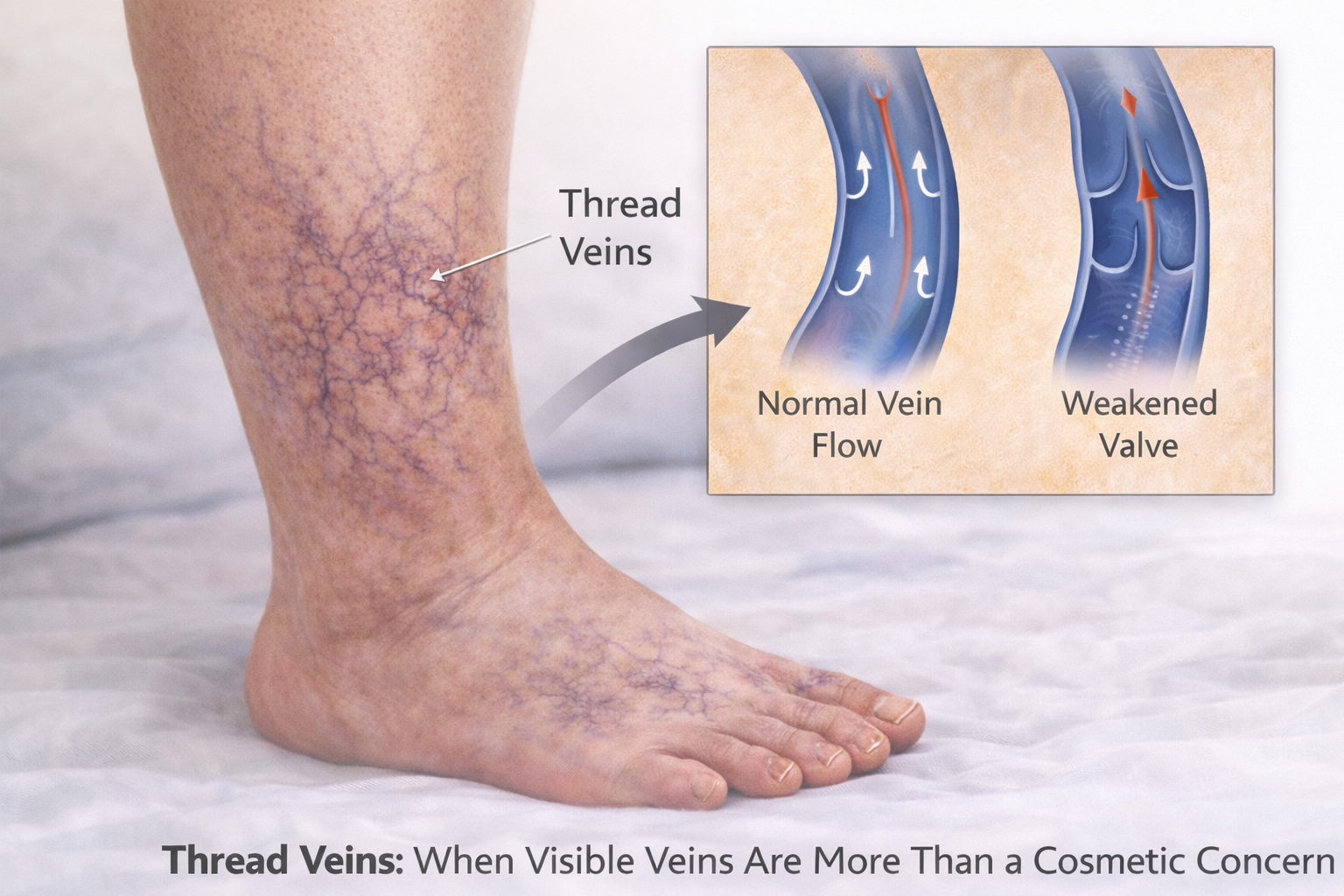
Thread veins are small, thin veins that appear close to the surface of the skin, commonly on the legs and face. Many people consider them a cosmetic issue and ignore them for years. However, in some cases, thread veins may indicate underlying circulation problems that deserve medical attention.
Understanding why thread veins develop and when they need evaluation can help prevent discomfort and future complications.
What Are Thread Veins?
Thread veins, also known as spider veins, are tiny dilated blood vessels that appear red, blue, or purple. They often spread in a web-like pattern and are most visible on the thighs, calves, and ankles.
These veins form when small valves inside the veins weaken, allowing blood to pool rather than flow efficiently back toward the heart.
Common Causes of Thread Veins
Thread veins can develop due to several factors, including:
-
Weak vein valves leading to poor blood circulation
-
Prolonged standing or sitting
-
Hormonal changes, especially during pregnancy
-
Aging and reduced skin elasticity
-
Family history of vein problems
In some cases, thread veins appear alongside varicose veins, suggesting a deeper vein issue.
Symptoms Patients Often Experience
While thread veins may not always cause pain, many patients report symptoms that affect daily comfort, such as:
-
Aching or heaviness in the legs
-
Mild burning or itching
-
Leg fatigue after long periods of standing
-
Swelling around the ankles
-
Increased visibility of veins over time
These symptoms may worsen by the end of the day or in warm weather.
When Thread Veins May Signal a Bigger Problem
Although thread veins are often harmless, they can sometimes be an early sign of venous insufficiency. Ignoring symptoms may allow vein problems to progress.
Possible risks include:
-
Worsening leg discomfort
-
Development of larger varicose veins
-
Chronic leg swelling
-
Skin changes due to poor circulation
Early evaluation helps identify whether the issue is limited to surface veins or linked to deeper circulation problems.
Who Is at Higher Risk?
Thread veins are more common in people who:
-
Spend long hours standing or sitting
-
Have a family history of vein disease
-
Are overweight
-
Have experienced multiple pregnancies
-
Have previously had vein-related problems
Awareness of these risk factors helps in early recognition.
How Thread Veins Are Evaluated
Evaluation focuses on understanding blood flow in the legs. Doctors may examine vein patterns and assess whether deeper veins are functioning properly. Identifying the underlying cause is essential for effective management.
Management and Care Options
Management depends on symptoms and underlying circulation health. Common approaches include:
-
Lifestyle changes to improve blood flow
-
Avoiding prolonged standing or sitting
-
Leg elevation and regular movement
-
Targeted treatment for affected veins when needed
Early care can prevent progression and improve comfort.
Patient Intent: When Should You Seek Advice?
If thread veins are accompanied by pain, swelling, or heaviness, or if they worsen rapidly, it is important to seek medical advice. Addressing the problem early can prevent more serious vein conditions.
Conclusion
Thread veins are often dismissed as cosmetic, but they can sometimes reflect deeper circulation issues. Paying attention to symptoms and seeking timely evaluation can help maintain healthy blood flow and prevent future complications.

 English
 Arabic
 French
 Spanish
 Portuguese
 Deutsch
 Turkish
 Dutch
Dutch
 Italiano
 Russian
 Romaian
 Greek
Greek