


Matter, Alexa, and Google: Competitive Forces Reshaping Smart Homes
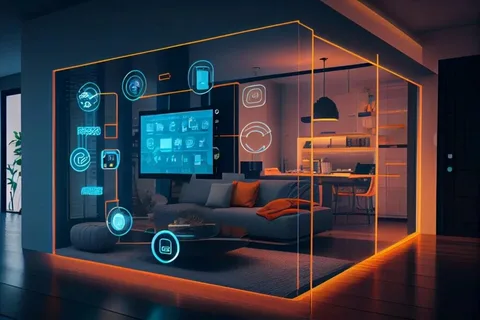
The global smart home solutions market is undergoing a transformative phase, reshaping how households interact with technology, energy, and security systems. In 2025, the market was valued at US$113.4 billion, reflecting widespread adoption of connected home devices across both developed and emerging economies. Driven by rapid advances in IoT ecosystems, artificial intelligence, and cloud-based automation, the market is projected to reach US$231.0 billion by 2032, growing at a robust CAGR of 10.7% during the forecast period.
This growth trajectory underscores a fundamental shift in consumer behavior. Smart homes are no longer niche or luxury installations; they are becoming an integral component of modern living. From automated lighting and climate control to voice-activated assistants and AI-enabled security systems, smart home solutions are delivering tangible benefits in convenience, energy efficiency, safety, and long-term cost savings.
Rising IoT Proliferation Driving Market Expansion
One of the strongest catalysts behind the smart home solutions market growth is the explosive rise in Internet of Things (IoT) devices. In 2025 alone, the number of connected devices globally reached 21.1 billion, expanding at an annual growth rate of 14%. Household penetration has surged to 77.6%, highlighting the near-ubiquitous presence of connected technologies in residential environments.
Smart sensors, connected thermostats, intelligent lighting systems, and networked appliances are forming interconnected ecosystems that continuously learn from user behavior. This seamless integration allows homeowners to automate daily routines, optimize energy consumption, and enhance security with minimal manual intervention. As device interoperability improves, households increasingly view smart home solutions as long-term infrastructure investments rather than optional upgrades.
Voice Assistants and AI Transforming User Experience
The widespread adoption of voice assistants, particularly platforms such as Amazon Alexa and Google Assistant, has significantly accelerated smart home penetration. Voice control has lowered the complexity barrier for consumers, enabling effortless management of multiple devices through natural language commands.
AI-powered automation has further enhanced the user experience by enabling predictive behavior. Smart systems can now learn occupant schedules, automatically adjust lighting and temperature, and provide real-time alerts for security or energy anomalies. These features are transforming smart homes into responsive living environments that adapt dynamically to user needs.
As AI models become more sophisticated, software-driven personalization is expected to become a key competitive differentiator across smart home ecosystems.
Energy Efficiency as a Core Value Proposition
Energy efficiency has emerged as one of the most compelling drivers of smart home adoption. Automated climate control systems and smart lighting solutions are enabling households to reduce utility costs by up to 20%, delivering measurable financial returns alongside environmental benefits.
Smart thermostats optimize heating and cooling based on occupancy patterns, weather forecasts, and real-time energy pricing. Similarly, intelligent lighting systems minimize energy waste through motion detection and daylight optimization. As global energy prices remain volatile and sustainability goals intensify, energy-efficient smart home solutions are becoming increasingly attractive to cost-conscious consumers.
Property Type Segmentation: Apartments Lead, Villas Accelerate
From a property type perspective, apartments dominate the smart home solutions market, accounting for 48.3% of total market share. High urban density, smaller living spaces, and tech-savvy residents have made apartments ideal environments for connected home devices. Multi-dwelling units also benefit from standardized infrastructure, enabling easier installation of smart security, lighting, and access control systems.
In contrast, villas and bungalows represent the fastest-growing segment, expanding at a 12% CAGR. This growth is fueled by higher disposable incomes and increasing demand for comprehensive, whole-home automation. Homeowners in this segment typically allocate US$8,000 to US$25,000 per property for integrated smart home solutions, including centralized control panels, advanced security, and customized automation scenarios.
Component Analysis: Hardware Dominance Meets Software Acceleration
The hardware segment continues to hold the largest share of the smart home solutions market, accounting for 42.2% of total revenue. This dominance reflects ongoing demand for physical devices such as smart speakers, sensors, hubs, cameras, locks, and environmental monitors. As new households adopt smart technologies, initial device procurement remains a critical revenue driver.
However, software is the fastest-growing component segment, registering a 12–15% CAGR. Growth in this segment is driven by AI-enabled automation platforms, cloud-based analytics, and subscription-based services. Consumers are increasingly willing to pay US$15–40 per month for premium features such as advanced security monitoring, predictive energy management, and personalized automation workflows.
This shift highlights a broader industry transition from one-time hardware sales toward recurring software and service revenues.
Application Trends: Retrofit Installations Dominate the Market
Retrofit installations account for a commanding 67.3% share of the global smart home solutions market. With approximately 1.2 billion existing homes worldwide, retrofit solutions allow homeowners to adopt smart technologies incrementally without major structural changes.
Wireless connectivity, plug-and-play devices, and cloud-based platforms have significantly reduced installation complexity, making smart upgrades accessible to a wider consumer base. Retrofit solutions are particularly popular for security systems, smart lighting, and voice-controlled devices, which deliver immediate benefits with minimal upfront investment.
New Construction Emerges as a High-Growth Opportunity
While retrofits dominate current demand, new construction projects represent the fastest-growing application segment, expanding at a 14–18% CAGR. Builders and real estate developers are increasingly partnering with smart home solution providers to deliver “smart-ready” homes.
These partnerships can reduce installation costs by 40–60% compared to post-construction retrofits. Moreover, smart-enabled homes command 3–5% price premiums, making them attractive to both developers and buyers. Integrated smart infrastructure is rapidly becoming a standard feature in modern residential developments, particularly in urban and suburban markets.
Regional Analysis: North America Leads, Asia Pacific Accelerates
North America remains the largest regional market, holding approximately 35% of global share and growing at a 9.8% CAGR. The region benefits from high consumer awareness, advanced digital infrastructure, and strong ecosystem leadership from major technology companies. The U.S. smart home market alone is valued at US$43 billion, reflecting widespread adoption across both single-family and multi-family housing.
In contrast, Asia Pacific is the fastest-growing region, registering an impressive 28% CAGR. China accounts for 40% of the regional market, supported by large-scale urbanization and government-backed smart city initiatives. India is emerging as a high-potential market, growing at 25% CAGR, driven by expanding middle-income households, rising smartphone penetration, and increasing awareness of energy efficiency.
Competitive Landscape and Strategic Developments
The smart home solutions market is highly competitive, with global technology giants shaping ecosystem dynamics. Amazon leads the market with a 28% share, driven by its expansive Alexa ecosystem and strong third-party device compatibility. Google follows closely with 24%, leveraging its AI expertise and deep integration with Android platforms.
Apple and Samsung each hold approximately 12% market share, targeting premium and ecosystem-centric consumers. Apple’s focus on privacy and seamless device integration appeals to high-end users, while Samsung leverages its broad appliance portfolio to deliver end-to-end smart home experiences.
Matter Standard Enhancing Interoperability
One of the most significant industry developments is the growing adoption of the Matter standard, which aims to improve cross-platform interoperability among smart home devices. By enabling seamless communication across ecosystems, Matter is reducing consumer friction and encouraging broader adoption.
Improved interoperability also benefits manufacturers by expanding addressable markets and simplifying product development. As Matter adoption accelerates, it is expected to play a crucial role in shaping the next phase of smart home ecosystem expansion.
Emerging Markets Represent a US$45 Billion Opportunity
Looking ahead, emerging markets represent a US$45 billion opportunity by 2032. Demand in these regions is being driven by affordable smart home devices, localized software platforms, and increasing smartphone penetration. Manufacturers are introducing cost-effective solutions tailored to regional needs, such as energy monitoring systems designed for unstable power grids and localized voice assistants supporting regional languages.
This localization strategy is expected to unlock mass-market adoption, particularly in Asia, Latin America, and parts of Africa.
Future Outlook: From Smart Homes to Intelligent Living
The future of the smart home solutions market lies in the transition from connected devices to fully intelligent living environments. Advancements in AI, machine learning, and predictive analytics will enable homes to anticipate user needs rather than simply respond to commands.
Integration with renewable energy systems, electric vehicle charging infrastructure, and smart grids will further enhance the value proposition. As affordability improves and interoperability challenges diminish, smart home solutions are poised to become a standard feature of residential living worldwide.
Conclusion
The global smart home solutions market is on a strong growth trajectory, driven by IoT proliferation, AI-enabled automation, energy efficiency imperatives, and evolving consumer expectations. With market size projected to reach US$231.0 billion by 2032, opportunities abound across hardware, software, retrofit applications, and emerging markets.
As technology ecosystems mature and interoperability improves, smart homes will increasingly redefine how people live, manage energy, and interact with their surroundings—marking a pivotal shift toward smarter, more sustainable living environments.
Related Reports:

 English
 Arabic
 French
 Spanish
 Portuguese
 Turkish
 Dutch
Dutch
 Italiano
 Russian
 Romaian
 Portuguese (Brazil)
 Greek
Greek