


PLC-SCADA Integration: Transforming Industrial Process Control in 2026
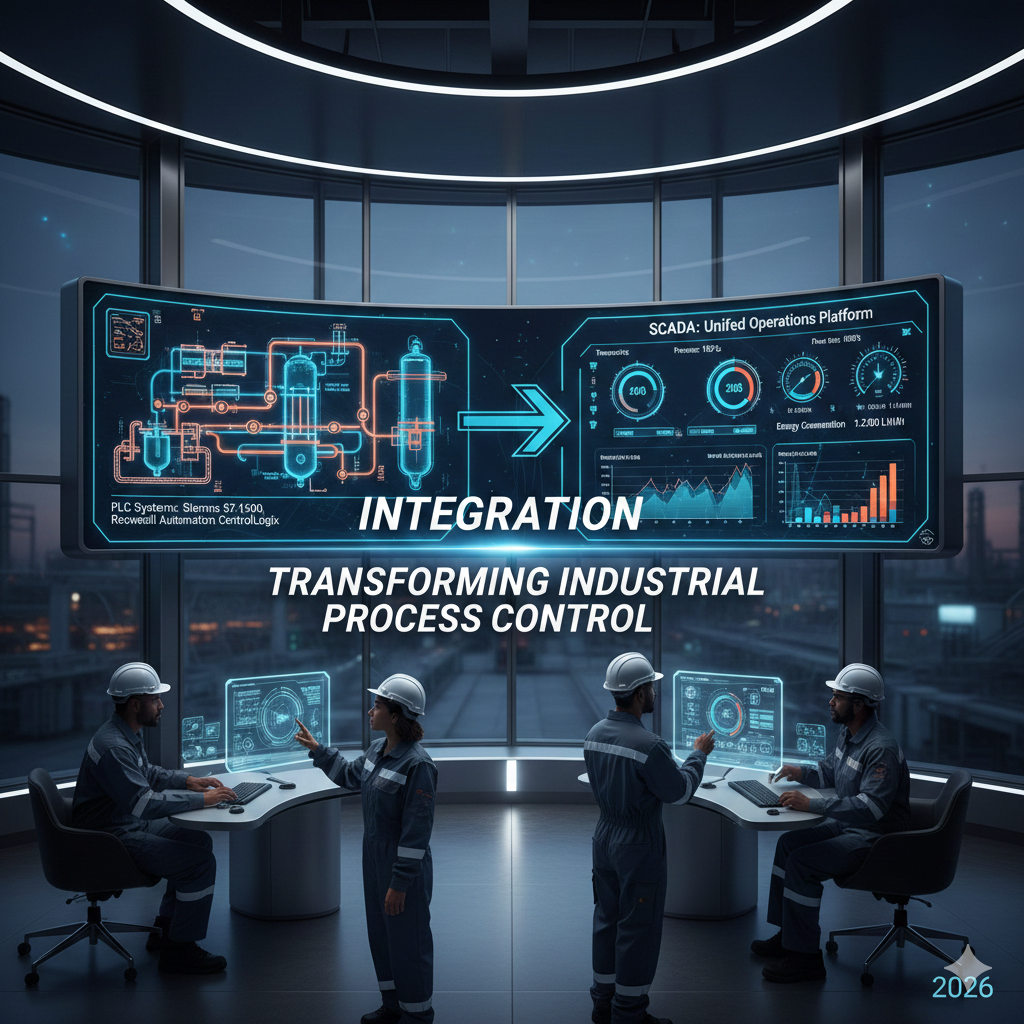
Industrial automation has evolved rapidly over the last decade, but 2026 marks a new phase where sensors, software, machinery, and data intelligence are working together seamlessly. At the centre of this transformation is PLC-SCADA integration, a combination that is enabling factories to achieve higher efficiency, faster decision-making, and better visibility.
Today, industries are moving beyond manual intervention and outdated relay-based systems. They are adopting automation frameworks that help them monitor, control, optimise, and predict operations in real time. PLC-SCADA integration has become the backbone of modern industrial control — and this blog explains how it works, why it matters, and what industries gain by upgrading to it.
What is PLC-SCADA Integration?
A Programmable Logic Controller (PLC) is an industrial computer used to control machines, processes, and sequences. It performs logic operations and executes instructions to drive equipment behaviour.
SCADA (Supervisory Control and Data Acquisition) is a software-based monitoring and control system that collects live data from equipment, visualises information, generates alarms, and gives operators complete oversight.
When these two systems are integrated:
-
PLC handles real-time field control
-
SCADA manages visualisation, analysis, and decision support
Together, they form a powerful automation architecture that gives industries accuracy, stability, and intelligence.
Why PLC-SCADA Integration Matters in 2026
Industries today require more than basic control. They demand:
-
Higher productivity
-
Predictive insights
-
Remote access
-
Energy efficiency
-
Safety compliance
-
Lower downtime
PLC-SCADA integration delivers all of these goals. Modern plants operate with complex machinery, and manual monitoring is no longer practical. Integrated systems create a centralised automation environment where data and control flow smoothly between machines and decision-makers.
key Benefits of PLC-SCADA Integration
1️⃣ Real-Time Operational Visibility
SCADA dashboards provide live production values, machine status, and performance analytics. Operators can identify inefficiencies instantly — no guesswork, no delay.
2️⃣ Reduced Downtime
Predictive alarms highlight issues before machines fail. PLC-SCADA systems help maintenance teams plan ahead, preventing sudden breakdowns and costly idle hours.
3️⃣ Improved Production Accuracy
PLC logic eliminates human error and maintains consistency in every process, which improves product quality, speed, and compliance.
4️⃣ Better Remote Access
Factories are no longer bound by local control rooms. SCADA allows remote monitoring from mobile devices or web dashboards, improving flexibility and response time.
5️⃣ Enhanced Safety
Critical process thresholds are automatically controlled, monitored, and recorded. Whether it’s temperature, torque, pressure, or motion — integrated alerts prevent hazardous conditions.
6️⃣ Optimised Energy Usage
With energy analytics integrated into PLC-SCADA systems, industries reduce power waste and align load consumption with operational requirements.
Where PLC-SCADA Integration is Used
PLC-SCADA systems are deployed across major industrial sectors, including:
-
Power generation
-
Manufacturing
-
Water treatment
-
Pharma formulation
-
Food & beverage processing
-
Automotive
-
Packaging
-
Oil & gas
-
Chemical refining
These industries rely on continuous production, precision, and safety — making automation integration essential for growth and survival.
Role of Analytics and IoT in 2026
Modern PLC-SCADA systems are no longer isolated. They are connected to smart sensors, IoT platforms, and cloud analytics. This unlocks:
-
Predictive maintenance
-
AI-based forecasting
-
Energy optimisation
-
Data-driven decision making
-
Digital twin modelling
-
Paperless reporting
With Industry 4.0 expanding, factories are stepping into a future where automation systems learn and adapt continuously.
Common Industrial Challenges Solved by Integration
✔ Manual process errors
✔ Inconsistent production cycles
✔ Missing field data
✔ High downtime
✔ Poor energy control
✔ Lack of traceability
✔ Limited safety compliance
PLC-SCADA integration provides full control and clarity — turning industrial uncertainty into predictable performance.
Future Growth Potential
By the end of 2026, PLC-SCADA adoption is expected to grow globally across both small-scale and large-scale industries. Automation costs are becoming more affordable, while data intelligence is becoming more necessary. Factories that adopt integrated systems now will stay competitive in productivity, sustainability, and cost efficiency.
Conclusion
PLC-SCADA integration is no longer a luxury — it is a fundamental requirement for industries that want to scale. The combination of PLC accuracy and SCADA visibility creates a reliable, efficient, and future-ready automation environment. With rapid digital transformation taking place in 2026, industries that integrate today will operate smarter, faster, and more profitably tomorrow.

 English
 Arabic
 Spanish
 Portuguese
 Deutsch
 Turkish
 Dutch
Dutch
 Italiano
 Russian
 Romaian
 Portuguese (Brazil)
 Greek
Greek