


Why Your Site Isn't Ranking: The Technical SEO Solution
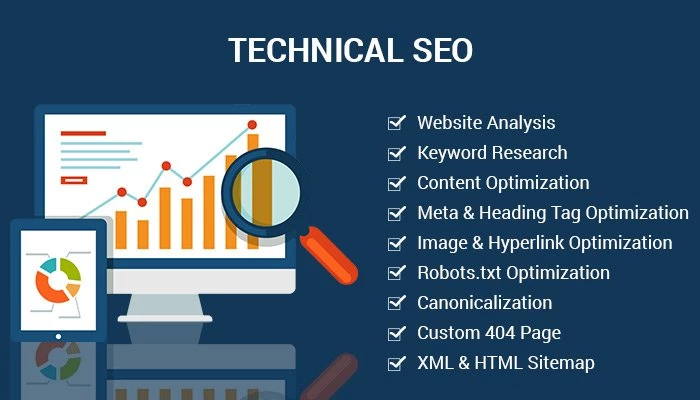
Let’s be blunt: most business owners treat technical SEO like a basement furnace. You don't care how it works until the house gets cold. But in the shark-infested waters of the US search market, ignoring your site’s infrastructure is like trying to race a Ferrari with a clogged fuel line. You can have the best content in the world, but if Googlebot hits a wall of JavaScript errors or a messy URL structure, your ROI stays at zero.
I’ve spent years digging through the wreckage of sites that "should" have ranked. They had the backlinks. They had a flashy design. Yet, they were invisible. Why? Because their technical foundation was a house of cards. Top-tier agencies don't just "fix errors"; they build resilient digital assets.
The Technical Debt Crisis: Why US Business Owners Can’t Ignore SEO Infrastructure
Technical debt isn't just a buzzword for developers. It is a silent killer of profit margins. Every time your team hacks together a new landing page or installs a "quick fix" plugin, you add a layer of complexity that slows down search engines.
Google’s 2024 and 2025 updates have leaned heavily into Interaction to Next Paint (INP). This isn't just about how fast a page loads; it’s about how snappy it feels when a user clicks a button. If your site feels sluggish, your conversion rate dies. Expert SEO services in USA focus on this because user frustration is a direct ranking signal.
Infrastructure matters. Period. If your site isn't architected for growth, you are burning money on every other marketing channel you touch.
Evaluating the Top 10 Technical SEO Barriers in 2025
The landscape has shifted. We aren't just fighting for keywords anymore; we are fighting for "crawling efficiency."
Indexing & Crawl Budget Wastage (The 'Ghost Page' Problem)
Google doesn't have infinite time for your website. They assign a "crawl budget." If your site is bloated with thin pages, filtered search results, or endless redirect chains, Googlebot leaves before it finds your money pages. Agencies solve this by pruning the dead weight. We use noindex tags like a scalpel to ensure only high-value pages see the light of day.
Core Web Vitals & The Transition from FID to INP
First Input Delay (FID) is dead. Long live Interaction to Next Paint (INP). This metric measures the delay for all interactions on a page. Think of it as the difference between a door that sticks and one that glides open. High-end technical SEO service providers use tools like PageSpeed Insights and CrUX data to shave milliseconds off these interactions.
JavaScript Rendering: Handling React, Vue, and Angular Frameworks
Modern web apps are beautiful but can be a nightmare for SEO. If your content is tucked away inside a JavaScript file that Google struggles to render, you might as well be writing in invisible ink. Agencies utilize Server-Side Rendering (SSR) or Dynamic Rendering to ensure the "rendered HTML" is served directly to the bot.
Architectural Fragility: Site Hierarchy and Orphaned URLs
An orphaned URL is a page with no internal links pointing to it. It’s a lonely island in a vast sea. If Google can't find a path to the page through your site's navigation, it assumes the page is unimportant. We build "silo structures" that group related topics together, pushing authority from the homepage down to the deepest service pages.
Schema Markup & Entity Modeling for AI Search (GEO)
Search is no longer just about strings of text; it is about "entities." Google wants to know what you are, not just what you say. By implementing advanced JSON-LD schema markup, agencies define the relationships between your brand, your services, and your location. This is the bedrock of Generative Engine Optimization (GEO).
How Elite SEO Agencies Process Technical Audits
A real audit isn't a 50-page PDF generated by a tool. That’s fluff. A real audit is a prioritized roadmap.
It starts with Log File Analysis. This is where the forensics happen. By looking at server logs, we see exactly which pages Google hits and how often. If the bot spends 80% of its time on your "Privacy Policy" and 2% on your "Service" page, you have a massive efficiency problem.
Next comes the Database vs. Crawler Comparison. We compare what’s in your database—all your products or posts—with what the crawler actually sees. Often, thousands of pages are "missing" simply because the internal linking is broken.
Finally, we address Rendering Checks and Entity Alignment. This ensures that JS-heavy sites are actually indexed and that your brand connects correctly to the global Knowledge Graph.
The Agency Workflow: From Detection to Deployment
The biggest bottleneck in SEO is almost always the "Dev Queue." Agencies that win are the ones that speak the language of developers. We don't just send a list of problems; we send tickets with clear requirements, expected outcomes, and "why" it matters for the bottom line.
Using staging environments is non-negotiable. We never test "fixes" on a live site. We break things in a sandbox, fix them, and then deploy. This prevents the dreaded "ranking drop" that happens when a simple header change accidentally breaks the site's CSS.
Measuring Success: Technical KPIs for the C-Suite
Stop looking at "keyword rankings" as the only metric. If you want to know if your technical SEO is working, look at these four critical signals.
First, watch your Crawl Frequency. If Google visits your site more often, it means the bot trusts your infrastructure. Second, check your Indexing Ratio. You want at least 95% of your submitted URLs to be in the index. Third, monitor your Core Web Vitals Pass Rate. Your site must get that "Good" green checkmark in the Search Console. Finally, track Time to First Byte (TTFB). If your server is slow, your rankings will eventually fall.
How to Select a Technical SEO Partner in the USA
Not all agencies are created equal. Many will promise "backlinks" but ignore the fact that your site takes 10 seconds to load.
Questions CXOs Should Ask
-
"Can you show me a log file analysis you've performed for a similar-sized site?"
-
"How do you handle JavaScript rendering for SEO?"
-
"What is your process for collaborating with our internal dev team?"
Red Flags: The "Set and Forget" Fallacy
If an agency says technical SEO is a "one-time fix," run. The web is dynamic. Google changes. Your site changes. Technical SEO is a continuous process of maintenance and optimization.
Expert Insights: The Future of Search Infrastructure
We are moving toward a world where the "head" of the site matters more than the "body." As AI agents start browsing the web for users, they will look for structured data and clean API-like responses. Your website is no longer just a digital brochure; it’s a data source for LLMs.
Ensuring your site is readable by both humans and machines is the ultimate challenge. Those who master the "entity" layer will dominate the next decade of search.
Technical SEO Frequently Asked Questions
Q: How long does it take to see results from technical SEO?
A: Unlike content, which can take months to rank, technical fixes often result in a "step-function" jump in traffic within weeks as Google re-crawls the site and realizes the barriers are gone.
Q: Is site speed a direct ranking factor?
A: Yes, but it’s more of a "tie-breaker." If two sites have equally good content, the faster one wins. More importantly, speed directly impacts conversion rates.
Q: Do I need a new website to fix technical SEO?
A: Rarely. Usually, it’s about cleaning up the existing code and optimizing the server environment. A full rebuild is only necessary if the CMS is completely obsolete.
Final Words for Business Leaders
Technical SEO isn't an "extra" service; it is the foundation of your entire digital presence. Without a clean, fast, and indexable site, you are essentially trying to build a skyscraper on a swamp.
At Brighton Ashbury, we don't just guess. We use data-driven forensics to identify exactly what is holding your site back. Whether it's a messy migration or a slow-loading platform, we provide the technical SEO service that drives real-world growth for US businesses. Stop letting small errors eat your profits.

 English
 Arabic
 French
 Spanish
 Deutsch
 Turkish
 Dutch
Dutch
 Italiano
 Russian
 Romaian
 Portuguese (Brazil)
 Greek
Greek