


Industrial, Automotive, and Medical Demand Fueling Piezoresistive Sensors
The global piezoresistive pressure sensor market is undergoing steady expansion as pressure-sensing technologies become indispensable across automotive, industrial, and medical applications. In 2026, the market is likely to be valued at US$ 5.7 billion and is projected to reach US$ 7.7 billion by 2033, growing at a CAGR of 4.4% during the forecast period from 2026 to 2033. This sustained growth trajectory reflects increasing demand for precise, reliable, and cost-effective pressure measurement solutions in safety-critical and performance-driven environments.
Piezoresistive pressure sensors, which convert mechanical stress into electrical resistance changes, are widely preferred for their high sensitivity, linear output, and compatibility with semiconductor manufacturing. As industries increasingly adopt automation, digital monitoring, and regulatory-compliant measurement systems, piezoresistive sensors are emerging as a foundational component of modern sensing architectures.
Understanding Piezoresistive Pressure Sensor Technology
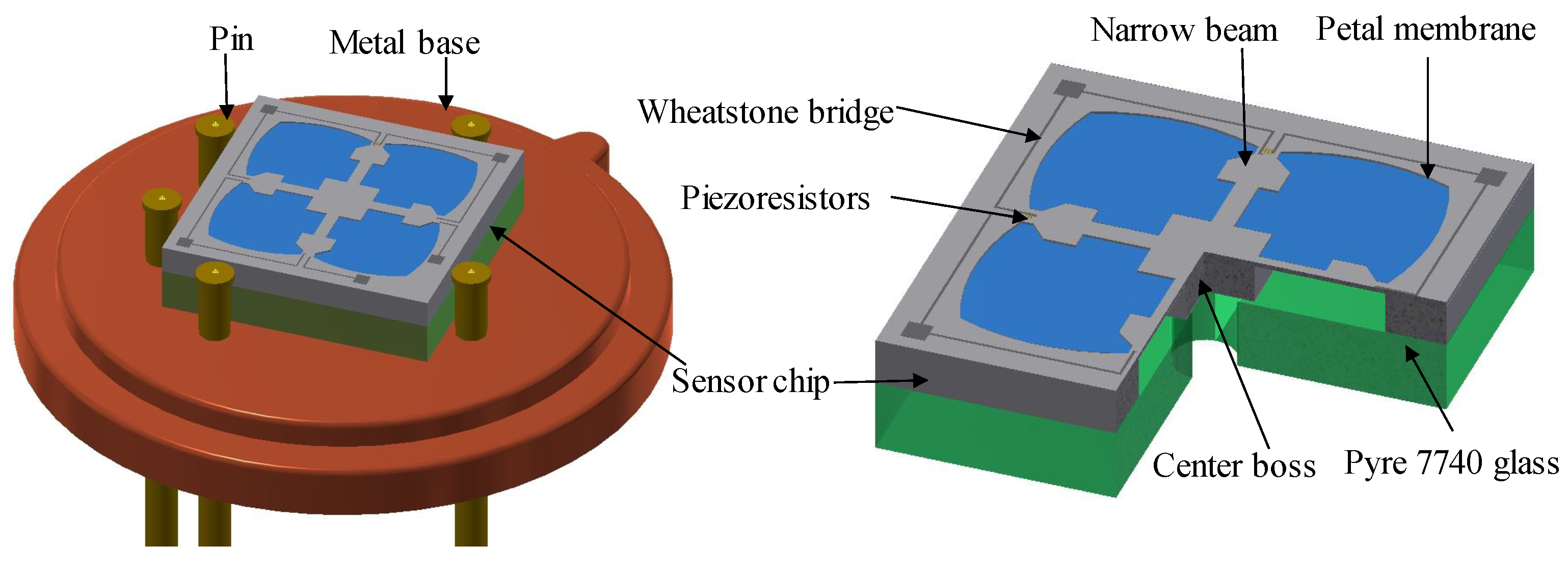
Piezoresistive pressure sensors operate on the principle that the electrical resistance of certain materials—typically doped silicon—changes when mechanical stress is applied. When pressure deforms a diaphragm within the sensor, embedded piezoresistors detect this strain and convert it into a proportional electrical signal.
This technology offers several advantages over alternative pressure-sensing methods. Piezoresistive sensors provide excellent sensitivity across a wide pressure range, strong signal stability, and straightforward signal conditioning. Their ability to be integrated into MEMS (Micro-Electro-Mechanical Systems) further enhances miniaturization, performance consistency, and mass production scalability.
These characteristics make piezoresistive sensors especially suitable for applications that require accurate pressure measurement under dynamic operating conditions, such as engine control systems, industrial process monitoring, and medical diagnostic devices.
Market Size Outlook and Growth Dynamics
The steady expansion of the piezoresistive pressure sensor market is driven by growing end-use demand rather than speculative adoption. Automotive manufacturers, industrial operators, and healthcare device developers increasingly rely on real-time pressure data to optimize performance, ensure safety, and meet regulatory standards.
Between 2026 and 2033, market growth is expected to remain moderate but resilient. Unlike rapidly commoditizing sensor segments, piezoresistive sensors benefit from long-term application relevance, especially in industries where reliability and measurement accuracy outweigh cost sensitivity. Additionally, advancements in MEMS fabrication are lowering production costs while improving sensor durability and output consistency, supporting broader adoption.
Key Industry Highlights Shaping the Market
Absolute Pressure Sensors Lead by Sensor Type
Among sensor types, absolute pressure sensors are expected to dominate the market, accounting for approximately 48% of total revenue in 2026. These sensors measure pressure relative to a perfect vacuum, making them particularly valuable in applications where altitude, atmospheric variation, or sealed system pressure must be precisely monitored.
Automotive engine management systems, industrial vacuum processes, and aerospace instrumentation heavily rely on absolute pressure sensors. Their ability to deliver accurate readings regardless of environmental pressure fluctuations makes them indispensable across diverse operating conditions.
Medium-Pressure Sensors Dominate by Pressure Range
By pressure range, medium-pressure sensors are projected to contribute around 52% of market revenue in 2026. This dominance reflects their widespread usage across automotive systems, factory automation equipment, HVAC systems, and industrial machinery.
Medium-pressure sensors strike a balance between sensitivity and robustness, allowing them to function reliably in environments that experience pressure fluctuations without extreme conditions. Their versatility supports sustained demand across multiple industries, reinforcing their leading market position.
Automotive Industry as the Largest End-Use Segment
The automotive sector is expected to account for approximately 38% of total market revenue in 2026, making it the largest end-use industry for piezoresistive pressure sensors. Modern vehicles rely extensively on pressure sensors for manifold air pressure, fuel injection systems, brake hydraulics, transmission control, and tire pressure monitoring.
The increasing electrification of vehicles and the integration of advanced driver-assistance systems (ADAS) are further expanding the number of sensors per vehicle. Even as automotive architectures evolve, accurate pressure measurement remains fundamental to safety, efficiency, and emissions compliance.
Healthcare Emerges as the Fastest-Growing End-Use Industry
While automotive dominates current market share, healthcare represents the fastest-growing end-use segment, projected to expand at a CAGR of approximately 10% through 2033. This growth is driven by the rapid digitalization of medical devices and rising demand for minimally invasive diagnostics.
Piezoresistive pressure sensors are widely used in ventilators, blood pressure monitors, infusion pumps, catheters, and respiratory monitoring equipment. The increasing adoption of connected medical devices and remote patient monitoring solutions is accelerating sensor integration, particularly in precision-critical applications.
Regional Market Analysis
Asia Pacific Leads Global Market Share
Asia Pacific is anticipated to dominate the global piezoresistive pressure sensor market, capturing approximately 38% market share in 2026. This regional leadership is supported by large-scale automotive production, expanding electronics manufacturing ecosystems, and strong industrial automation investments.
Countries such as China, Japan, South Korea, and India host extensive semiconductor fabrication facilities and sensor manufacturing operations. Government initiatives supporting domestic electronics production and smart manufacturing further strengthen regional supply chains and demand growth.
North America Maintains Strong Technology Adoption
North America continues to represent a significant market due to its advanced automotive sector, strong aerospace industry, and leadership in medical device innovation. Stringent regulatory requirements related to safety, emissions, and healthcare quality drive consistent demand for high-performance pressure sensing solutions.
The region also benefits from ongoing research and development activities focused on sensor miniaturization, accuracy enhancement, and integration with digital platforms.
Europe Driven by Industrial and Automotive Regulations
Europe’s piezoresistive pressure sensor market is shaped by strict environmental regulations, workplace safety standards, and advanced automotive engineering. The region’s strong focus on industrial automation, renewable energy systems, and medical technology supports stable sensor demand.
European manufacturers emphasize sensor reliability, long-term stability, and compliance with regulatory frameworks, reinforcing demand for precision pressure measurement technologies.
Role of MEMS Manufacturing Expansion
The expansion of MEMS manufacturing capacity plays a pivotal role in reinforcing market growth. MEMS-based piezoresistive sensors enable compact form factors, improved signal consistency, and high-volume production efficiency. As fabrication processes mature, manufacturers can achieve higher yields while reducing per-unit costs.
This scalability enhances supply stability and makes piezoresistive sensors more accessible to emerging applications, including consumer electronics, wearable devices, and smart infrastructure systems. The convergence of MEMS technology with advanced packaging techniques further improves sensor robustness and environmental resistance.
Regulatory and Compliance Factors Driving Adoption
Regulatory emphasis across industries is a critical driver for the piezoresistive pressure sensor market. Automotive emissions regulations require precise pressure measurement for optimized combustion and exhaust control. Industrial safety standards mandate accurate pressure monitoring in hazardous environments, while healthcare regulations demand high measurement accuracy and reliability.
Compliance with international standards not only boosts sensor demand but also encourages technological innovation, pushing manufacturers to develop sensors with improved accuracy, redundancy, and fault detection capabilities.
Competitive Landscape and Innovation Trends
The competitive landscape is characterized by established sensor manufacturers and specialized MEMS companies focusing on product differentiation through accuracy, durability, and application-specific customization. Continuous innovation in materials science, signal conditioning electronics, and digital interfaces is reshaping product offerings.
Manufacturers are increasingly integrating piezoresistive sensors with IoT-enabled systems, allowing real-time data transmission, predictive maintenance, and remote diagnostics. These advancements enhance sensor value beyond basic measurement, positioning them as intelligent components within connected ecosystems.
Challenges and Market Constraints
Despite steady growth, the market faces challenges related to temperature sensitivity, long-term drift, and competition from alternative sensing technologies such as capacitive and optical sensors. Addressing these limitations requires ongoing R&D investment and advanced calibration techniques.
Additionally, pricing pressure in high-volume applications can constrain margins, pushing manufacturers to optimize production efficiency while maintaining performance standards.
Future Outlook and Market Opportunities
Looking ahead, the piezoresistive pressure sensor market is expected to benefit from emerging opportunities in electric vehicles, smart factories, renewable energy systems, and advanced medical diagnostics. As industries increasingly rely on real-time data for decision-making, accurate pressure measurement will remain a core requirement.
The combination of regulatory enforcement, technological innovation, and expanding end-use applications positions the market for stable, long-term growth through 2033.
Conclusion
The global piezoresistive pressure sensor market is on a steady growth path, supported by expanding applications across automotive, industrial, and healthcare sectors. With a projected increase from US$ 5.7 billion in 2026 to US$ 7.7 billion by 2033, the market reflects sustained demand for reliable, high-precision pressure sensing solutions.
Dominance of absolute and medium-pressure sensors, strong automotive demand, rapid healthcare growth, and Asia Pacific’s manufacturing leadership collectively shape the competitive landscape. As MEMS manufacturing capacity expands and regulatory requirements intensify, piezoresistive pressure sensors will continue to play a critical role in enabling safer, smarter, and more efficient systems across industries.
Related Reports:

 English
 French
 Spanish
 Portuguese
 Deutsch
 Turkish
 Dutch
Dutch
 Italiano
 Russian
 Romaian
 Portuguese (Brazil)
 Greek
Greek