


Understanding Voltage and Current Switching by Relay Factories
Introduction: The Role of Relays in Switching
The Relay factory plays a vital role in producing relays that are integral to controlling voltage and current in electrical systems. These components act as electrical switches, enabling the control of power between circuits by responding to low-voltage signals. By producing high-quality relays, factories ensure that current and voltage can be switched safely and effectively, which is essential in numerous applications ranging from industrial machinery to home appliances. But how do relay factories design relays that can manage this process? Let’s explore how relays switch current and voltage in automation and electrical control systems.
The Basic Function of a Relay
At its core, a relay operates by using an electromagnet to open or close a set of contacts in response to an electrical signal. When the coil inside the relay receives current, it generates a magnetic field, causing the relay’s contacts to either connect or disconnect. This allows the relay to switch higher currents and voltages on the output side while being controlled by a low-voltage signal on the input side. The ability of relays to switch between different current and voltage levels is key to their use in controlling electrical systems in a variety of settings.
Voltage and Current Switching: How It Works
Relay factories produce different types of relays to manage the switching of both current and voltage, each suited for specific applications. For instance, when a relay is used to switch high-voltage AC (alternating current) or DC (direct current) circuits, the contacts within the relay must be rated to handle the maximum voltage and current that will flow through them. The electromagnetic field generated by the relay's coil pulls the contacts together or forces them apart, depending on whether the relay is designed to normally open or normally closed.
When a relay is activated, the low voltage applied to the coil of the relay causes a magnetic field to form, which moves the contacts. These contacts then either allow or interrupt the flow of current at the output, effectively switching the current and voltage. The contacts are designed to withstand the current passing through them and are insulated to avoid short circuits or arcing, which could cause damage to the relay and surrounding equipment.
Relay Factory Design for Safe Switching
A Relay Factory focuses on producing reliable and safe relays that meet the required voltage and current specifications. The design of the relay, including the selection of materials and the construction of the contacts, plays a significant role in its ability to switch both current and voltage safely. For example, the contacts in a relay are often made from silver or other conductive materials that are resistant to corrosion and wear, ensuring a long service life.
Factories also produce relays with various contact configurations—single-pole single-throw (SPST), double-pole double-throw (DPDT), and others—to provide versatility in switching different loads and circuits. Whether for residential, industrial, or automotive applications, relay factories ensure that the relays they manufacture are capable of handling the precise demands of voltage and current switching without compromising performance or safety.
The Essential Role of Relay Factories in Voltage and Current Control
Relay Factories play an essential role in the design and production of relays that enable the switching of voltage and current in a wide variety of applications. By using electromagnets and durable materials, these relays allow low-voltage control signals to manage high-voltage and high-current circuits safely and efficiently. The precision, reliability, and customization of relays produced by factories ensure that electrical systems, from industrial machinery to consumer electronics, operate smoothly and safely. Understanding the inner workings of these relays and the importance of factory manufacturing processes highlights the critical role that relay factories play in modern electrical control systems.
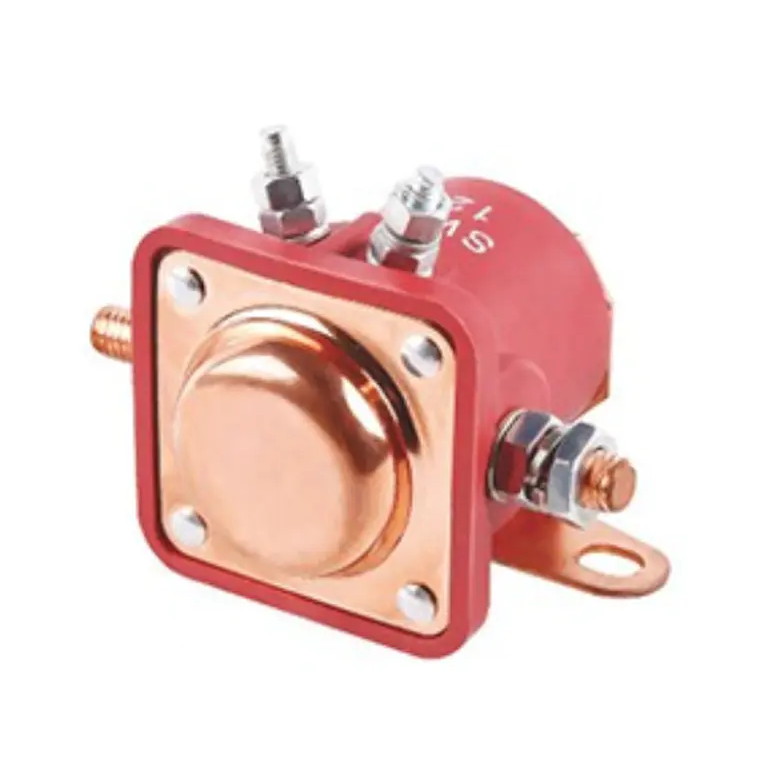
12V/24V
OEM: FORDB6AZ-11450-A SW-3
WAL: 66-200
Z M: 401

 English
 Arabic
 French
 Spanish
 Deutsch
 Turkish
 Dutch
Dutch
 Italiano
 Russian
 Romaian
 Portuguese (Brazil)
 Greek
Greek