


Why Full Face Auto Darkening Helmets Stand Out
The Evolution of Welding Helmets
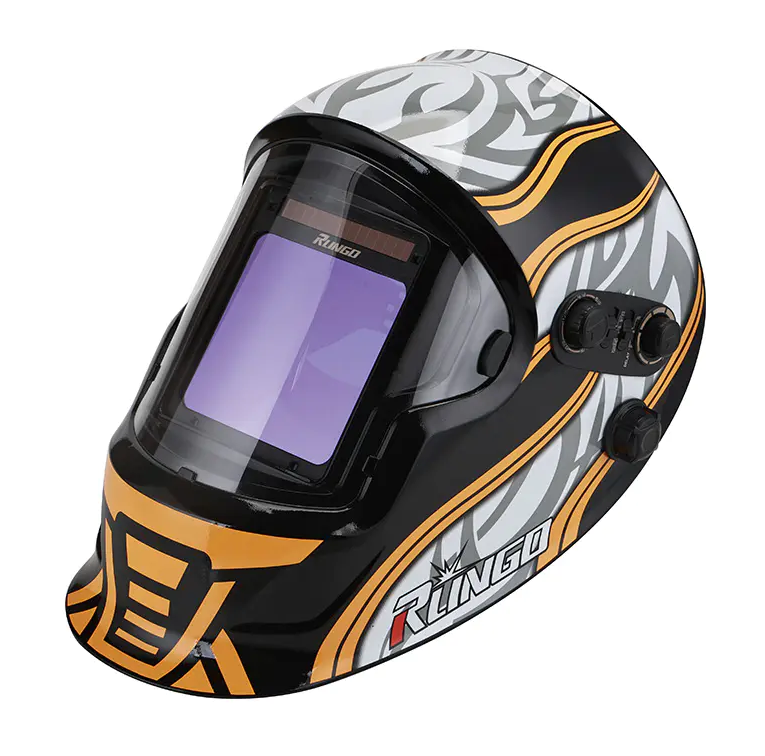
When it comes to welding safety gear, helmets are one of the most crucial components. Among the different types of welding helmets, the Full Face Auto Darkening Welding Helmet has gained popularity due to its advanced features, offering significant advantages over traditional models. The shift towards automatic darkening technology represents a leap in welding helmet design, improving both safety and comfort for welders. However, understanding how this modern helmet differs from its traditional counterparts is essential for choosing the right protective gear for specific welding tasks.
Auto Darkening Technology vs. Manual Adjustment
The primary difference between Full Face Auto Darkening Welding Helmets and traditional helmets lies in the lens technology. Traditional welding helmets rely on fixed dark lenses that do not adjust according to the welding environment. This means that welders must manually lift the helmet to assess their work or adjust their settings, which can be time-consuming and cumbersome. In contrast, the Full Face Auto Darkening Welding Helmet features a lens that automatically adjusts its shade in response to the light emitted during welding, providing welders with a clear, hands-free experience throughout the entire process. This automatic response reduces interruptions, allowing the welder to focus fully on their work, which is particularly beneficial for those working in high-intensity environments.
Comfort and Convenience
Comfort is a significant consideration when selecting welding helmets. Traditional helmets, while providing adequate protection, can often be heavier and more cumbersome, making extended use uncomfortable. These helmets tend to put more pressure on the neck and face, especially with longer welding sessions. On the other hand, Full Face Auto Darkening Welding Helmets are designed to be lightweight and ergonomic, often made with advanced materials like polyamide or fiberglass. These helmets distribute weight more evenly across the head, reducing fatigue. Moreover, the larger, clearer lenses in auto-darkening helmets offer better visibility, enabling welders to work more efficiently without needing to constantly reposition the helmet for better views.
Protection and Safety Features
Safety is another key difference between these two types of helmets. Traditional helmets provide basic protection against sparks and flying debris, but they do not offer the same level of shielding from harmful ultraviolet (UV) and infrared (IR) rays as the modern auto-darkening versions. The Full Face Auto Darkening Welding Helmet is designed with lenses that can block harmful UV and IR radiation automatically, providing more comprehensive protection. In addition, these helmets are typically built with stronger outer shells, reducing the risk of injury in case of accidental impacts. The automatic darkening feature further enhances safety by ensuring that welders always have proper eye protection, even when moving around or looking away from the welding arc.
Adaptability for Different Welding Techniques
Another key advantage of Full Face Auto Darkening Welding Helmets is their adaptability to various welding techniques. Traditional helmets typically come with a single lens shade, which may not be suitable for all types of welding. For instance, the brightness of different welding processes, such as MIG or TIG, can vary significantly, requiring different lens settings for optimal protection and visibility. With auto-darkening helmets, the lens adjusts instantaneously based on the intensity of the light, providing consistent protection across different welding applications without the need to change lenses or settings manually. This makes the auto-darkening helmet a versatile tool for welders working with different techniques.
Durability and Maintenance
In terms of durability, Full Face Auto Darkening Welding Helmets often come with advanced materials that enhance the overall longevity of the helmet. The lens in particular is designed to last longer, as it is built to resist scratches and impacts. Many models also feature rechargeable batteries or long-lasting solar-powered systems, which reduce the need for frequent battery changes—a problem often associated with traditional helmets with manual or basic electronic mechanisms. On the other hand, traditional helmets may show signs of wear more quickly, especially if they are frequently exposed to extreme temperatures or harsh working conditions.

 English
 Arabic
 French
 Spanish
 Portuguese
 Deutsch
 Dutch
Dutch
 Italiano
 Russian
 Romaian
 Portuguese (Brazil)
 Greek
Greek