 English
 Arabic
 French
 Spanish
 Portuguese
 Deutsch
 Turkish
 Dutch
Dutch
 Italiano
 Russian
 Romaian
 Portuguese (Brazil)
 Greek
Greek

Audizen for Tinnitus Relief – Audizen Reviews & Details
Health |
2026-02-26 10:28:46
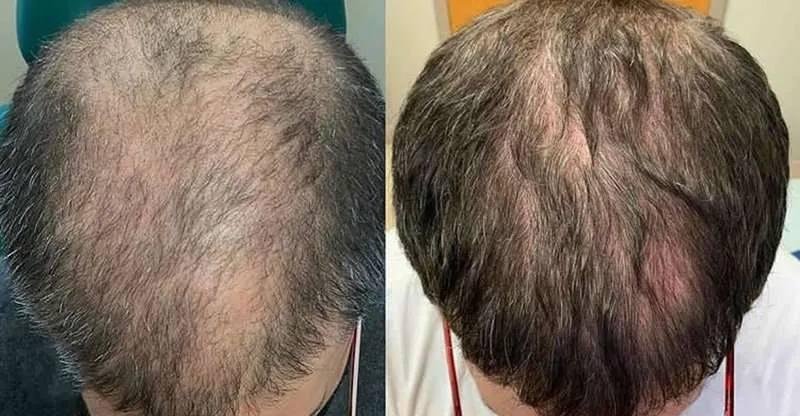
The medical landscape of the Kingdom has embraced a paradigm shift in how we approach follicular aging and cellular decay. Treating hair loss with exosomes in Riyadh(تساقط الشعر بالإكسوسومات في الرياض) has transitioned from a niche experimental offering to a frontline clinical standard in 2026, providing a biological solution that meets the high expectations of the Saudi population. Unlike traditional treatments that merely provide nutrients or block hormones, exosome therapy focuses on the "software" of the cell—the instructions that tell a hair follicle whether to grow, rest, or die. In the arid and demanding environment of Saudi Arabia, where environmental stressors can accelerate thinning, understanding the microscopic science of exosomes is the key to unlocking a permanent and non-surgical path to hair restoration.
To understand exosome therapy, one must first look beyond the hair follicle and into the world of intercellular communication. Exosomes are not cells; they are tiny, lipid-membrane-enclosed vesicles, approximately 30 to 150 nanometers in size, secreted by mesenchymal stem cells (MSCs).
In 2026, we understand these vesicles as the "signaling units" of the body. While stem cells were once thought to be the direct builders of tissue, we now know that they exert their regenerative power by releasing exosomes. These vesicles act as microscopic delivery vehicles, carrying a concentrated payload of:
Proteins and Cytokines: To reduce inflammation and trigger cell repair.
Messenger RNA (mRNA): To provide blueprints for protein synthesis within the hair bulb.
MicroRNA: To silence the genes responsible for follicular miniaturization and hair loss.
Growth Factors: Specifically VEGF (Vascular Endothelial Growth Factor) and KGF (Keratinocyte Growth Factor), which are essential for thick hair shafts.
The Saudi environment—characterized by intense UV radiation, high temperatures, and low humidity—can lead to "oxidative stress" in the scalp. This stress causes hair follicles to enter a premature resting phase. Exosome therapy provides a multi-dimensional biological counter-attack to these factors.
The primary cause of thinning is the shrinking of the follicle until it produces only "vellus" hair (peach fuzz). Exosomes deliver specific signals that "re-inflate" the follicle, increasing the diameter of the hair shaft and extending the Anagen (growth) phase. This turns fine, weak hair back into terminal, thick hair.
A major challenge in Riyadh’s climate is maintaining a robust blood supply to the scalp. Exosomes are potent stimulators of angiogenesis—the formation of new micro-blood vessels. By increasing the vascular network around the hair bulb, exosomes ensure that the follicle is constantly bathed in oxygen and nutrients, even when environmental conditions are harsh.
Micro-inflammation of the scalp is a hidden driver of androgenetic alopecia. Exosomes have natural immunomodulatory properties. They "reprogram" the scalp’s immune cells to stop attacking the follicles, creating a calm, fertile environment where growth can occur without interference.
While many patients in Saudi Arabia are familiar with Platelet-Rich Plasma (PRP), exosome therapy represents a significant technological upgrade in 2026.
| Feature | PRP (Platelet-Rich Plasma) | Exosome Therapy |
| Origin | Autologous blood (from the patient). | Purified stem cell vesicles. |
| Consistency | Varies based on patient age/health. | Standardized, high-potency concentration. |
| Preparation | Requires a painful blood draw. | Ready-to-use; no blood draw needed. |
| Cellular Impact | General growth stimulation. | Targeted genetic signaling and repair. |
| Procedure Time | 45–60 minutes. | 20–30 minutes. |
The administration of exosomes is a precise, medical-grade procedure. In the leading clinics of Riyadh, the process typically follows three steps:
Digital Scalp Mapping: Specialists use high-magnification cameras to identify areas of miniaturization and determine the optimal "dose" of exosomes required.
Microneedling or Micro-injection: To ensure the exosomes reach the dermal papilla (the root of the hair), the scalp is prepared using a microneedling device. This creates microscopic channels that allow the nano-sized vesicles to penetrate deep into the dermis.
Application: The purified exosome solution is applied, where the vesicles immediately begin seeking out damaged cells to begin the communication process.
Regenerative medicine is a marathon, not a sprint. Because exosomes are triggering a biological change, the results emerge in alignment with the natural hair growth cycle:
Weeks 0–4: A noticeable reduction in daily hair shedding.
Months 2–4: Improved hair texture; the "peach fuzz" begins to feel coarser and darker.
Months 6–9: Peak visible density. The "gaps" in the hairline or crown begin to fill in with new, terminal hair.
Maintenance: In 2026, most specialists recommend a single "booster" session every 8 to 12 months to maintain the signaling levels.
Exosomes represent the pinnacle of 2026 hair restoration technology in Saudi Arabia. By moving away from invasive surgeries and toward the science of cellular communication, patients can now address the root causes of hair loss with unprecedented precision. For those in Riyadh seeking a safe, science-backed, and non-surgical way to reclaim their hair's natural vitality, exosome therapy offers a window into the future of medicine—available today.



