


Stroke Rehabilitation at Home – Personalised Recovery Support for Your Loved One
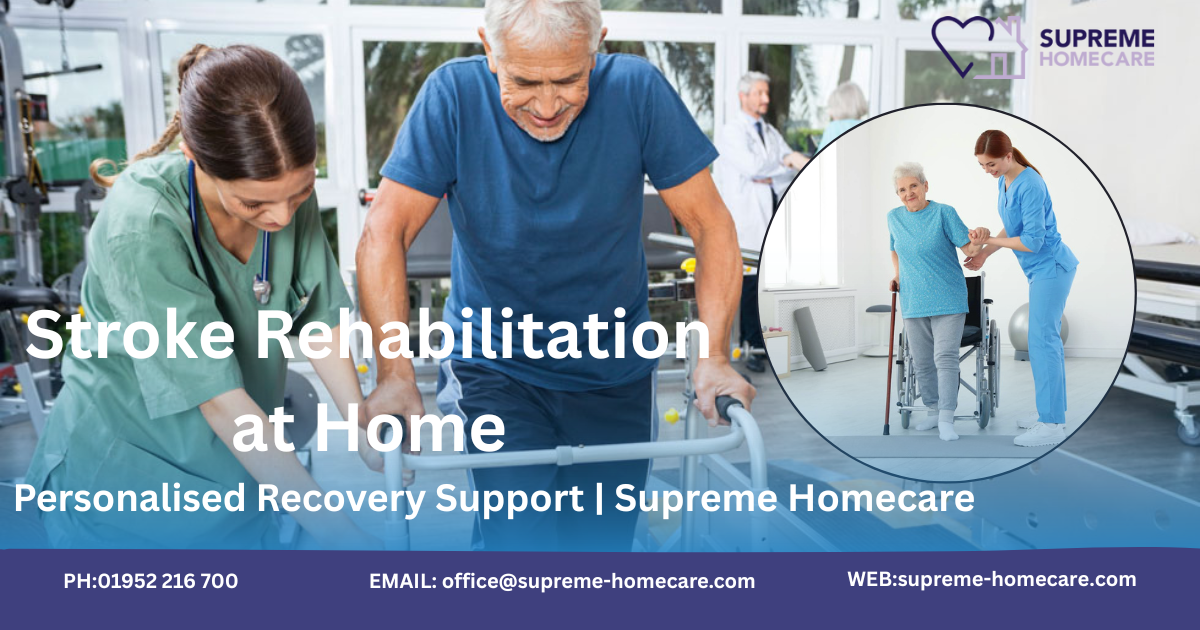
Recovering from a stroke is never easy. It changes movement, speech, memory, coordination, and confidence. Families often feel overwhelmed, and seniors may feel frightened by their reduced independence. However, one thing makes a real difference during this challenging journey:
receiving the right rehabilitation support at home.
At Supreme Homecare, we provide specialised stroke rehabilitation at home, helping seniors regain strength, rebuild skills, and restore confidence one step at a time. Our approach is gentle, adaptive, and fully centred around each individual’s recovery needs.
Understanding Stroke Recovery: What Really Happens After a Stroke
A stroke affects the brain’s ability to control movement, speech, and daily tasks. Recovery can be slow, but with the right support, seniors can regain abilities and rebuild independence.
Common post-stroke challenges include:
-
Weakness in one side of the body
-
Difficulty speaking or understanding
-
Memory and concentration issues
-
Problems with balance and mobility
-
Difficulty swallowing
-
Emotional changes such as anxiety or frustration
Because every stroke is different, rehabilitation must be customised, consistent, and delivered with patience and care.
Why Home-Based Stroke Rehabilitation Works Better
Many families wonder whether hospital-based therapy is enough. While clinical therapy is essential, home-based rehabilitation plays a powerful role in improving recovery outcomes.
Here’s why:
1. A familiar environment boosts confidence
Recovering in the comfort of home helps seniors feel safe, calm, and motivated to participate in daily exercises.
2. Rehabilitation becomes practical
Instead of learning movements in a clinic, seniors practice activities they perform daily — standing from their own bed, walking across their home, using their kitchen safely, etc.
3. One-to-one personalised attention
Unlike busy rehabilitation centres, home care provides direct one-to-one focus tailored entirely to your loved one’s needs.
4. Families stay involved
Family members understand the exercises, progress, and daily care plan, making recovery stronger and smoother.
5. Continuous emotional reassurance
Stroke recovery is emotionally demanding. Having a carer nearby provides comfort, encouragement, and hope.
Supreme Homecare’s Stroke Recovery Pathway
To ensure this blog does not resemble previous ones, the structure below follows a unique recovery-pathway model.
PHASE 1: Stabilisation & Early Support
When rehabilitation begins, the first priority is to create a safe and calm environment at home.
During this phase, caregivers focus on:
-
Safe transfers (bed to chair, chair to toilet)
-
Reducing fall risks
-
Helping with essential daily tasks
-
Organising medication
-
Creating a predictable daily routine
Small improvements made in early recovery build the foundation for future progress.
PHASE 2: Strength & Mobility Training
Movement usually becomes challenging after a stroke. Our caregivers follow personalised mobility plans created by physiotherapists, ensuring exercises are performed safely and consistently.
Support includes:
-
Guided walking
-
Balance exercises
-
Strengthening routines for arms and legs
-
Functional practice (standing, sitting, turning)
-
Safe posture correction
Consistency is key. With daily supervised exercises, seniors improve gradually and safely.
PHASE 3: Speech, Memory & Cognitive Stimulation
Stroke often affects the way a person communicates or processes information.
Caregivers help with:
-
Simple speech practice
-
Memory games
-
Conversation stimulation
-
Reading and comprehension exercises
-
Confidence-building activities
-
Encouraging clear, slow communication
This phase restores not only cognitive ability but also emotional stability.
PHASE 4: Relearning Daily Tasks
This is where home-based rehabilitation makes the biggest difference.
Our carers help seniors relearn essential skills like:
-
Dressing independently
-
Preparing simple meals
-
Eating safely after swallowing difficulties
-
Managing hygiene and grooming
-
Moving around the home confidently
These victories may seem small, but they bring back independence and dignity.
PHASE 5: Emotional Healing & Motivation
Stroke survivors often experience emotional ups and downs, including fear, frustration, or low confidence.
Our caregivers provide:
-
Companionship
-
Emotional reassurance
-
Gentle encouragement
-
Social connection
-
Motivation during exercises
A strong emotional foundation helps seniors push through challenges and regain purpose.
PHASE 6: Long-Term Recovery & Prevention
Stroke rehabilitation does not end after a few weeks. Long-term support prevents complications and helps maintain progress.
We assist with:
-
Continued exercises
-
Safe mobility support
-
Preventing secondary strokes through routine management
-
Healthy lifestyle guidance
-
Daily monitoring for changes in symptoms
Long-term care prevents setbacks and strengthens recovery.
Who Benefits Most from Stroke Rehabilitation at Home?
Home-based stroke recovery is ideal for seniors who:
-
Struggle with mobility and need safe supervision
-
Have weakness or paralysis on one side
-
Need help with speech or communication
-
Need support during daily tasks
-
Are emotionally affected by the stroke
-
Require medication and routine management
-
Prefer personalised one-to-one care
-
Want to recover safely in their own home
Many families search for “stroke rehabilitation near me”, and what they truly need is consistent, high-quality support at home.
Why Families Trust Supreme Homecare
Specialised Stroke Recovery Training
Our carers are trained to support mobility, speech exercises, swallowing safety, and daily rehabilitation tasks.
Personalised Recovery Plans
Every client receives a tailored plan created around their unique symptoms, doctor recommendations, and personal goals.
Safety-First Approach
We closely monitor movements, transfers, and exercises to prevent falls and accidents.
Emotional & Motivational Support
Stroke recovery requires patience. Our carers offer daily encouragement and reassurance.
Flexible Support Options
Choose from:
-
Hourly home care
-
Daytime rehabilitation
-
Overnight assistance
-
Full live-in stroke recovery support
Clear Family Communication
We keep families updated with progress, challenges, and recommendations at every stage.
A Realistic Example of a Day in Stroke Rehabilitation
Morning Routine
-
Assisted stretching
-
Guided mobility exercises
-
Medication reminder
-
Breakfast preparation with swallowing safety
-
Hygiene and grooming support
Midday
-
Balance training
-
Outdoor or indoor walking support
-
Cognitive stimulation tasks
Afternoon
-
Rest period with monitoring
-
Meal preparation
-
Hobbies or conversation to improve communication
Evening
-
Gentle relaxation exercises
-
Emotional support
-
Safe transfer to bed
-
Night supervision if required
Every step is delivered with patience, empathy, and respect.
Conclusion
Stroke rehabilitation is not just a physical process — it is emotional, personal, and deeply transformative. With the right support at home, seniors can rebuild strength, confidence, and independence at their own pace.
At Supreme Homecare, we are committed to walking this journey with you, one step at a time.
👉 Learn more: https://www.supreme-homecare.com/
FAQs – Stroke Rehabilitation
1. What does stroke rehabilitation at home include?
It includes mobility exercises, daily care support, speech stimulation, emotional encouragement, and safe routine management.
2. How long does stroke recovery take?
Recovery varies by individual. With consistent rehabilitation, many seniors regain independence over weeks or months.
3. Do you support clients who have severe mobility issues?
Yes, our carers assist with safe transfers, walking support, posture correction, and bed mobility.
4. Can a caregiver help with stroke exercises?
Absolutely. Our staff follow personalised exercise plans recommended by therapists.
5. Is stroke rehabilitation available as a live-in service?
Yes, Supreme Homecare provides hourly, overnight, and full live-in rehabilitation support.

 English
 Arabic
 Spanish
 Portuguese
 Deutsch
 Turkish
 Dutch
Dutch
 Italiano
 Russian
 Romaian
 Portuguese (Brazil)
 Greek
Greek