


Healthcare Distribution Market Set to Reach USD 5,892.1 Billion by 2033
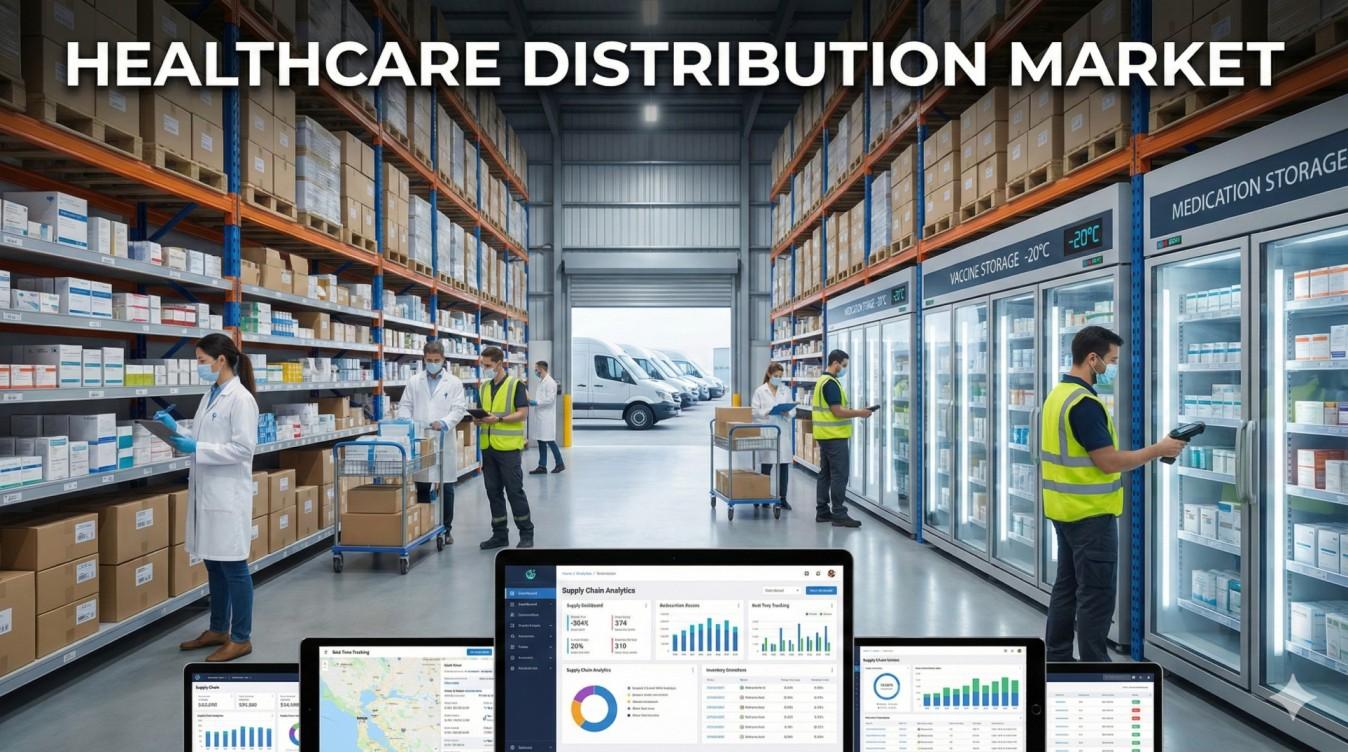
The Global Healthcare Distribution Market is witnessing transformative growth as healthcare supply chains become more complex and critical to the timely delivery of medical products. Healthcare distribution encompasses the end-to-end management of medical goods, including pharmaceuticals, medical devices, diagnostic kits, and other healthcare products, ensuring that they reach hospitals, clinics, pharmacies, and patients efficiently.
The market is increasingly relying on advanced supply chain technologies, logistics optimization, and integrated distribution networks to meet rising demand, reduce operational inefficiencies, and comply with stringent regulatory standards.
Market Overview
The Global Healthcare Distribution Market is anticipated to reach a valuation of USD 1,421.7 billion in 2024 and is projected to grow to USD 5,892.1 billion by 2033, registering a robust compound annual growth rate (CAGR) of 17.1%. The market is propelled by the growing demand for pharmaceuticals, vaccines, and medical devices, coupled with advancements in logistics, automation, and digital health supply chain solutions. Increasing incidences of chronic diseases, aging populations, and rising healthcare expenditures across developed and emerging economies are fueling demand for efficient distribution services.
Distribution networks play a critical role in ensuring product integrity, maintaining cold chain requirements for temperature-sensitive products, and enabling rapid response during public health emergencies. The adoption of digital tools, predictive analytics, and real-time tracking solutions has further enhanced the efficiency of healthcare distribution, enabling stakeholders to optimize inventory, reduce wastage, and minimize stock-outs.
Market Dynamics
The healthcare distribution market is driven by several key factors. First, the increasing complexity of pharmaceutical supply chains requires integrated solutions that provide visibility and control over logistics operations. Second, the growing demand for specialty drugs, biologics, and personalized medicines necessitates sophisticated distribution systems capable of handling sensitive and high-value products. Third, regulatory requirements related to serialization, traceability, and cold chain management compel distributors to adopt advanced technologies and processes.
Challenges include high operational costs, logistical complexities in emerging markets, and vulnerabilities to disruptions caused by pandemics, natural disasters, or geopolitical factors. Nevertheless, innovations such as automated warehouses, robotics, AI-based demand forecasting, and blockchain-enabled tracking are transforming the distribution landscape, improving efficiency and reducing risks. Strategic partnerships between manufacturers, distributors, and logistics providers further facilitate seamless product flow from production facilities to end-users.
Segmentation by Product
The Healthcare Distribution Market can be segmented by product into pharmaceuticals, medical devices, diagnostic products, vaccines, and other healthcare consumables. Pharmaceuticals constitute the largest segment, driven by the rising prevalence of chronic diseases, the introduction of specialty drugs, and the increasing number of prescriptions globally. Medical devices, including surgical instruments, diagnostic tools, and imaging equipment, are gaining traction due to growing adoption in hospitals and clinics. Diagnostic products, including in-vitro diagnostic kits, reagents, and laboratory supplies, are witnessing increased demand for early disease detection and monitoring. Vaccines are becoming a critical segment following the emphasis on immunization programs and pandemic preparedness.
Segmentation by Service Type
Healthcare distribution services include wholesale distribution, retail distribution, and direct-to-patient delivery models. Wholesale distributors serve as intermediaries between manufacturers and healthcare providers, ensuring bulk procurement and timely delivery of medical products. Retail distribution encompasses pharmacy chains, online pharmacies, and specialty stores that deliver products directly to end consumers. Direct-to-patient delivery models, including home delivery of medications and telepharmacy services, are gaining prominence due to patient convenience, technological advancements, and the rise of e-commerce in healthcare.
Segmentation by End-User
End-users of healthcare distribution services include hospitals, clinics, retail pharmacies, specialty pharmacies, long-term care facilities, and home healthcare providers. Hospitals and clinics are primary beneficiaries of comprehensive distribution services, requiring timely access to critical medical products. Retail and specialty pharmacies serve outpatient needs, leveraging advanced logistics and inventory management systems. Long-term care facilities depend on reliable distribution networks for patient medications and medical supplies. The growth of home healthcare and telemedicine has accelerated demand for last-mile delivery services, ensuring patients receive essential medications and healthcare products at home.
Regional Analysis
North America is anticipated to dominate the Healthcare Distribution Market with a 39.2% share in 2024, driven by its robust healthcare infrastructure, high healthcare expenditure, and emphasis on innovation. The United States leads in pharmaceutical spending, investment in specialty drugs, and adoption of advanced distribution systems. Distribution channels in North America, including online pharmacies, specialty distributors, and integrated logistics networks, provide multiple avenues for product delivery. The region also benefits from regulatory frameworks that ensure product safety, traceability, and compliance with serialization requirements.
Europe is another key market, supported by well-established healthcare systems, high adoption of digital supply chain technologies, and increasing investments in medical devices and vaccines. Asia-Pacific is experiencing rapid growth due to expanding healthcare infrastructure, rising disposable incomes, and increasing prevalence of chronic diseases. Emerging economies such as India, China, and Japan are witnessing accelerated adoption of e-commerce and digital distribution channels in healthcare.
Download a Complimentary PDF Sample Report: https://dimensionmarketresearch.com/report/healthcare-distribution-market/request-sample/
Key Market Trends
Several trends are shaping the healthcare distribution market. The adoption of digital supply chain solutions, including AI-based demand forecasting, warehouse automation, and real-time tracking, is improving efficiency and transparency. Cold chain logistics are becoming increasingly critical for the safe distribution of vaccines, biologics, and temperature-sensitive products. The rise of e-pharmacies and telemedicine is driving last-mile delivery innovations. Strategic mergers, acquisitions, and partnerships among manufacturers, distributors, and logistics providers are creating integrated distribution networks that enhance market reach. Sustainability initiatives and green logistics practices are also gaining attention as stakeholders prioritize environmental responsibility.
Competitive Landscape
The Healthcare Distribution Market is highly competitive and fragmented, with several global and regional players vying for market share. Key players include McKesson Corporation, Cardinal Health, AmerisourceBergen, Henry Schein, Owens & Minor, Cencora, and Walgreens Boots Alliance. These companies focus on expanding distribution networks, investing in technology-driven solutions, and forming strategic partnerships with manufacturers and healthcare providers. Emerging players are introducing innovative services such as home delivery, automated inventory management, and AI-powered logistics solutions to differentiate themselves in a highly dynamic market.
Future Outlook and Opportunities
The Healthcare Distribution Market is projected to experience substantial growth through 2033. Opportunities exist in expanding e-commerce and direct-to-patient delivery models, integrating AI and blockchain technologies for secure and efficient distribution, and enhancing cold chain logistics for vaccines and biologics. The growing demand for specialty pharmaceuticals, personalized medicine, and home healthcare services will drive the need for advanced distribution solutions. Collaboration between manufacturers, distributors, technology providers, and healthcare institutions will continue to strengthen supply chain resilience, improve patient access, and support market expansion.
Frequently Asked Questions
What is healthcare distribution?
Healthcare distribution refers to the logistics, supply chain management, and delivery of medical products, including pharmaceuticals, medical devices, vaccines, and diagnostic supplies, from manufacturers to end-users such as hospitals, pharmacies, and patients.
Which region dominates the global healthcare distribution market?
North America dominates, particularly the United States, due to its advanced healthcare infrastructure, high pharmaceutical spending, and investment in innovative distribution channels.
What are the main drivers of the healthcare distribution market?
Key drivers include rising demand for pharmaceuticals and medical devices, technological advancements in supply chain management, increasing prevalence of chronic diseases, and growth in e-commerce and home healthcare.
What are the major challenges in healthcare distribution?
Challenges include high operational costs, complex logistics, cold chain management requirements, regulatory compliance, and vulnerabilities to disruptions caused by pandemics, natural disasters, or geopolitical factors.
Who are the leading players in the healthcare distribution market?
Leading players include McKesson Corporation, Cardinal Health, AmerisourceBergen, Henry Schein, Owens & Minor, Cencora, and Walgreens Boots Alliance, which focus on expanding networks, technology adoption, and strategic partnerships.
Summary of Key Insights
The Healthcare Distribution Market is expected to grow from USD 1,421.7 billion in 2024 to USD 5,892.1 billion by 2033 at a CAGR of 17.1%. Growth is driven by the rising demand for pharmaceuticals, vaccines, and medical devices, coupled with technological advancements in logistics, supply chain management, and digital distribution solutions. North America leads the market, supported by strong healthcare infrastructure, high spending, and innovation. Market segmentation by product, service type, and end-user highlights the diverse applications and evolving delivery models. Emerging trends such as AI-powered analytics, blockchain tracking, cold chain logistics, e-pharmacies, and direct-to-patient delivery present significant opportunities for market expansion. Competitive dynamics feature global and regional players investing in technology, strategic collaborations, and innovative services to meet growing demand.
Purchase the report for comprehensive details: https://dimensionmarketresearch.com/checkout/healthcare-distribution-market/

 English
 French
 Spanish
 Portuguese
 Deutsch
 Turkish
 Dutch
Dutch
 Italiano
 Russian
 Romaian
 Portuguese (Brazil)
 Greek
Greek