


Hydraulic Cylinder Market: Hydraulic Cylinder Manufacturers and Competition
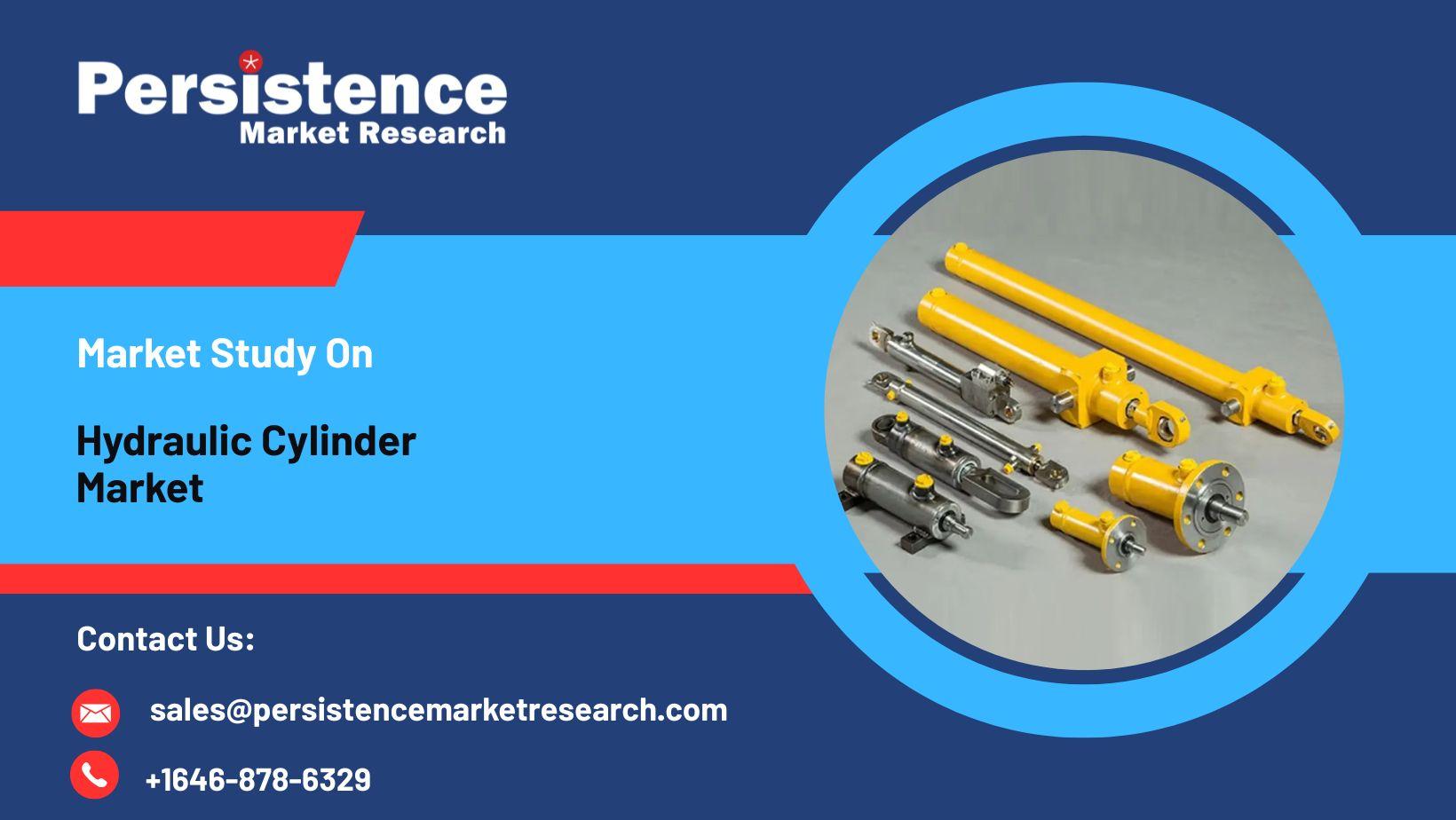
The Hydraulic Cylinder Market plays a foundational role in modern industrial systems by enabling linear motion and force transmission across a wide range of heavy-duty applications. Hydraulic cylinders are mechanical actuators that utilize pressurized hydraulic fluid to produce controlled linear movement, making them indispensable in industries such as construction, agriculture, mining, material handling, oil & gas, and manufacturing. Their ability to deliver high force, precise control, and durability under extreme operating conditions continues to drive widespread adoption across both developed and emerging economies. As industries increasingly focus on automation, productivity enhancement, and operational reliability, hydraulic cylinders remain a critical component within broader hydraulic systems and motion control architectures.
From a market statistics perspective, the global hydraulic cylinder market was valued at US$15.6 billion in 2025 and is projected to reach US$22.7 billion by 2032, expanding at a compound annual growth rate (CAGR) of 5.5% during the forecast period from 2025 to 2032. Market growth is driven primarily by the expanding construction and infrastructure sector, increasing agricultural mechanization, and rising automation across industrial operations. Among product categories, double-acting hydraulic cylinders represent the leading segment due to their efficiency, versatility, and suitability for high-load applications. Geographically, Asia Pacific dominates the global market, supported by rapid urbanization, large-scale infrastructure investments, and the growing adoption of construction and agricultural machinery in countries such as China, India, and Southeast Asian nations.
𝐃𝐨𝐰𝐧𝐥𝐨𝐚𝐝 𝐅𝐫𝐞𝐞 𝐒𝐚𝐦𝐩𝐥𝐞 & 𝐂𝐡𝐞𝐜𝐤 𝐭𝐡𝐞 𝐋𝐚𝐭𝐞𝐬𝐭 𝐌𝐚𝐫𝐤𝐞𝐭 𝐀𝐧𝐚𝐥𝐲𝐬𝐢𝐬: https://www.persistencemarketresearch.com/samples/4713
Key Highlights from the Report
• Asia Pacific leads the global hydraulic cylinder market due to rapid infrastructure expansion and industrialization.
• Double-acting hydraulic cylinders account for the largest market share owing to superior performance and load-handling capability.
• Construction and agricultural machinery remain the primary demand generators worldwide.
• Rising automation across manufacturing sectors continues to strengthen market penetration.
• Technological advancements in sealing systems enhance durability and operational efficiency.
• Emerging economies present strong growth opportunities driven by mechanization and urban development.
Hydraulic Cylinder Market Segmentation
The Hydraulic Cylinder Market is segmented based on product type, function, application, and end-user industry, each contributing uniquely to overall market dynamics. Based on product type, the market includes single-acting hydraulic cylinders, double-acting hydraulic cylinders, telescopic hydraulic cylinders, and tie-rod hydraulic cylinders. Single-acting cylinders are commonly used in lifting and pressing applications where force is required in one direction, while double-acting cylinders are widely preferred for applications requiring controlled movement in both extension and retraction. Telescopic cylinders are extensively utilized in dump trucks and material handling equipment due to their compact design and long stroke capability, whereas tie-rod cylinders are favored in industrial machinery for their ease of maintenance and cost efficiency.
From an application standpoint, hydraulic cylinders are deployed across construction equipment, agricultural machinery, industrial manufacturing systems, mining equipment, marine systems, and material handling solutions. Construction equipment such as excavators, loaders, cranes, and bulldozers represents the largest application segment, reflecting the heavy reliance on hydraulic systems for earthmoving and lifting operations. In agriculture, hydraulic cylinders are essential components in tractors, harvesters, plows, and irrigation systems, supporting the ongoing trend toward farm mechanization. Industrial manufacturing applications include presses, injection molding machines, and automated assembly lines, where precise force control and reliability are paramount.
End-user segmentation further divides the market into construction, agriculture, manufacturing, oil & gas, mining, transportation, and aerospace sectors. Construction and agriculture collectively account for a substantial share of market revenue due to consistent demand for heavy machinery and equipment upgrades. The manufacturing sector is experiencing steady growth as automation and smart factory initiatives increase demand for reliable hydraulic motion control systems. Additionally, oil & gas and mining applications rely heavily on hydraulic cylinders for drilling, extraction, and material transportation, ensuring stable demand even in challenging operating environments.
Regional Insights of the Hydraulic Cylinder Market
The Asia Pacific region holds the largest share of the global hydraulic cylinder market, driven by rapid urbanization, infrastructure development, and industrial expansion. Countries such as China and India are investing heavily in road construction, smart cities, renewable energy projects, and agricultural modernization, all of which require extensive use of construction and farming equipment powered by hydraulic systems. Additionally, the presence of large-scale manufacturing hubs and favorable government policies supporting industrial growth further strengthen regional demand for hydraulic cylinders.
North America represents a mature yet steadily growing market, supported by ongoing investments in infrastructure rehabilitation, mining activities, and automation across manufacturing facilities. The United States remains the dominant contributor within the region, driven by demand for advanced construction machinery, agricultural equipment, and energy sector applications. Technological innovation, coupled with a strong focus on equipment durability and performance optimization, sustains market growth across North America.
Europe holds a significant market share, fueled by industrial automation, stringent equipment safety standards, and widespread adoption of energy-efficient machinery. Countries such as Germany, France, and the United Kingdom continue to invest in advanced manufacturing and construction technologies, supporting consistent demand for high-performance hydraulic cylinders. Meanwhile, Latin America and the Middle East & Africa are emerging markets, benefiting from infrastructure development, mining activities, and agricultural expansion, particularly in Brazil, Mexico, Saudi Arabia, and South Africa.
Market Drivers
The growth of the Hydraulic Cylinder Market is strongly driven by increasing automation across industrial sectors, where hydraulic systems remain essential for high-force and precision-based applications. Expanding infrastructure projects worldwide, including highways, bridges, rail networks, and urban development initiatives, are generating sustained demand for construction machinery that relies heavily on hydraulic cylinders. Additionally, the rapid mechanization of agriculture, particularly in emerging economies, is accelerating the adoption of tractors, harvesters, and irrigation systems equipped with advanced hydraulic components. Technological improvements in materials, seals, and surface coatings are also enhancing cylinder durability, load capacity, and operational efficiency, further strengthening market growth.
Market Restraints
Despite steady growth prospects, the Hydraulic Cylinder Market faces several restraints that may limit expansion in certain regions. Fluctuating raw material prices, particularly steel and aluminum, significantly impact manufacturing costs and profit margins for hydraulic cylinder producers. Additionally, the high maintenance requirements of hydraulic systems, including fluid leakage and seal wear, can deter adoption in applications where low maintenance is a priority. Environmental concerns related to hydraulic fluid leakage and stringent regulatory standards on emissions and waste disposal also pose challenges, particularly in regions with strict environmental compliance requirements.
Market Opportunities
The market presents substantial opportunities driven by advancements in hydraulic technology and evolving industrial needs. The development of lightweight hydraulic cylinders, energy-efficient designs, and environmentally friendly hydraulic fluids is opening new avenues for innovation. Increasing investment in renewable energy projects, such as wind and hydropower, offers growth potential as hydraulic cylinders are widely used in turbine systems and maintenance equipment. Furthermore, the rising adoption of smart and connected hydraulic systems integrated with sensors and condition monitoring technologies enables predictive maintenance, reduced downtime, and improved operational efficiency, creating attractive opportunities for manufacturers and solution providers.
Company Insights
The Hydraulic Cylinder Market is characterized by the presence of established global players and regional manufacturers focusing on product innovation, durability, and customization. Key companies operating in the market include:
• Parker Hannifin Corporation
• Bosch Rexroth AG
• Eaton Corporation plc
• HYDAC International GmbH
• SMC Corporation
• KYB Corporation
• Wipro Infrastructure Engineering
• Caterpillar Inc.
Recent Developments:
• Parker Hannifin expanded its hydraulic cylinder product portfolio with enhanced sealing technology designed to improve lifespan and reduce leakage in construction equipment applications.
• Bosch Rexroth introduced a new generation of energy-efficient hydraulic cylinders optimized for industrial automation and smart manufacturing environments.
Conclusion
The Hydraulic Cylinder Market continues to demonstrate stable and sustained growth, supported by rising automation, infrastructure development, and increasing adoption of construction and agricultural machinery worldwide. With the market valued at US$15.6 billion in 2025 and projected to reach US$22.7 billion by 2032 at a CAGR of 5.5%, hydraulic cylinders remain indispensable components in modern motion control systems. Asia Pacific leads the global landscape due to rapid urbanization and mechanization, while North America and Europe maintain strong demand driven by technological advancements and industrial modernization. Despite challenges related to raw material costs and environmental compliance, ongoing innovation in design, materials, and smart hydraulic systems presents promising opportunities. As industries continue to prioritize efficiency, durability, and productivity, hydraulic cylinders will remain central to powering heavy-duty applications across global markets.

 English
 Arabic
 French
 Spanish
 Deutsch
 Turkish
 Dutch
Dutch
 Italiano
 Russian
 Romaian
 Portuguese (Brazil)
 Greek
Greek