


Optimizing Electronic Performance with Efficient Voltage Regulator Circuit Designs
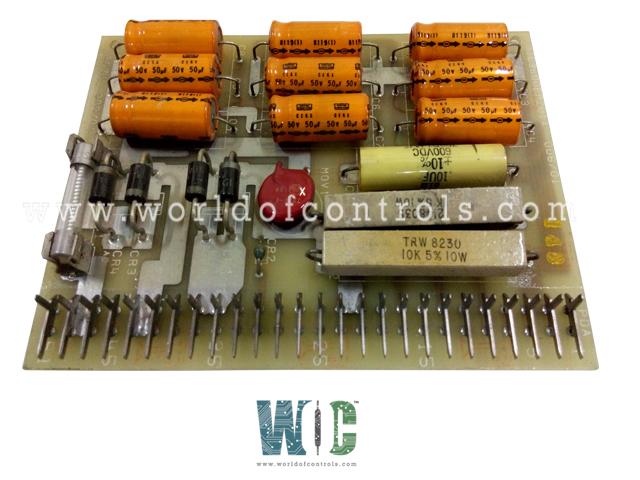
In the world of electronics, power stability is everything. Whether it’s your smartphone, a medical monitoring device, or a high-performance industrial controller, consistent voltage regulation determines how efficiently and reliably the system operates. Voltage regulator circuit designs sit at the heart of every reliable electronic system, ensuring that devices receive a stable power supply even when input voltages fluctuate.
Understanding Voltage Regulator Circuit Boards
A voltage regulator circuit board is responsible for maintaining a constant output voltage to a load, regardless of variations in the input voltage or load conditions. These boards are vital for protecting sensitive electronic components from damage caused by voltage spikes or dips.
There are two main types of voltage regulators: linear regulators and switching regulators.
-
Linear regulators are simple and produce low noise but are less efficient, especially for high-power systems, as they dissipate excess energy as heat.
-
Switching regulators, on the other hand, use high-speed switching transistors and energy storage components like inductors and capacitors to efficiently convert voltages with minimal energy loss.
Each design has its ideal use case depending on the power requirements, efficiency goals, and noise tolerance of the system.
Common Design Challenges
Designing an efficient voltage regulator circuit board is not without difficulties. Engineers often face problems such as:
-
Excessive heat dissipation, especially in compact designs.
-
Ripple and noise interference, which can distort signals in precision applications.
-
Load regulation and transient response trade-offs that affect performance during sudden power changes.
-
PCB layout constraints, which can significantly impact electromagnetic compatibility (EMC) and efficiency.
To overcome these, careful component selection and thoughtful circuit layout are vital.
Strategies to Improve Efficiency
The key to an efficient voltage regulator circuit lies in balancing performance and thermal management. Here are some proven optimization strategies:
-
Choose the right regulator type. Switching regulators outperform linear types in high-power setups but require more complexity in design.
-
Optimize the layout. Short traces, proper grounding, and careful placement of high-frequency components reduce noise and improve regulation.
-
Improve heat dissipation. Using heatsinks, larger copper pours, or thermal vias helps manage heat without compromising compactness.
-
Select high-quality components. Premium capacitors, low-ESR inductors, and robust ICs contribute significantly to long-term performance.
-
Implement feedback control. Adaptive feedback loops ensure voltage stability even under variable load conditions.
These methods collectively ensure efficient energy conversion, stability, and long-term reliability.
Real-World Applications
Voltage regulator circuit boards power nearly every modern device — from mobile phones and industrial automation systems to automotive electronics. In industries where downtime is costly, efficient boards directly translate to extended lifespan and reduced maintenance.
For instance, in an industrial automation setup, an optimized voltage regulator design can reduce power losses, minimize heat generation, and sustain continuous operation under heavy load conditions. Engineers also use simulation tools like SPICE or MATLAB to test and fine-tune regulator designs before deployment, ensuring optimal efficiency under different operating scenarios.
Emerging Innovations
Recent advancements are redefining how voltage regulators are built. The use of Gallium Nitride (GaN) and Silicon Carbide (SiC) materials has revolutionized power conversion efficiency, enabling smaller and faster designs. Additionally, smart voltage regulators with IoT connectivity now allow real-time monitoring and automatic adjustments based on system performance data.
These innovations pave the way for next-generation power management solutions that are more compact, responsive, and energy-efficient.
Conclusion
Optimizing electronic performance through efficient voltage regulator circuit design is essential for the reliability and longevity of modern devices. By integrating smart feedback mechanisms, refined layouts, and superior components, engineers can achieve stable power delivery even in demanding environments.
A great example of such engineering is the IC3600EPSX1E1C Voltage Regulator Circuit Board, known for its robust performance and reliable design. This board ensures power stability in GE control systems, making it a trusted choice for industrial applications. For those seeking high-quality components or hard-to-find replacement boards, World of Controls stands out as a dependable supplier, offering genuine parts and expert support to keep your systems running at peak performance.
Check Also - IC3600EPSX1G1G GE Fanuc Volatge Regulator Circuit Board

 English
 Arabic
 French
 Spanish
 Portuguese
 Deutsch
 Dutch
Dutch
 Italiano
 Russian
 Romaian
 Portuguese (Brazil)
 Greek
Greek