


Cage Free Eggs Market Sustainability Impact on Modern Food Systems Worldwide
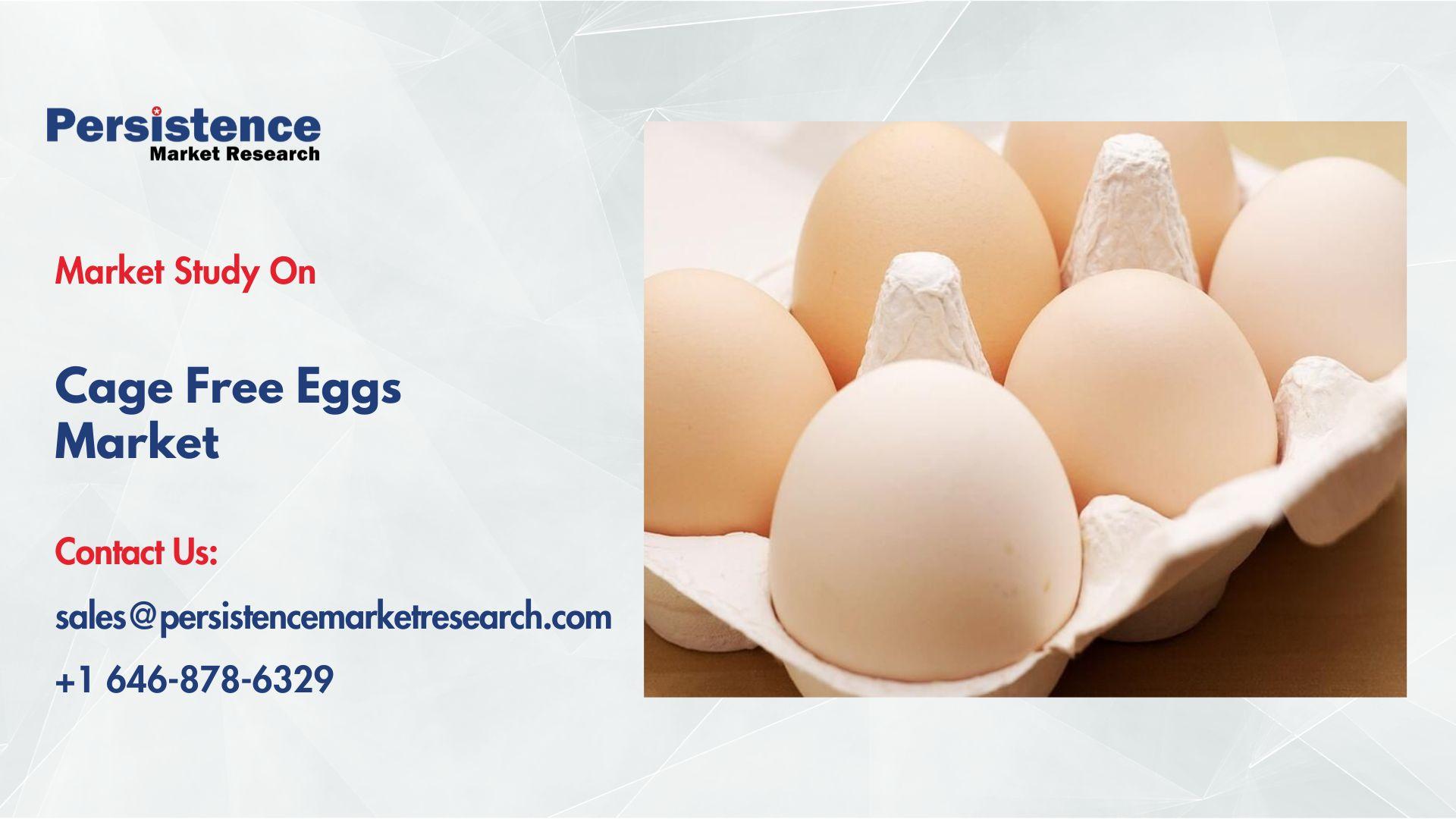
The global cage-free eggs market is undergoing a significant structural transformation as animal welfare considerations, regulatory reforms, and evolving consumer preferences reshape the dynamics of the egg production industry. In 2025, the global cage-free eggs market is valued at approximately US$4.9 billion. Supported by increasing adoption across both developed and emerging economies, the market is projected to reach US$6.8 billion by 2032. This growth trajectory reflects a steady compound annual growth rate (CAGR) of 4.8% over the forecast period from 2025 to 2032.
Cage-free egg production eliminates the use of conventional battery cages, allowing hens to move freely within barns or open housing systems. This production model has gained strong traction due to rising ethical consumption trends, heightened awareness of animal welfare, and growing pressure from advocacy groups, retailers, and institutional buyers. Major foodservice companies, hospitality chains, and multinational food manufacturers are increasingly committing to 100% cage-free egg sourcing policies, thereby creating sustained demand across the supply chain.
Government regulations mandating improved housing conditions for laying hens have emerged as a critical growth driver, particularly in Europe and North America. In parallel, consumer willingness to pay a premium for ethically produced food has strengthened revenue generation opportunities for producers and distributors. Technological advancements in poultry farm management, combined with efficiency improvements in cage-free systems, are further mitigating cost challenges and supporting wider adoption.
Get Your FREE Sample Report Instantly – Click Now: https://www.persistencemarketresearch.com/samples/11086
Segmentation Analysis
By Type
By type, the cage-free eggs market is segmented into white eggs, brown eggs, organic cage-free eggs, and specialty cage-free eggs enriched with omega-3 or other nutritional enhancements. Among these segments, brown cage-free eggs currently dominate the global market in terms of revenue share, primarily due to strong consumer perception of superior quality and nutritional value in key regions such as Europe and North America. Brown eggs are widely favored in retail channels and are often associated with premium and organic labeling, which further enhances their market appeal.
Organic cage-free eggs represent the fastest-growing segment during the forecast period. This growth is driven by rising health consciousness, increasing demand for chemical-free food products, and expanding organic food distribution networks. Consumers seeking transparency in food sourcing are increasingly gravitating toward organic cage-free eggs, prompting producers to invest in certified organic operations to capture higher-margin opportunities.
By Product Type
From a product perspective, the market is categorized into shell eggs and processed cage-free egg products, including liquid eggs, powdered eggs, and frozen egg formats. Shell eggs account for the majority of market demand, driven by household consumption and retail sales through supermarkets and specialty food stores. The preference for fresh, whole eggs remains strong, particularly in regions where home cooking and baking are integral to daily dietary habits.
Processed cage-free egg products, however, are witnessing accelerated adoption across the food processing and foodservice sectors. Bakeries, confectionery manufacturers, and ready-to-eat meal producers are increasingly incorporating cage-free egg ingredients to align with sustainability commitments and brand positioning strategies. Convenience, longer shelf life, and consistency in quality are key factors contributing to the growth of this segment.
By Distribution Channel
Based on distribution channel, the cage-free eggs market is segmented into retail, foodservice, and industrial channels. Retail channels, including supermarkets, hypermarkets, and online grocery platforms, represent the largest share of global revenue. The expansion of private-label cage-free egg offerings by major retailers has improved product accessibility and affordability, thereby accelerating consumer adoption.
The foodservice channel is emerging as a critical growth engine, supported by large-scale commitments from restaurant chains, hotels, and catering services to transition toward cage-free sourcing. Industrial channels, encompassing food manufacturers and ingredient suppliers, are also expanding steadily as sustainability reporting and supplier compliance requirements become more stringent.
Need Tailored Insights? Request Customization Now: https://www.persistencemarketresearch.com/request-customization/11086
Regional Insights
Regionally, North America leads the global cage-free eggs market, accounting for a substantial share of total revenue in 2025. The United States remains the largest national market, driven by strong consumer advocacy, retailer mandates, and corporate sourcing pledges from major food brands. Several U.S. states have implemented or announced legislation banning or restricting the sale of eggs produced using conventional cages, further reinforcing the shift toward cage-free systems.
Europe follows closely, with countries such as Germany, the United Kingdom, France, and the Netherlands demonstrating high penetration of cage-free egg production. The European Union’s longstanding ban on conventional battery cages has created a favorable regulatory environment, encouraging early adoption and technological advancement within the region. European consumers also exhibit strong preferences for ethically produced food, supporting premium pricing structures.
Asia-Pacific is projected to be the fastest-growing regional market over the forecast period. Rapid urbanization, rising disposable incomes, and increasing awareness of animal welfare are driving demand for cage-free eggs across countries such as China, Japan, Australia, and South Korea. Multinational foodservice operators expanding in the region are introducing global sourcing standards, which is accelerating the transition toward cage-free egg supply chains. Additionally, government-led initiatives aimed at improving food safety and production standards are expected to further support market growth in this region.
Latin America and the Middle East & Africa are witnessing gradual but steady adoption, supported by export-oriented production facilities and growing alignment with international animal welfare standards. As global trade in agricultural products increasingly emphasizes ethical sourcing, producers in these regions are investing in cage-free infrastructure to enhance competitiveness.
Unique Features and Innovations in the Market
The modern cage-free eggs market is distinguished by continuous innovation in poultry housing systems, farm management practices, and supply chain transparency solutions. Advanced aviary systems and multi-tier barn designs are enabling higher stocking densities while maintaining animal welfare standards, thereby improving productivity and cost efficiency for producers.
Digital technologies are playing an increasingly important role in enhancing operational performance. The integration of Internet of Things (IoT) sensors allows real-time monitoring of temperature, humidity, air quality, and hen activity levels within cage-free facilities. These insights enable producers to optimize environmental conditions, reduce mortality rates, and improve egg yield consistency.
Artificial intelligence (AI) is being leveraged for predictive analytics, disease detection, and feed optimization. AI-powered image recognition systems can monitor flock behavior and identify early signs of stress or illness, reducing reliance on manual inspections and improving biosecurity outcomes. While still in early stages, the adoption of automation and data-driven decision-making is expected to significantly enhance the scalability of cage-free production models.
Blockchain and digital traceability platforms are also gaining traction, enabling end-to-end visibility across the supply chain. These solutions enhance consumer trust by providing verifiable information on sourcing practices, production methods, and certification status, thereby supporting premium brand positioning.
Market Highlights
The adoption of cage-free eggs is being driven by a combination of ethical, regulatory, and economic factors. Food manufacturers and retailers are increasingly recognizing the reputational and commercial benefits of aligning with animal welfare standards, particularly as sustainability reporting becomes a core component of corporate strategy. Cage-free sourcing commitments are helping companies differentiate their brands, mitigate reputational risk, and meet investor expectations related to environmental, social, and governance (ESG) performance.
Regulatory frameworks continue to play a pivotal role in shaping market dynamics. Bans on conventional cages, labeling requirements, and animal welfare certifications are creating a more standardized operating environment, reducing uncertainty for long-term investments. At the same time, improvements in production efficiency and economies of scale are gradually narrowing the cost gap between cage-free and conventional eggs, enhancing market competitiveness.
Sustainability considerations are further reinforcing adoption, as cage-free systems are increasingly integrated with renewable energy solutions, waste management innovations, and circular agriculture practices. These initiatives contribute to reduced environmental footprints and align with broader climate action goals across the agri-food sector.
Secure Your Full Report – Proceed to Checkout: https://www.persistencemarketresearch.com/checkout/11086
Key Players and Competitive Landscape
The global cage-free eggs market is moderately consolidated, with a mix of multinational agribusinesses, regional producers, and vertically integrated poultry companies competing across different geographies. Leading players are actively investing in capacity expansion, technological upgrades, and strategic partnerships to strengthen their market positions.
Cal-Maine Foods, Inc. is a prominent market participant, leveraging its extensive production scale and distribution network to support the transition toward cage-free operations across the United States. The company continues to invest in infrastructure upgrades and long-term supply agreements with major retailers.
Rose Acre Farms has emerged as a key innovator, focusing on sustainable housing systems and transparent sourcing practices. Its proactive investments in cage-free facilities have positioned the company as a preferred supplier for foodservice and retail clients with strict welfare requirements.
Noble Foods, a leading player in the United Kingdom, has built a strong brand portfolio centered on free-range and cage-free eggs. The company emphasizes consumer engagement and product differentiation through enhanced traceability and quality assurance initiatives.
Hy-Line International and Hendrix Genetics play a critical role in the competitive landscape by supplying high-performance laying hen breeds optimized for cage-free environments. Their ongoing research and development efforts are contributing to improved productivity and animal welfare outcomes across the industry.
In Asia-Pacific, companies such as ISE Foods Inc. and San Miguel Pure Foods are expanding cage-free production capabilities to meet rising domestic and export demand. These players are leveraging partnerships with global foodservice brands to accelerate market penetration.
Looking ahead, the competitive landscape is expected to evolve as new entrants adopt asset-light models and digital-first approaches to supply chain management. Mergers, acquisitions, and strategic alliances are likely to intensify as companies seek to achieve scale, diversify product portfolios, and access high-growth regional markets.
Future growth opportunities will be shaped by continued regulatory alignment, advancements in farm automation, and increasing consumer demand for ethically produced food. As technology adoption accelerates and cost efficiencies improve, cage-free eggs are expected to transition from a premium niche to a mainstream offering across global markets.
Explore the Latest Trending Research Reports:

 English
 French
 Spanish
 Portuguese
 Deutsch
 Turkish
 Dutch
Dutch
 Italiano
 Russian
 Romaian
 Portuguese (Brazil)
 Greek
Greek