


CIGS Thin-Film Solar Cells Market Opportunities Emerging in Emerging Economies
Introduction: The Growing Importance of Thin-Film Solar Technologies
As the global energy landscape shifts toward decarbonization, solar power continues to emerge as one of the most reliable and scalable renewable energy sources. While crystalline silicon solar panels dominate the market, thin-film technologies are steadily gaining traction due to their flexibility, lightweight design, and suitability for diverse applications. Among these technologies, CIGS (Copper Indium Gallium Selenide) thin-film solar cells stand out for their high efficiency potential and adaptability. The CIGS thin-film solar cells market is increasingly attracting attention from manufacturers, policymakers, and investors seeking next-generation photovoltaic solutions.
What Are CIGS Thin-Film Solar Cells and How Do They Work?
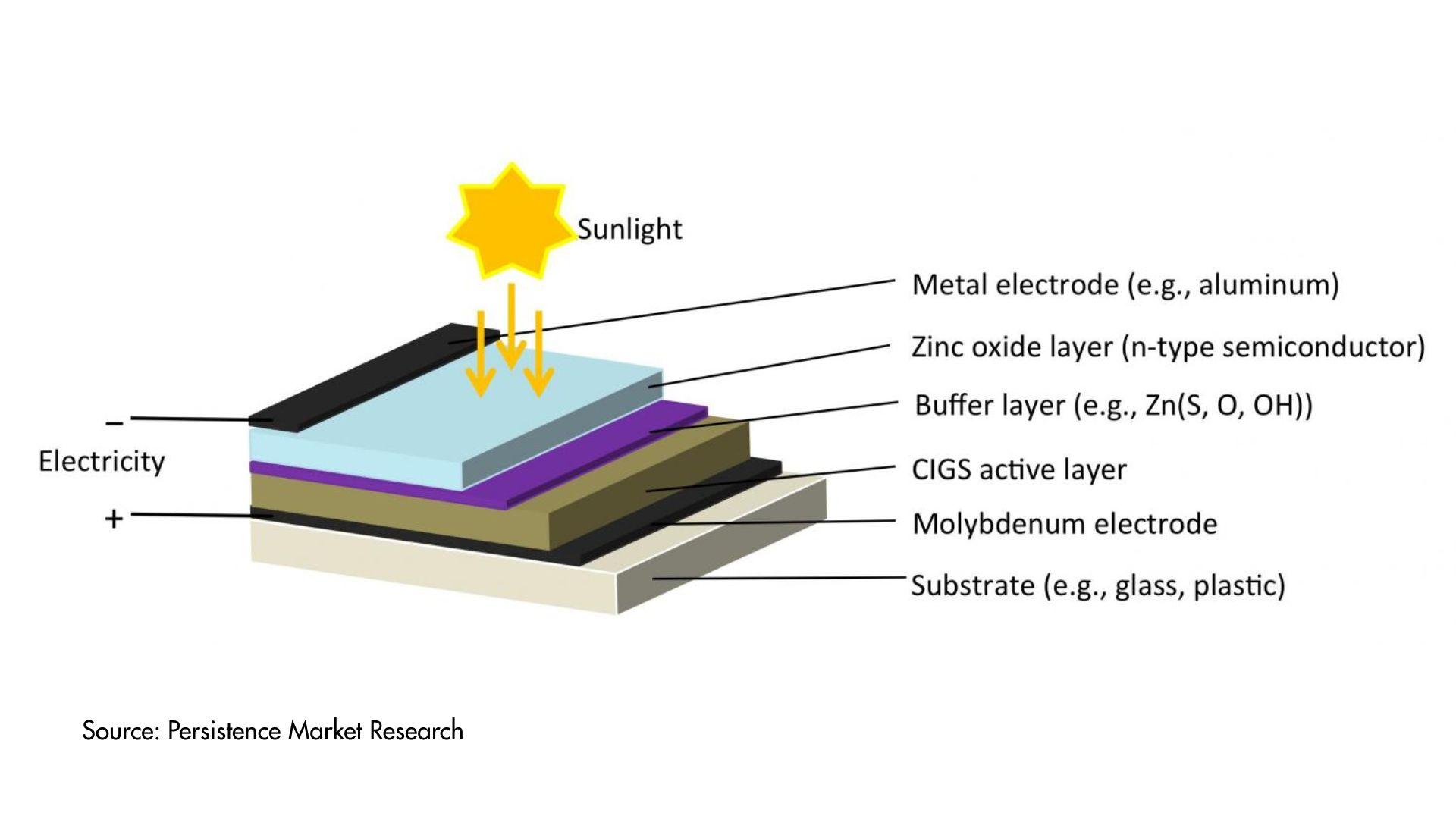
CIGS thin-film solar cells are a type of photovoltaic technology that uses a semiconductor compound made of copper, indium, gallium, and selenium to convert sunlight into electricity. Unlike traditional silicon-based solar panels, CIGS cells are created by depositing extremely thin layers of these materials onto substrates such as glass, metal, or flexible polymers. This structure allows CIGS solar cells to absorb sunlight more efficiently, even under low-light or shaded conditions. Their lightweight and flexible nature makes them ideal for applications such as building-integrated photovoltaics, portable solar products, and curved or irregular surfaces, offering strategic advantages over conventional solar technologies.
Market Overview: Current Size and Long-Term Growth Outlook
The global CIGS thin-film solar cells market is positioned for steady growth, supported by rising investments in renewable energy and advancements in thin-film manufacturing technologies. According to a Persistence Market Research report, the global market for CIGS thin-film solar cells is projected to be valued at around US$ 2.9 billion in 2026. Over the forecast period, the market is expected to witness strong expansion, reaching approximately US$ 5.4 billion by 2033. This growth reflects a compound annual growth rate (CAGR) of 9.3% from 2026 to 2033, highlighting the increasing commercial viability and adoption of CIGS-based solar solutions across multiple end-use sectors.
Key Growth Drivers: Factors Accelerating Market Expansion
Several critical factors are driving the growth of the CIGS thin-film solar cells market. One of the primary drivers is the global push to reduce carbon emissions and dependence on fossil fuels. Governments across regions are introducing supportive policies, incentives, and renewable energy targets, which are encouraging the deployment of advanced solar technologies.
Another major driver is the superior performance characteristics of CIGS solar cells. These cells offer high absorption efficiency, better temperature tolerance, and improved performance in low-light conditions compared to traditional silicon panels. Additionally, the reduced material usage in thin-film technologies lowers overall weight and opens new application possibilities, further boosting demand.
Technological Advancements and Efficiency Improvements
Technological innovation plays a vital role in shaping the CIGS thin-film solar cells market. Over the years, continuous research and development efforts have significantly improved the efficiency and durability of CIGS cells. Laboratory efficiencies have reached competitive levels with crystalline silicon, while commercial efficiencies continue to improve steadily.
Advances in deposition techniques, such as co-evaporation and sputtering, have enhanced material uniformity and reduced manufacturing defects. Moreover, improvements in encapsulation and module design have increased product lifespan and reliability. These technological enhancements are critical in lowering the cost per watt and improving the overall competitiveness of CIGS solar cells in the global photovoltaic market.
Applications and End-Use Industries Driving Demand
The versatility of CIGS thin-film solar cells makes them suitable for a wide range of applications. One of the most prominent application areas is building-integrated photovoltaics (BIPV), where CIGS modules can be seamlessly integrated into rooftops, facades, and windows. Their aesthetic appeal and flexibility make them particularly attractive for urban and architectural applications.
Portable and off-grid solar solutions also represent a growing segment for CIGS technology. Lightweight and flexible CIGS panels are increasingly used in consumer electronics, military equipment, emergency power systems, and remote installations. Additionally, the automotive and transportation sectors are exploring CIGS solar cells for auxiliary power generation in electric vehicles and specialty transport applications.
Regional Analysis: Key Markets and Emerging Opportunities
From a regional perspective, Europe has emerged as a significant market for CIGS thin-film solar cells, driven by strong renewable energy policies and early adoption of advanced solar technologies. Countries such as Germany and France have actively supported thin-film solar research and deployment through funding and regulatory incentives.
Asia Pacific is expected to witness the fastest growth during the forecast period, supported by large-scale solar installations, expanding manufacturing capabilities, and rising energy demand. China, Japan, and South Korea are investing heavily in thin-film solar technologies to diversify their renewable energy portfolios. North America also represents a key market, with increasing adoption in commercial and residential applications, supported by federal and state-level renewable energy initiatives.
Challenges and Market Constraints
Despite its promising outlook, the CIGS thin-film solar cells market faces several challenges. High initial manufacturing costs and complex production processes can limit large-scale commercialization, especially when compared to mature silicon-based technologies. The availability and price volatility of raw materials such as indium and gallium also pose potential risks to supply chain stability.
Additionally, market penetration remains relatively limited due to lower consumer awareness and the dominance of crystalline silicon panels. Overcoming these challenges will require continued technological innovation, economies of scale, and supportive policy frameworks to improve cost competitiveness and market acceptance.
Competitive Landscape and Industry Developments
The competitive landscape of the CIGS thin-film solar cells market is characterized by a mix of established solar manufacturers and specialized thin-film technology providers. Companies are focusing on strategic partnerships, capacity expansions, and product innovation to strengthen their market positions. Research institutions and startups are also playing a crucial role by developing next-generation CIGS materials and scalable production methods.
Ongoing investments in pilot projects and demonstration installations are helping validate the performance and reliability of CIGS solar cells, paving the way for broader commercial adoption. As competition intensifies, differentiation through efficiency, flexibility, and application-specific solutions is expected to become increasingly important.
Future Outlook: Long-Term Potential of CIGS Technology
Looking ahead, the CIGS thin-film solar cells market is expected to benefit from the global transition toward clean energy and sustainable infrastructure. As manufacturing costs decline and efficiency levels continue to rise, CIGS technology is likely to carve out a stronger position within the broader solar energy market.
The projected growth from US$ 2.9 billion in 2026 to US$ 5.4 billion by 2033 underscores the long-term potential of this technology. With a CAGR of 9.3% over the forecast period, CIGS thin-film solar cells are set to play a strategic role in diversifying solar applications and advancing the next phase of photovoltaic innovation.
Explore the Latest Trending Research Reports:

 Arabic
 French
 Spanish
 Portuguese
 Deutsch
 Turkish
 Dutch
Dutch
 Italiano
 Russian
 Romaian
 Portuguese (Brazil)
 Greek
Greek