


How to Choose the Right CO2 Removal System for Shelter
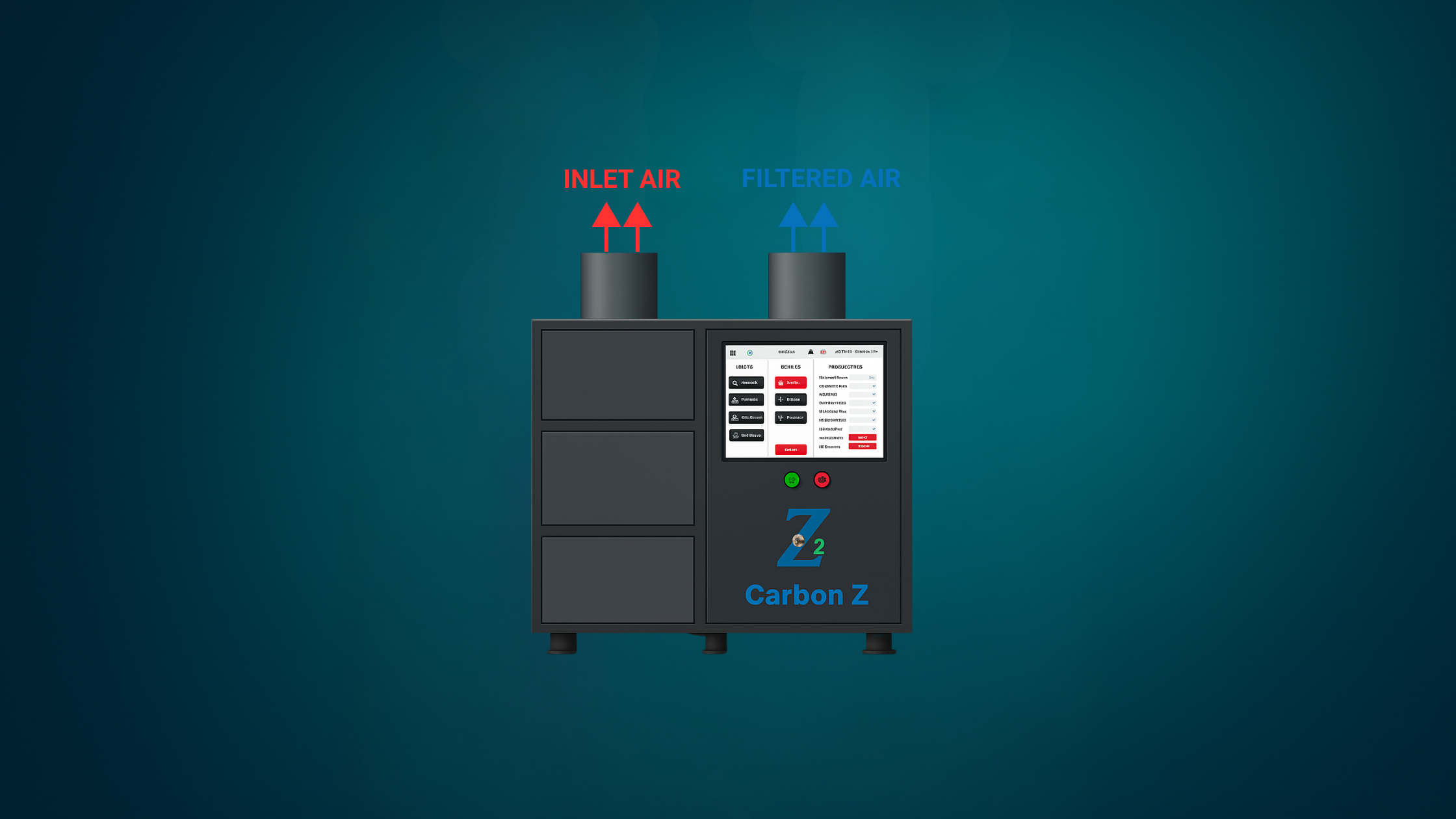
Shelters and bunkers require reliable air purification during emergencies when external contamination prevents fresh air intake. Carbon dioxide from human breathing accumulates quickly in sealed spaces, posing health risks that standard ventilation cannot address. Selecting the appropriate CO2 removal system ensures safe internal air quality, extending occupancy duration while integrating with existing safety infrastructure.
Essential Factors for CO2 Removal System Selection
Carbon dioxide levels rise to 1 percent in a 50 cubic meter shelter with four occupants within 24 hours, causing headaches, dizziness, and cognitive impairment. Concentrations above 5 percent lead to toxicity, particularly for vulnerable individuals. A properly chosen CO2 removal system maintains levels below 0.5 percent using scrubbers like regenerative amines or soda lime, operating independently of external air sources.
Key selection criteria include shelter volume, expected occupancy, power availability, maintenance requirements, and integration capabilities. Evaluate these factors systematically to match system specifications with operational needs.
Factor 1: Calculate Shelter Volume and Occupancy Needs
Measure the internal volume in cubic meters and determine maximum expected occupants, including overcrowding scenarios during evacuations. Multiply volume by people to establish required air processing capacity, typically 100 to 500 cubic meters per hour for standard family shelters. Larger community bunkers demand 1000 cubic meters per hour or more.
Online manufacturer calculators provide precise recommendations based on these inputs. Account for activity levels, as higher exertion increases carbon dioxide production by 20 to 50 percent.
Factor 2: Prioritize Regenerative Versus Disposable Technology
Regenerative CO2 removal systems feature multiple beds that alternate between adsorption and desorption cycles, automatically refreshing media without manual intervention. These support weeks of continuous operation, ideal for prolonged emergencies. Disposable soda lime systems suit short-term use but require frequent canister replacements every 100 to 500 hours.
Choose regenerative models for shelters expecting extended isolation, as they reduce long-term costs by 90 percent through media reuse. Verify cycle duration and automation features during evaluation.
Factor 3: Assess Power Requirements and Backup Options
Systems operate on 110 to 240 volts with power draws ranging from 500 watts for compact units to 2 kilowatts for industrial models. Confirm compatibility with shelter generators, batteries, or solar panels. Battery-ready designs extend runtime during grid failures, critical for blackout-prone scenarios.
Select units with low standby consumption and automatic low-power modes to maximize backup duration. Test integration with uninterruptible power supplies during purchase.
Shelter Sizing and Capacity Selection Table
|
Shelter Volume |
Maximum Occupants |
Recommended CO2 Removal System Capacity |
Technology Type |
|
50 cubic meters |
4 people |
100 cubic meters per hour |
Regenerative |
|
100 cubic meters |
10 people |
300 cubic meters per hour |
Regenerative |
|
200 cubic meters |
20 people |
500 cubic meters per hour |
Regenerative |
|
500+ cubic meters |
50+ people |
1000+ cubic meters per hour |
Industrial |
Add 20 percent capacity buffer for unexpected loads.
Factor 4: Evaluate Monitoring and Safety Features
Advanced CO2 removal systems include digital sensors for real-time carbon dioxide, oxygen, and pressure monitoring, with automatic alarms and app connectivity. Overpressure fans maintain positive internal pressure to block contaminants. Confirm compliance with civil defense standards for reliability certification.
Integrated gas detection prevents failures, while data logging supports post-event analysis and regulatory reporting. Prioritize touchscreen controls for user-friendly operation without specialized training.
Factor 5: Consider Maintenance and Cost Efficiency
Regenerative systems require annual professional servicing, while disposables need quarterly media changes. Factor in media costs, with regeneratives offering lower lifecycle expenses. Initial investments range from $3000 for basic units to $15,000 for feature-rich models, offset by durability and minimal downtime.
Review warranty terms, typically 2 to 5 years, and availability of local service support. Calculate total ownership costs over 10 years for accurate comparisons.
Factor 6: Ensure Compatibility with Existing Infrastructure
Verify ducting compatibility (50-to-100-millimeter diameters), mounting options, and integration with NBC filtration, fire suppression, and oxygen systems. Modular designs facilitate retrofits in older shelters. Confirm gastight seals and vibration resistance for blast-proof installations.
Professional consultations confirm seamless operation within complete air management ecosystems.
Step-by-Step Selection Process
- Document shelter specifications including volume, power, and occupancy.
- Use online tools to generate capacity requirements.
- Compare three to five models across regenerative technology, features, and pricing.
- Request manufacturer demonstrations or trials.
- Obtain quotes including installation and maintenance contracts.
Common Selection Mistakes to Avoid
|
Mistake |
Consequence |
Correct Approach |
|
Undersizing capacity |
Rapid CO2 buildup during overcrowding |
Add 20 percent buffer |
|
Ignoring power backups |
System failure in blackouts |
Prioritize battery/solar compatibility |
|
Skipping sensor validation |
Undetected malfunctions |
Demand certified monitoring |
|
Overlooking integration |
Incompatible with NBC/fire systems |
Verify modular connections |
Proactive evaluation prevents costly errors.
FAQs
Q. What distinguishes regenerative CO2 removal systems from disposable ones?
Ans. Regenerative systems automatically refresh media for weeks of use, while disposables require frequent replacements.
Q. How much does a suitable CO2 removal system cost for family shelters?
Ans. Prices start at $3000 for 100 cubic meters per hour capacity with essential features.
Q. Do all CO2 removal systems include overpressure protection?
Ans. Premium models do; confirm this feature prevents contaminant ingress.
Q. How often does maintenance occur for selected systems?
Ans. Monthly self-checks and annual professional service maintain peak performance.

 English
 Arabic
 French
 Spanish
 Portuguese
 Deutsch
 Turkish
 Dutch
Dutch
 Italiano
 Russian
 Romaian
 Greek
Greek