


Chemical Peel Market Size, Growth, Trends, Forecast (2024-2032)
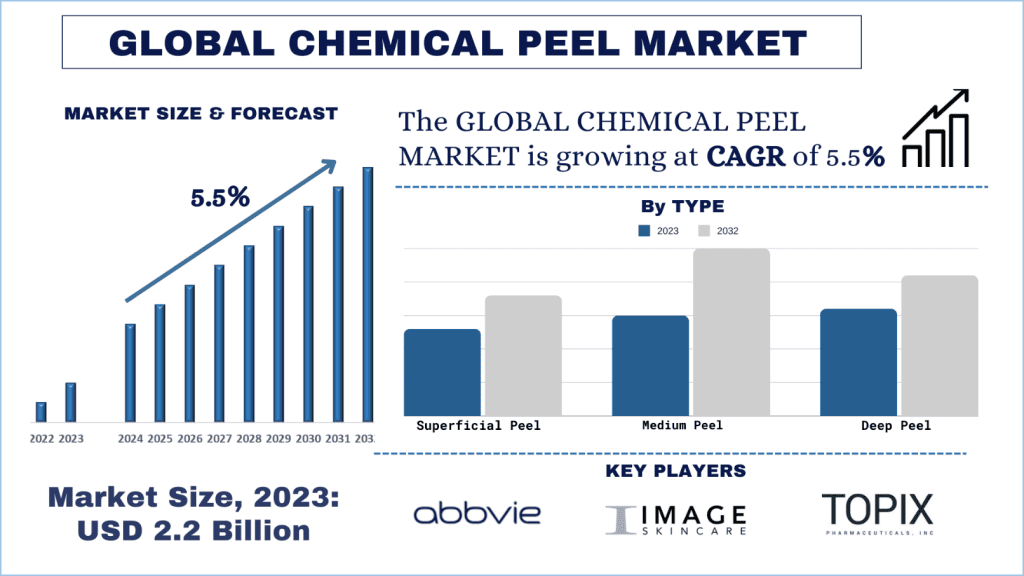
According to the Universal Data Solutions, the surge in product launches and the rise in demand for aesthetic solutions will drive the global scenario of the chemical peel market. As per their “Chemical Peel Market” report, the global market was valued at USD 2.2 Billion in 2023, growing at a CAGR of about 5.5% during the forecast period from 2024 - 2032 to reach USD billion by 2032.
Research and development (R&D) in chemical peels focuses on improving these treatments' safety, efficacy, and versatility. Ongoing research and development in chemical peels aim to push the boundaries of innovation, improve treatment outcomes, and expand the therapeutic possibilities of these versatile skincare procedures. By continuously refining formulations, integrating new technologies, and addressing emerging consumer needs, R&D efforts contribute to the evolution and advancement of the chemical peel market.
The various aspects of R&D in chemical peels are:
· Formulation Development: R&D efforts aim to develop advanced formulations for chemical peels that optimize results while minimizing adverse effects. This involves experimenting with different combinations and concentrations of active ingredients such as alpha hydroxy acids (AHAs), beta hydroxy acids (BHAs), trichloroacetic acid (TCA), phenol, enzymes, antioxidants, and skin-soothing agents.
· Technology Integration: Researchers explore innovative technologies to enhance the delivery and penetration of chemical peel solutions into the skin. This may involve incorporating nano-particles, liposomes, or microneedling techniques to improve the absorption and efficacy of active ingredients while reducing skin irritation.
· Safety and Efficacy Studies: R&D includes conducting rigorous clinical trials and safety studies to evaluate the effectiveness and safety of new chemical peel formulations. These studies assess factors such as skin tolerance, irritation potential, depth of penetration, duration of peeling, and long-term outcomes.
· Targeted Treatments: Researchers investigate the use of chemical peels for targeted treatments, such as addressing specific skin concerns like acne, hyperpigmentation, photoaging, melasma, and scars. This involves tailoring peel formulations to target different layers of the skin and specific biochemical pathways associated with each condition.
· Combination Therapies: R&D explores the synergistic effects of combining chemical peels with other skincare treatments, such as laser therapy, microneedling, dermal fillers, or topical skincare products. Combination therapies can enhance treatment outcomes by targeting multiple aspects of skin aging and damage simultaneously.
· Personalized Medicine: With advances in genomic and biomarker research, there is growing interest in personalized approaches to skincare. R&D efforts aim to identify biomarkers and genetic factors that influence individual responses to chemical peels, enabling personalized treatment plans tailored to each patient's unique skin biology and characteristics.
· Sustainability and Natural Ingredients: There is increasing consumer demand for sustainable and environmentally friendly skincare products. R&D explores the use of natural ingredients and eco-friendly manufacturing processes in chemical peel formulations to meet these consumer preferences while maintaining efficacy and safety standards.
· Patient Experience: Researchers focus on enhancing the patient experience during and after chemical peel treatments. This may involve developing novel application techniques, formulating products with pleasant textures and fragrances, and optimizing post-treatment care regimens to minimize discomfort and downtime.
Recent product innovations in chemical peels are:
Ø In October 2023, Kaya launched a state-of-the-art clinic for beauty and wellness aficionados in Bengaluru, India, with treatments including laser hair removal, dermal fillers, chemical peel, and more.
Ø In January 2023, U.S.-based Derma E launched a new vitamin C 10% multi-acid radiance liquid peel & retinol concentrated serum.
Ø In January 2022, U.S.-based Vitality Institute, the famous skincare brand, announced the launch of its first-ever VI Peel Body Treatment, which helps remove pigmentation and fine lines on the décolletage, targets body acne to reduce scarring and repeat flare-ups, smooths scars from surgeries or injuries, softens the appearance of stretch marks and tightens sagging skin.
Ø In November 2021, Spa and skincare brand Germaine de Capuccini launched a chemical peel line exclusively for professional use, encouraging superficial peelings to reveal rejuvenated skin.
With dignified applications, these approaches will hopefully burgeon the global chemical peel market in the upcoming years. However, the journey towards universal adoption of new approaches comes with challenges. Primary concerns include the safety implications associated with the healthcare sector, which limit their accessibility. The evolution of the healthcare industry's use of innovative products is undeniably transforming the way of approaching such aesthetic care products. The current trajectory is anticipated to continue to elevate, bringing hope to people worldwide.
Access sample report (including graphs, charts, and figures) - https://univdatos.com/reports/chemical-peel-market?popup=report-enquiry
Conclusion
Despite the hurdles, the future of chemical peel is undeniably bright. A new dawn is breaking in the development of innovative healthcare. There's no denying that these products are transforming the way of operating the healthcare sector, bringing enormous varieties to the population worldwide.
Contact Us:
Email - contact@univdatos.com
Website - www.univdatos.com

 English
 Arabic
 French
 Portuguese
 Deutsch
 Turkish
 Dutch
Dutch
 Italiano
 Russian
 Romaian
 Portuguese (Brazil)
 Greek
Greek