


Degenerative Disc Disease Treatment Market: Growth Trends and Innovations
Market Overview
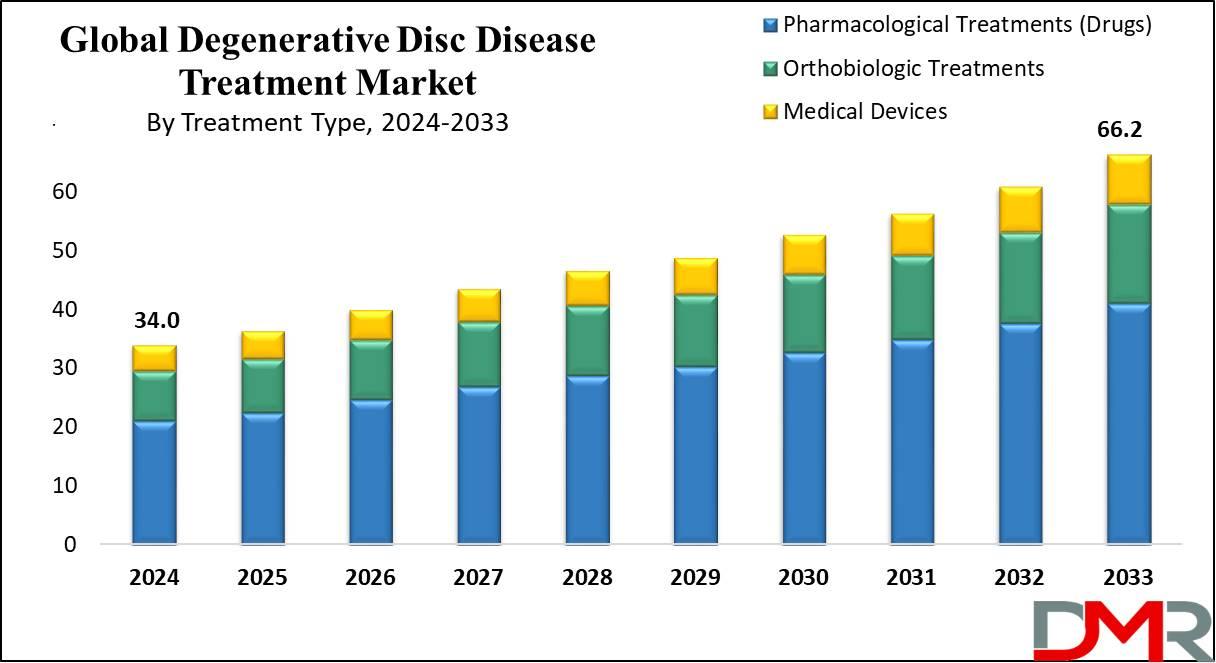
The Global Degenerative Disc Disease Treatment Market is witnessing substantial growth due to rising incidences of degenerative disc diseases among the aging population and the increasing demand for innovative and effective treatment options. The market is projected to reach USD 34.0 billion in 2024 and is further expected to grow to USD 66.2 billion by 2033 at a CAGR of 7.7%. Degenerative disc disease, characterized by chronic back pain, reduced mobility, and nerve compression, has become a critical concern for healthcare providers worldwide. The increasing prevalence of the condition among geriatric populations, coupled with lifestyle factors such as sedentary behavior and obesity, has created a pressing need for advanced treatment modalities, driving market expansion.
Treatment strategies for degenerative disc disease span conservative management, pharmacological interventions, minimally invasive procedures, and surgical options. Conservative treatments, including physical therapy, pain management, and lifestyle modification, remain the first line of approach, but rising patient demand for long-term relief has pushed the adoption of interventional therapies and surgical solutions such as spinal fusion, artificial disc replacement, and endoscopic procedures. The integration of technological advancements, including regenerative medicine, stem cell therapy, and biologics, has also enhanced treatment outcomes and patient satisfaction.
The market’s growth is further propelled by increasing healthcare spending, rising awareness about spinal health, and the development of specialized spinal treatment centers across various regions. With an aging global population and improvements in diagnostic capabilities, the demand for early intervention and effective treatment solutions is expected to accelerate over the forecast period. Degenerative disc disease treatment has evolved into a multidisciplinary approach, involving orthopedic surgeons, neurosurgeons, pain management specialists, and physical therapists, ensuring comprehensive patient care and optimized outcomes.
Market Dynamics
Several factors are driving the expansion of the degenerative disc disease treatment market. One of the primary growth drivers is the global increase in aging populations, as older adults are more susceptible to spinal degeneration due to reduced regenerative capacity and prolonged exposure to mechanical stress. Conditions such as osteoporosis, osteoarthritis, and chronic lifestyle-related spinal injuries exacerbate the progression of disc degeneration, leading to increased clinical intervention.
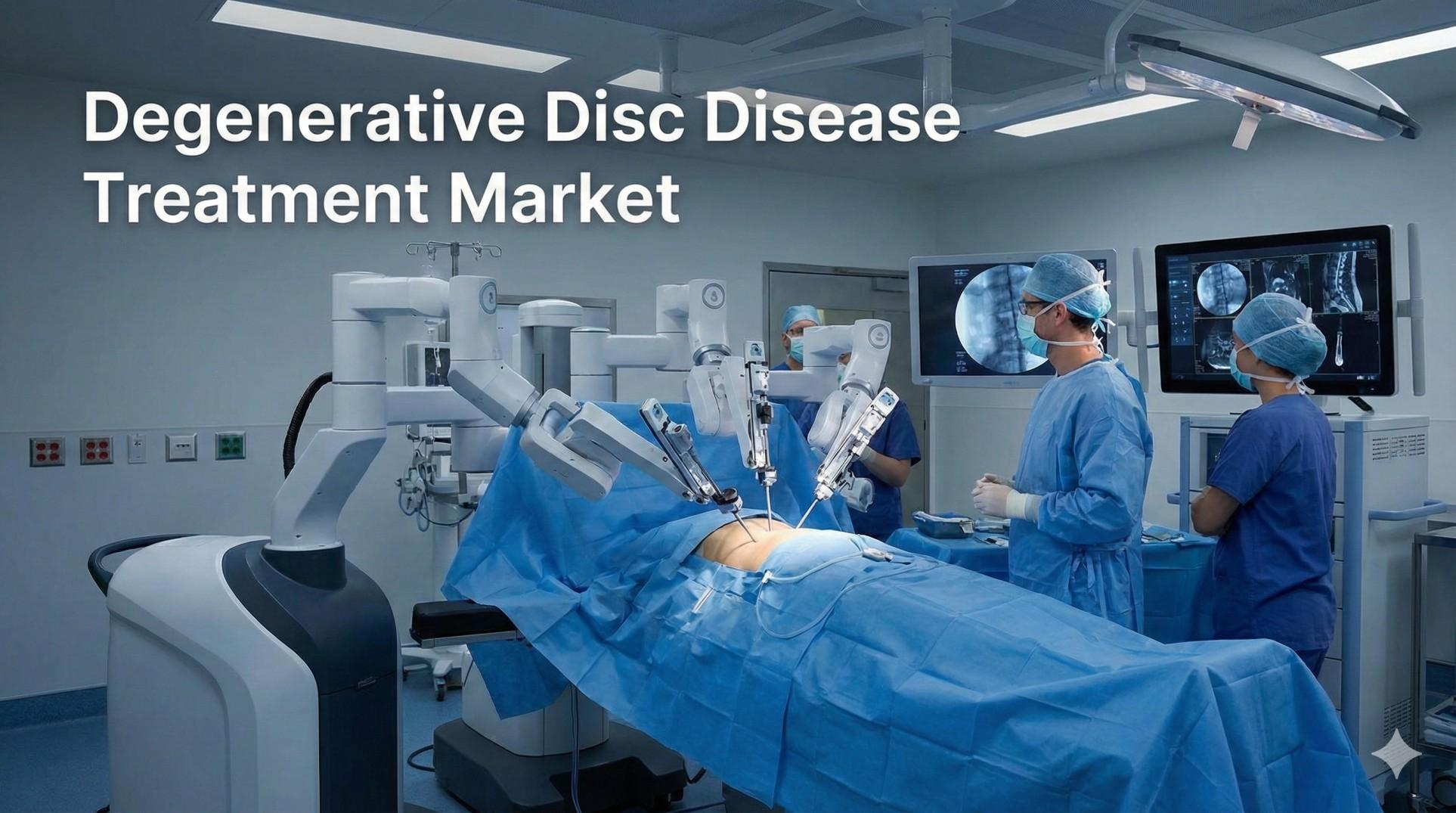
Technological advancements in surgical techniques, including minimally invasive spine surgery, robotic-assisted procedures, and endoscopic interventions, have improved safety, recovery time, and patient outcomes, thereby increasing adoption rates. Spinal fusion remains a standard surgical procedure, but artificial disc replacement and motion-preserving technologies are gaining popularity due to their ability to maintain spinal flexibility and reduce postoperative complications.
Pharmacological treatment options also contribute to market growth, with advancements in analgesics, anti-inflammatory drugs, and biologics improving symptom management and quality of life for patients. Regenerative therapies, including stem cell injections and platelet-rich plasma (PRP), are emerging as promising alternatives to traditional surgical interventions. The potential for these therapies to repair or regenerate damaged disc tissue has created significant interest among healthcare providers and patients alike.
However, the market faces challenges such as high treatment costs, limited reimbursement in certain regions, and a lack of awareness in emerging economies. Additionally, stringent regulatory requirements for new devices and biologic therapies can slow market entry for innovative solutions. Despite these challenges, the increasing prevalence of degenerative disc disease and the growing demand for effective and minimally invasive treatments ensure sustained market growth.
Market Segmentation Analysis
Segmentation of the degenerative disc disease treatment market offers insight into treatment trends, patient preferences, and emerging growth areas.
By Treatment Type: The market is broadly categorized into conservative treatment, pharmacological therapy, minimally invasive procedures, and surgical interventions. Conservative treatment, including physical therapy, exercise, and lifestyle modification, remains the most widely adopted approach due to its non-invasive nature and low risk profile. Pharmacological therapy, involving NSAIDs, analgesics, and biologics, provides effective pain management and inflammation control, complementing other treatment approaches. Minimally invasive procedures, such as endoscopic discectomy, nucleoplasty, and laser therapy, are increasingly preferred due to reduced recovery times, lower surgical risks, and improved outcomes. Surgical interventions, including spinal fusion, artificial disc replacement, and laminectomy, are recommended for severe cases where conservative or minimally invasive treatments fail.
By End-User: Hospitals dominate the treatment landscape due to the availability of specialized spinal care units, advanced surgical facilities, and multidisciplinary teams. Ambulatory surgical centers are increasingly contributing to market growth by providing cost-effective and efficient treatment options for minimally invasive procedures. Specialized orthopedic and spine clinics are also gaining prominence, offering focused expertise in degenerative disc disease management and regenerative therapies.
By Age Group: Patients aged 45–65 years constitute the largest demographic for degenerative disc disease treatment, driven by increased susceptibility to spinal degeneration and lifestyle-related musculoskeletal stress. Geriatric populations above 65 years are also a significant segment due to higher incidences of chronic pain and limited mobility. Early-onset cases in adults below 45 are rising, often linked to genetic factors, trauma, and sedentary lifestyles.
By Geography: North America dominates the market with 37.9% of global revenue in 2024, driven by high prevalence among aging populations, advanced healthcare infrastructure, and significant investment in spinal care technologies. Europe is witnessing steady growth due to established healthcare systems, increasing adoption of minimally invasive procedures, and rising awareness of spinal health. Asia Pacific is emerging as a high-growth region due to increasing healthcare access, rising disposable incomes, and growing awareness of advanced treatment modalities. Latin America and the Middle East & Africa are expected to experience moderate growth, supported by expanding healthcare infrastructure and increasing focus on musculoskeletal health.
Regional Analysis
North America holds a dominant position in the global degenerative disc disease treatment market. The region benefits from high healthcare expenditure, widespread availability of advanced spinal care facilities, and robust patient awareness regarding treatment options. In the United States, degenerative disc disease is a leading cause of chronic back pain, driving demand for both conservative and surgical interventions. Canada similarly exhibits high treatment adoption due to an aging population and well-established healthcare systems. The availability of reimbursement programs and insurance coverage further facilitates patient access to advanced treatment options.
Europe follows closely, with countries like Germany, France, Italy, and the United Kingdom leading in the adoption of innovative therapies. The region emphasizes minimally invasive techniques, regenerative medicine, and advanced surgical interventions, reflecting a focus on improving patient outcomes and reducing postoperative recovery times. Aging demographics, increasing prevalence of obesity, and lifestyle-related spinal conditions are contributing to growing treatment demand.

Asia Pacific is emerging as a significant growth market. Countries such as China, Japan, and India are witnessing rising incidences of degenerative disc disease due to increasing urbanization, sedentary lifestyles, and an aging population. Advancements in healthcare infrastructure, expansion of orthopedic and spine centers, and increased awareness of advanced treatments are driving market adoption. Government initiatives to improve healthcare access and investments in medical technology further support market expansion in this region.
Latin America and the Middle East & Africa are projected to experience moderate growth. Increasing awareness, growing healthcare infrastructure, and adoption of modern surgical techniques are key factors. However, limited access to advanced treatment facilities and financial constraints may moderate growth rates in these regions.
Download a Complimentary PDF Sample Report : https://dimensionmarketresearch.com/report/degenerative-disc-disease-treatment-market/request-sample/
Technological Advancements
The degenerative disc disease treatment market is witnessing continuous innovation aimed at improving patient outcomes and reducing recovery times. Robotic-assisted spine surgery has become increasingly prevalent, allowing surgeons to perform complex procedures with high precision. Endoscopic spine surgeries provide minimally invasive options, reducing postoperative pain and hospital stays.
Regenerative medicine is a major emerging trend, with stem cell therapy and platelet-rich plasma (PRP) treatments offering the potential to restore damaged disc tissue and reduce inflammation. Biologics are gaining traction as adjunct therapies, enhancing tissue repair and supporting long-term recovery. Additionally, advanced imaging techniques and computer-assisted surgical planning are improving diagnostic accuracy and surgical precision, ensuring better patient outcomes and reduced risk of complications.
Market Drivers and Opportunities
- Aging Population: The global increase in the geriatric population is directly influencing the prevalence of degenerative disc disease, driving demand for advanced treatment options.
- Technological Innovation: Minimally invasive procedures, robotic-assisted surgery, and regenerative therapies are expanding treatment possibilities and attracting more patients.
- Healthcare Spending: Rising expenditure on healthcare and availability of reimbursement programs facilitate access to effective treatments.
- Awareness and Education: Increased patient awareness regarding spinal health and treatment options is encouraging early intervention and adoption of innovative therapies.
- Lifestyle Factors: Sedentary behavior, obesity, and workplace-related musculoskeletal stress are increasing incidences of spinal degeneration, further boosting market demand.
Challenges
High treatment costs, limited accessibility in emerging regions, and stringent regulatory requirements for innovative therapies may hinder market growth. In addition, the lack of awareness in certain regions and the availability of alternative therapies can affect market penetration. However, continuous technological advancements and growing investments in healthcare infrastructure are mitigating these challenges.
Future Outlook
The Degenerative Disc Disease Treatment Market is expected to maintain a steady growth trajectory over the next decade. The increasing prevalence of chronic back conditions, technological advancements in treatment modalities, and the expansion of healthcare infrastructure across emerging markets are key growth enablers. North America is expected to maintain its dominance, while Asia Pacific is likely to emerge as a high-growth region due to rising healthcare access and increasing awareness of advanced treatment options. With projected market value reaching USD 66.2 billion by 2033, the sector demonstrates strong growth potential and long-term sustainability.
FAQs
1. What is driving the growth of the degenerative disc disease treatment market?
The growth is driven by the increasing prevalence of spinal degeneration among aging populations, rising awareness of treatment options, and advancements in minimally invasive and regenerative therapies.
2. Which treatment types are most popular?
Conservative management, pharmacological therapy, minimally invasive procedures, and surgical interventions are widely used. Surgical interventions are preferred for severe cases, while conservative and minimally invasive treatments are adopted for mild to moderate conditions.
3. Which regions dominate the market?
North America leads due to advanced healthcare infrastructure and high prevalence of degenerative disc disease. Europe follows with a focus on innovative surgical techniques, while Asia Pacific is emerging as a high-growth region.
4. How is technology impacting treatment adoption?
Technological advancements such as robotic-assisted surgery, endoscopic procedures, regenerative therapies, and advanced imaging techniques are improving patient outcomes and expanding market adoption.
5. What is the expected market growth by 2033?
The global market is expected to reach USD 66.2 billion by 2033, growing at a CAGR of 7.7%, driven by increasing prevalence of spinal conditions, technological innovation, and expanded healthcare access.
Summary of Key Insights
The Degenerative Disc Disease Treatment Market is experiencing robust growth driven by the rising prevalence of spinal disorders, an aging global population, and technological advancements in treatment options. North America dominates the market, while Asia Pacific is emerging as a high-growth region due to increasing awareness and healthcare access. The market is witnessing continuous innovation in minimally invasive surgeries, regenerative therapies, and biologics, enhancing patient outcomes and driving adoption. With a projected market value of USD 66.2 billion by 2033, the degenerative disc disease treatment market presents significant opportunities for healthcare providers, technology developers, and investors.
Purchase the report for comprehensive details : https://dimensionmarketresearch.com/checkout/degenerative-disc-disease-treatment-market/

 English
 Arabic
 Spanish
 Portuguese
 Deutsch
 Turkish
 Dutch
Dutch
 Italiano
 Russian
 Romaian
 Portuguese (Brazil)
 Greek
Greek