


Autonomous Ships Market Advancing Arctic Research And Environmental Monitoring Missions Globally
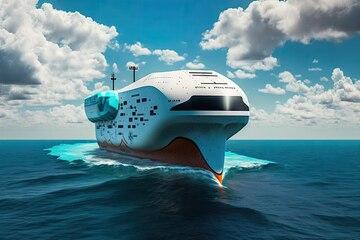
autonomous ships market is revolutionizing Arctic research and environmental monitoring by enabling safe, efficient, and continuous data collection in extreme conditions. The autonomous ships market integrates AI-powered navigation, real-time environmental sensing, and autonomous operational protocols to explore remote Arctic regions. By leveraging predictive analytics, autonomous fleet coordination, and advanced sensor technologies, the autonomous ships market ensures reliable monitoring of climate patterns, marine ecosystems, and ice dynamics. As global attention on climate change grows, the autonomous ships market emerges as a critical enabler of scientific research and environmental stewardship in challenging polar regions.
Introduction
The autonomous ships market is increasingly applied to Arctic research and environmental monitoring, where extreme conditions, remote locations, and unpredictable weather make human-operated missions challenging. Autonomous vessels can navigate icy waters, collect critical environmental data, and transmit real-time intelligence to scientific stations. Within the autonomous ships market, AI navigation, advanced sensors, and automated operations optimize research missions and enable continuous data collection. With the Arctic region experiencing rapid environmental changes, the autonomous ships market is essential for enhancing global climate research capabilities and ecological monitoring.
AI-Powered Navigation for Extreme Conditions
Safe navigation in ice-covered waters is a key feature of the autonomous ships market. AI algorithms analyze ice density, sea currents, and weather forecasts to determine optimal routes. In the autonomous ships market, predictive navigation allows vessels to traverse challenging Arctic conditions while minimizing risk. Autonomous navigation ensures continuous operations, demonstrating the strategic importance of the autonomous ships market in supporting critical Arctic research missions.
Advanced Environmental Monitoring Systems
The autonomous ships market employs a suite of sensors to monitor water temperature, salinity, ice coverage, and marine biodiversity. Radar, sonar, LiDAR, and satellite imaging provide comprehensive situational awareness. Within the autonomous ships market, these systems allow real-time monitoring, enabling scientists to gather accurate data without exposing human crews to harsh Arctic conditions. Environmental monitoring ensures sustainable and informed decision-making for climate and marine studies.
Predictive Maintenance for Operational Reliability
Operational reliability is crucial in remote Arctic missions. The autonomous ships market uses predictive maintenance systems to monitor engine performance, propulsion systems, and onboard equipment. In the autonomous ships market, predictive maintenance reduces the risk of vessel downtime, ensures mission continuity, and enhances the safety of autonomous operations in extreme and isolated environments.
Automated Data Collection and Research Support
The autonomous ships market integrates automated systems for data collection, sample analysis, and environmental measurement. Robotic arms, sensor-guided collection platforms, and AI-driven analytics allow for precise, continuous research operations. Within the autonomous ships market, automation reduces human intervention, accelerates scientific discoveries, and ensures accurate and consistent data acquisition across multiple Arctic research sites.
Fleet Coordination for Comprehensive Coverage
Autonomous research vessels can be deployed in coordinated fleets to cover large Arctic areas efficiently. The autonomous ships market enables AI-driven scheduling, route optimization, and real-time communication between vessels. In the autonomous ships market, intelligent fleet coordination enhances data coverage, allows simultaneous multi-location monitoring, and increases overall mission efficiency in Arctic research operations.
Connectivity and Remote Operations
Maintaining communication in polar regions is challenging due to limited infrastructure. The autonomous ships market utilizes satellite links, secure data channels, and remote monitoring platforms to oversee fleet operations. Within the autonomous ships market, seamless connectivity ensures real-time transmission of critical research data, remote mission oversight, and rapid response to unexpected conditions, ensuring scientific objectives are met efficiently.
Risk Mitigation in Harsh Environments
The autonomous ships market addresses operational risks such as ice collisions, extreme cold, and unpredictable weather. AI-based risk assessment, autonomous navigation, and redundant systems ensure vessels operate safely. In the autonomous ships market, proactive risk mitigation strategies improve mission success, reduce potential hazards, and maintain operational continuity in Arctic research missions.
Environmental Sustainability and Compliance
The autonomous ships market contributes to sustainable Arctic operations by monitoring environmental impacts, minimizing emissions, and reducing human interference in fragile ecosystems. AI-driven analytics ensure that research operations are both effective and environmentally responsible. Within the autonomous ships market, responsible operational practices help maintain ecological balance while facilitating critical climate research.
Regional Adoption and Research Initiatives
The autonomous ships market is increasingly adopted by research institutions in Europe, North America, and Asia for Arctic scientific studies. Collaborative international missions are using autonomous vessels to monitor climate change, marine life, and ice dynamics. Within the autonomous ships market, strategic deployment in polar research enhances global understanding of environmental changes and supports international scientific collaboration.
Technological Innovations Driving Growth
Continuous technological advancements, including AI navigation, autonomous decision-making, advanced sensors, and predictive maintenance, are accelerating the autonomous ships market in Arctic research. Digital twins, IoT-enabled monitoring, and automated data analytics enhance operational efficiency. Within the autonomous ships market, these innovations allow uninterrupted scientific missions in extreme environments, providing valuable insights into climate change and ecosystem dynamics.
Market Drivers and Strategic Opportunities
The autonomous ships market is driven by increasing global concern for climate change, the need for continuous environmental monitoring, and the operational challenges of Arctic research. Investments in autonomous technologies, advanced sensors, and AI analytics create significant opportunities. In the autonomous ships market, strategic deployment in polar research missions enhances scientific knowledge, reduces human exposure to hazardous conditions, and improves environmental monitoring capabilities.
Future Outlook
The autonomous ships market is expected to expand further in Arctic research and environmental monitoring, offering autonomous fleets capable of AI navigation, predictive analytics, and automated data collection. Future developments will focus on fully autonomous research operations, enhanced environmental sensing, and integration with international scientific networks. The autonomous ships market will continue to improve operational efficiency, safety, and data accuracy in remote polar research.
Conclusion
The autonomous ships market is transforming Arctic research and environmental monitoring through AI-powered navigation, real-time sensing, predictive maintenance, and automated data collection. By enhancing operational efficiency, safety, and scientific output, the autonomous ships market establishes itself as a strategic enabler of reliable, continuous, and advanced Arctic research missions worldwide.
Description:
Explore the autonomous ships market in Arctic research and environmental monitoring missions, focusing on AI navigation, predictive maintenance, automated data collection, and fleet coordination. Learn how autonomous vessels enhance safety, efficiency, and accuracy in polar scientific and ecological studies.

 English
 Arabic
 French
 Portuguese
 Deutsch
 Turkish
 Dutch
Dutch
 Italiano
 Russian
 Romaian
 Portuguese (Brazil)
 Greek
Greek