


Emerging Research Initiatives, Biomarker Studies, and Tissue Banking Strengthening US Liver Biopsy Market Research Infrastructure
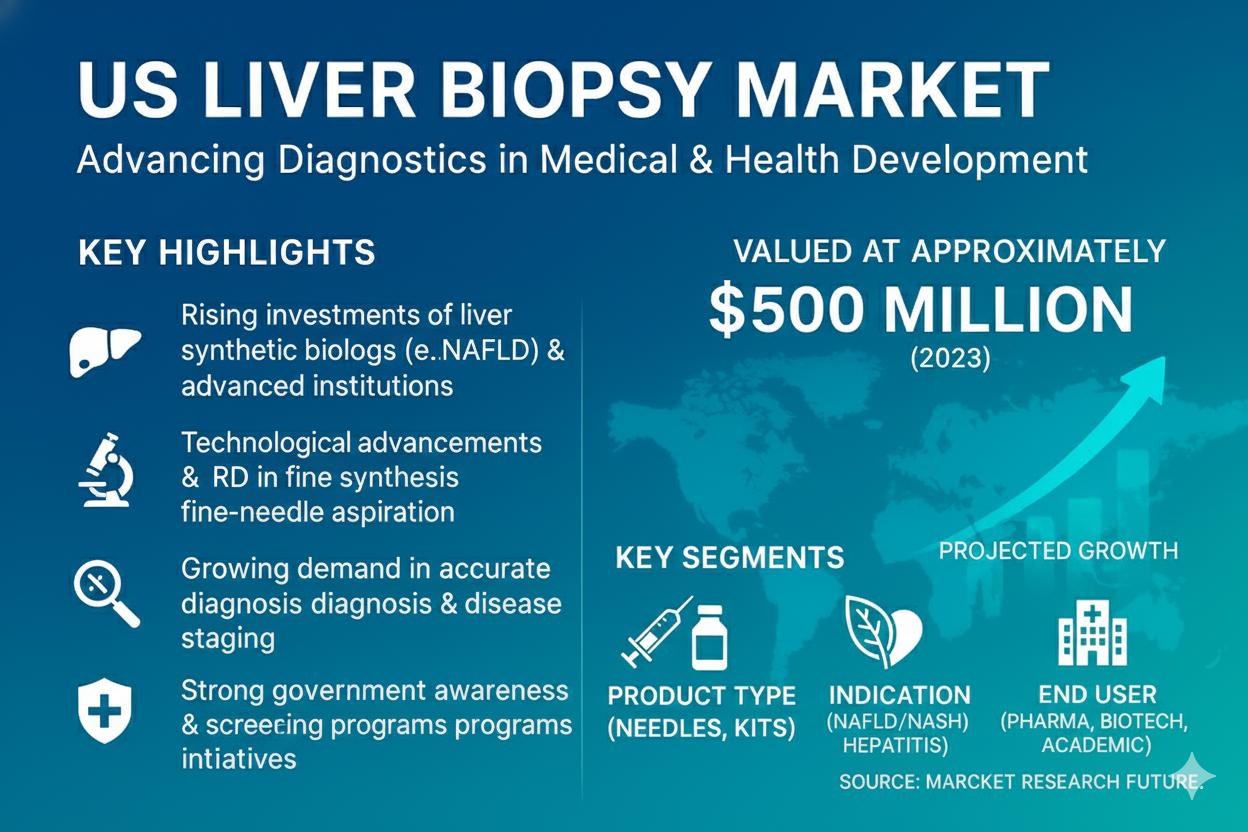
As interest in liver disease biomarkers and molecular pathology grows, research centers and biobanks are increasingly using liver biopsy samples to study fibrosis, gene expression, and treatment response. This research-driven demand supports expansion described in US Liver Biopsy Market Research, enabling better understanding of disease mechanisms and facilitating novel therapy development.
Clinical studies investigating NASH, liver cancer, cirrhosis reversal, and regenerative therapies often require histological endpoints, reinforcing the importance of biopsy as a standard procedure. Biobanks store tissue samples under strict protocols, allowing longitudinal studies and retrospective analyses. This long-term value increases biopsy volume and supports robust research pipelines.
Furthermore, collaborations between academic institutions, biotech firms, and pharmaceutical companies are fostering translational research, diagnostics innovation, and personalized liver disease therapies. Funding initiatives targeting liver disease research, combined with increasing grant allocations for histopathology and molecular diagnostics, continue to drive market investment and infrastructure growth.
FAQs
Q1. Why are biopsies important for liver disease research?
Because they provide actual tissue for histological, molecular, and genetic analyses — critical for understanding disease mechanisms and testing new therapies.
Q2. How do biobanks contribute to clinical research?
They store biopsy-derived tissue for longitudinal and retrospective studies, enabling deeper insights into disease progression and treatment efficacy.

 English
 Arabic
 French
 Spanish
 Portuguese
 Turkish
 Dutch
Dutch
 Italiano
 Russian
 Romaian
 Portuguese (Brazil)
 Greek
Greek