


Key Technologies Driving Advanced Crushing Equipment
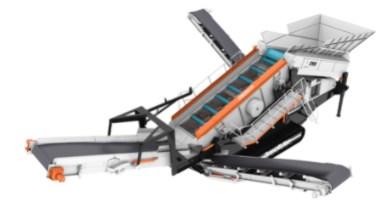
How Does a Stone Crushing Machine Factory Ensure High Production Stability?
A Stone Crushing Machine Factory plays an essential role in determining how stable and efficient a crushing plant will perform in long-term field conditions. The factory’s approach to structural engineering, material selection, and assembly precision directly influences the consistency of the machine’s output. Stability begins with a well-calculated design, where engineers evaluate load distribution, vibration behavior, and component integration. By using advanced modeling techniques, the structural frame is reinforced at critical stress points, allowing the machine to withstand continuous impact forces. This structural reliability supports smooth operation even under heavy workloads. Another aspect is the optimization of crushing chambers and rotor geometry, which is designed to maintain constant material flow without blockages. A factory that enforces strict machine testing before delivery can detect imbalance issues, misalignments, or hydraulic malfunctions, ensuring that the equipment is capable of producing stable output immediately after installation.
What Manufacturing Processes Improve Durability and Wear Resistance?
The long service life of crushing equipment is heavily influenced by the manufacturing practices within a Stone Crushing Machine Factory. Durability starts with selecting high-strength steels and wear-resistant alloys for components such as liners, hammers, cheek plates, and jaw dies. These materials undergo specialized heat-treatment processes that enhance hardness, toughness, and fatigue resistance. Factories focusing on longevity also invest in precision machining technologies to ensure accurate fitting of bearings, shafts, and sealing surfaces. Tight tolerances reduce friction and prevent premature wear. Furthermore, the use of computer-controlled welding guarantees uniform penetration and superior bonding strength, reducing the risk of structural failure. A reliable factory also performs rigorous quality inspections, including ultrasonic flaw detection and hardness testing, to ensure that each part meets performance standards. By maintaining strict quality control from raw materials to final assembly, manufacturers can significantly extend the working life of the equipment.
How Do Modern Manufacturers Address Efficiency and Energy Consumption?
Efficiency is one of the most important considerations for buyers, and a Stone Crushing Machine Factory must integrate multiple technologies to improve output while reducing energy consumption. Modern factories use variable-frequency drives to optimize motor speed according to load conditions, allowing the machine to save significant energy during partial-load operation. The design of the crushing chamber also contributes to efficiency, as an optimized geometry improves material breakage while reducing recirculation. Advanced hydraulic systems support automatic adjustments, helping maintain optimal particle size without manual tuning. Intelligent controls play a key role by monitoring feed rate, chamber pressure, and power consumption. These systems adjust parameters in real time to prevent overload, minimize idle time, and achieve the highest possible throughput. Improved lubrication systems, enhanced by sensors, ensure that key components operate with minimal friction. All these technological additions work together to reduce fuel or electricity consumption, ultimately lowering operational costs for users.
What Support Systems Improve Long-Term Operational Value?
Manufacturers today understand that crushing equipment is an investment requiring ongoing support. After-sales service is a major factor influencing long-term value, as timely maintenance and rapid parts replacement can prevent costly downtime. Leading factories build global service networks that provide technical guidance, installation assistance, and periodic inspections. They also maintain warehouses of essential components to shorten delivery times for replacement parts. In addition, digital documentation and remote diagnostic technologies allow service teams to monitor machine behavior and identify faults before they lead to failures. Training programs offered by factories help operators understand how to execute daily checks, maintain safe working conditions, and adjust machine settings for different materials. By combining equipment quality with reliable support, manufacturers ensure that operators achieve maximum productivity throughout the machine’s life cycle.
Machinery Weight: 9.5-75t
Max Feeding size(mm): ≤1000mm
Hopper Volume(m³): 61-1204t/h

 Arabic
 French
 Spanish
 Portuguese
 Deutsch
 Turkish
 Dutch
Dutch
 Italiano
 Russian
 Romaian
 Portuguese (Brazil)
 Greek
Greek