


Evaluating Stability and Power Use in Advanced Machinery
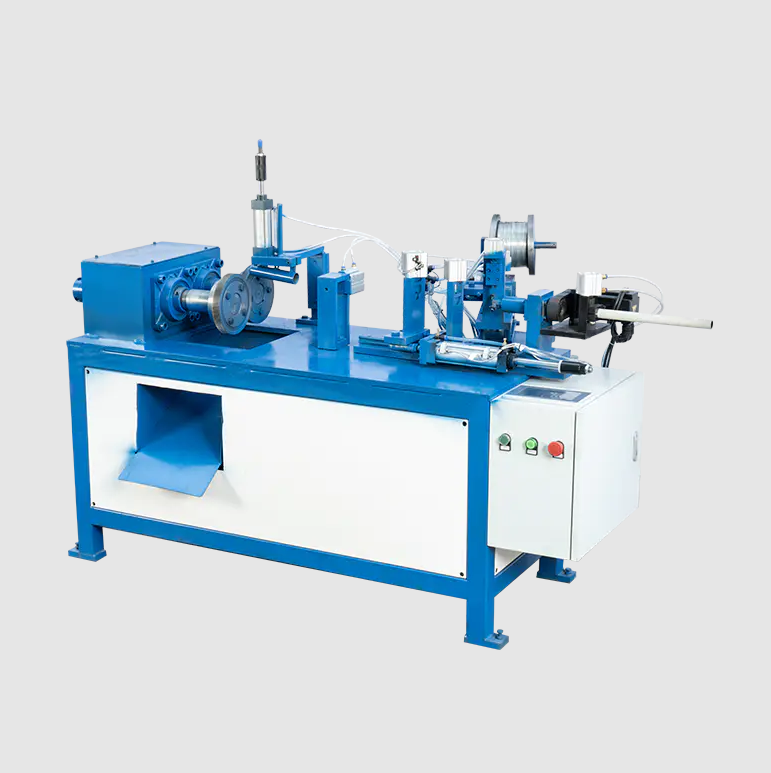
Overview of High-Speed Operational Demands
In modern industrial environments, the stability of Automation Machinery And Equipment during high-speed operation has become a key indicator of production efficiency and system reliability. As factories pursue faster cycle times and higher throughput, machines must maintain precise movement, low vibration, and consistent output even while operating at elevated speeds. Compared with older generations of machinery, the current generation benefits from improvements in structure, control algorithms, and power management, allowing high-speed operation without sacrificing accuracy or durability.
Mechanical Stability in Fast Motion
Mechanical rigidity is fundamental for stable high-speed performance. When equipment operates at high rotational or linear speeds, minor structural weaknesses can lead to amplified vibration, reduced positioning accuracy, and accelerated wear. Modern automated machinery uses reinforced frames, precision-machined guide rails, and balanced rotating elements to minimize oscillation. Advanced computational design, such as finite element analysis, helps engineers predict mechanical stress and optimize component geometry to ensure stable operation even under continuous high-speed loads.
Control System Accuracy and Synchronization
Stability at high speed also relies on the precision of the motion control system. Servo motors, high-resolution encoders, and real-time feedback loops allow automated systems to maintain accurate trajectory control despite rapid acceleration. Modern control platforms use predictive algorithms that calculate dynamic loads and adjust torque output instantly, reducing overshoot and preventing shock during high-speed transitions. Synchronization between multiple axes ensures smooth coordinated movement, which is crucial for assembly lines, machining centers, and robotic systems.
Thermal Management for Reliable Performance
High-speed operation increases heat generation in motors, drive components, and electronics. Without proper thermal management, excessive heat can cause dimensional expansion, lubricant breakdown, and reduced electrical efficiency. Today’s automated machinery integrates improved heat-dissipating surfaces, advanced cooling fans, and intelligent power modules that distribute loads to reduce hotspots. Stable thermal conditions directly result in more predictable machine behavior, minimized deformation, and longer service life.
Energy Efficiency Advantages Over Traditional Equipment
A significant advantage of modern Automation Machinery And Equipment is its lower energy consumption compared with traditional machines performing similar workloads. Several factors contribute to this improvement:
High-efficiency servo motors consume power only when movement is required, unlike older induction motors that run continuously.
Regenerative braking systems recover energy during rapid deceleration and feed it back into the power network or internal capacitors.
Lightweight yet strong materials reduce inertia, meaning less energy is required to accelerate or decelerate moving parts.
Optimized gear systems and lubricants lower frictional losses, allowing smoother motion with reduced torque demands.
Intelligent power control algorithms distribute electrical loads more efficiently, preventing unnecessary power spikes during high-speed operation.
Through these innovations, automated systems often achieve the same throughput—or even greater—while using significantly less electricity than older equipment. This not only lowers operating costs but also reduces heat generation, indirectly contributing to better high-speed stability.
Environmental and Operational Benefits
Improved energy efficiency also correlates with enhanced environmental performance. Reduced power consumption lowers carbon emissions for facilities relying on grid power. Additionally, stable power management systems reduce electrical noise and voltage fluctuations, which can otherwise affect sensitive sensors or control boards. As a result, high-speed automated machinery achieves a balanced combination of speed, stability, and sustainability.
Overall, the high-speed stability of modern automated machinery is the result of stronger mechanical structures, smarter control systems, and effective thermal management. At the same time, their energy efficiency far surpasses that of traditional equipment, enabling manufacturers to achieve higher productivity with lower power consumption. These combined advantages make contemporary systems essential for competitive, sustainable industrial operations.

 English
 Arabic
 French
 Spanish
 Portuguese
 Deutsch
 Turkish
 Italiano
 Russian
 Romaian
 Portuguese (Brazil)
 Greek
Greek