English
 Arabic
 French
 Spanish
 Portuguese
 Deutsch
 Turkish
 Dutch
Dutch
 Italiano
 Russian
 Romaian
 Portuguese (Brazil)
 Greek
Greek

Who Can Benefit from Laser Gum Contouring in Mumbai?
Health |
2026-02-07 09:29:54
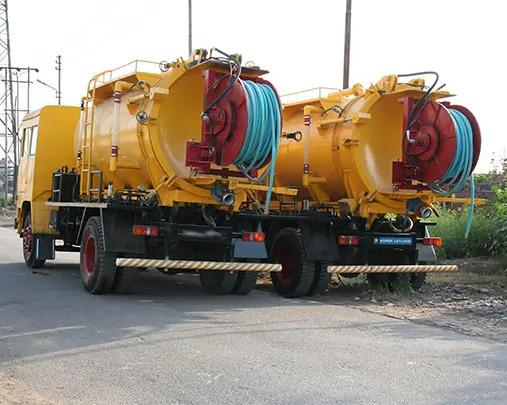
Maintaining clean and functional sewer systems is essential for public health, environmental safety, and smooth urban operations. Over time, sewer lines accumulate sludge, grease, debris, and waste materials that can lead to blockages, overflows, and unpleasant odors. Traditionally, sewer cleaning relied on manual and mechanical methods, but modern technology has introduced advanced solutions like sewer suction machines. Understanding the differences between these two approaches is crucial for municipalities, industries, and service providers aiming for efficiency and safety.
Sewer suction machines, often combined with high-pressure jetting systems, are advanced cleaning vehicles designed to remove blockages and waste from underground drainage systems. These machines use high-pressure water to break down debris and a powerful vacuum system to extract waste into a storage tank for safe disposal.
They are widely used for cleaning sewer lines, septic tanks, and industrial drains. Their ability to handle both liquid and solid waste makes them highly versatile and effective in modern sanitation systems.
Traditional sewer cleaning methods include manual and mechanical techniques such as plungers, drain snakes, augers, and chemical cleaners. These tools have been used for decades and are still common in small-scale or residential applications.
Mechanical tools like augers break through blockages, while chemical solutions dissolve organic waste. Although simple and cost-effective, these methods often provide only temporary relief and may not fully clean the pipe system.
One of the most significant differences lies in cleaning efficiency. Sewer suction machines offer deep and thorough cleaning by removing not only the blockage but also the residue stuck to pipe walls. High-pressure jetting ensures that grease, sludge, and debris are completely flushed out.
In contrast, traditional methods typically create a small opening in the blockage rather than removing it entirely. This often leaves behind residue, which can lead to recurring clogs.
Modern sewer suction machines are designed for high productivity. They can clean large sewer networks quickly and efficiently, making them ideal for municipal and industrial use.
Traditional cleaning methods, however, are labor-intensive and time-consuming. Workers must manually operate tools, which slows down the cleaning process, especially for large or complex sewer systems.
Sewer suction machines excel in dealing with stubborn blockages such as tree roots, heavy sludge, and industrial waste. The combination of high-pressure water and vacuum suction allows them to tackle even the most challenging obstructions.
Traditional tools like snakes and augers are effective for minor clogs but struggle with severe or deeply embedded blockages. In some cases, they may even push debris further down the pipe, worsening the issue.
Safety is a critical factor in sewer cleaning. Sewer suction machines minimize human contact with hazardous waste by automating the cleaning process. This reduces the risk of exposure to toxic gases, harmful bacteria, and infections.
Traditional methods often require manual intervention, exposing workers to dangerous conditions. Additionally, chemical cleaners used in traditional methods can pose health risks and environmental hazards.
Modern sewer suction machines are more environmentally friendly as they rely primarily on water pressure and mechanical suction rather than harmful chemicals. They ensure proper waste collection and disposal, reducing environmental contamination.
On the other hand, traditional cleaning methods often involve chemical solutions that can damage pipes and harm the environment over time.
Sewer suction machines provide long-lasting results by thoroughly cleaning the entire pipe system and removing buildup that causes recurring blockages. This reduces the need for frequent maintenance.
Traditional methods, due to their partial cleaning approach, often require repeated use, leading to higher long-term costs and inefficiency.
At first glance, traditional cleaning methods appear more affordable due to lower equipment costs. Tools like plungers and snakes are inexpensive and widely available.
However, sewer suction machines prove to be more cost-effective in the long run. Their efficiency reduces labor costs, minimizes downtime, and prevents recurring issues, ultimately saving money over time.
Despite their advantages, sewer suction machines have some limitations. They require skilled operators and involve higher initial investment. Additionally, they may not be necessary for small-scale cleaning tasks where simpler tools can suffice.
Traditional methods are limited in their ability to handle severe blockages and large sewer systems. They often provide temporary solutions, require frequent maintenance, and pose safety risks to workers.
Moreover, their inability to remove all debris can lead to repeated clogging, increasing overall operational costs.
The choice between sewer suction machines and traditional cleaning methods depends on the scale and complexity of the cleaning task. For small residential issues, traditional tools may be sufficient. However, for municipal, industrial, or large-scale cleaning, sewer suction machines are the clear winner.
Their efficiency, safety, and long-term effectiveness make them an essential tool in modern sanitation management.
The evolution of sewer cleaning technology has significantly improved how drainage systems are maintained. While traditional cleaning methods still have their place in handling minor issues, they fall short when it comes to efficiency, safety, and long-term performance.
Sewer suction machines represent the future of sewer maintenance, offering a powerful, reliable, and environmentally responsible solution. As cities continue to grow and infrastructure demands increase, adopting modern cleaning technologies is no longer optional—it is a necessity for sustainable urban development.