 English
 Arabic
 French
 Spanish
 Portuguese
 Deutsch
 Turkish
 Dutch
Dutch
 Italiano
 Russian
 Romaian
 Portuguese (Brazil)
 Greek
Greek

Build a Strong Property Brand with a Real Estate Digital Marketing Agency in India
Other |
2026-03-19 04:49:45
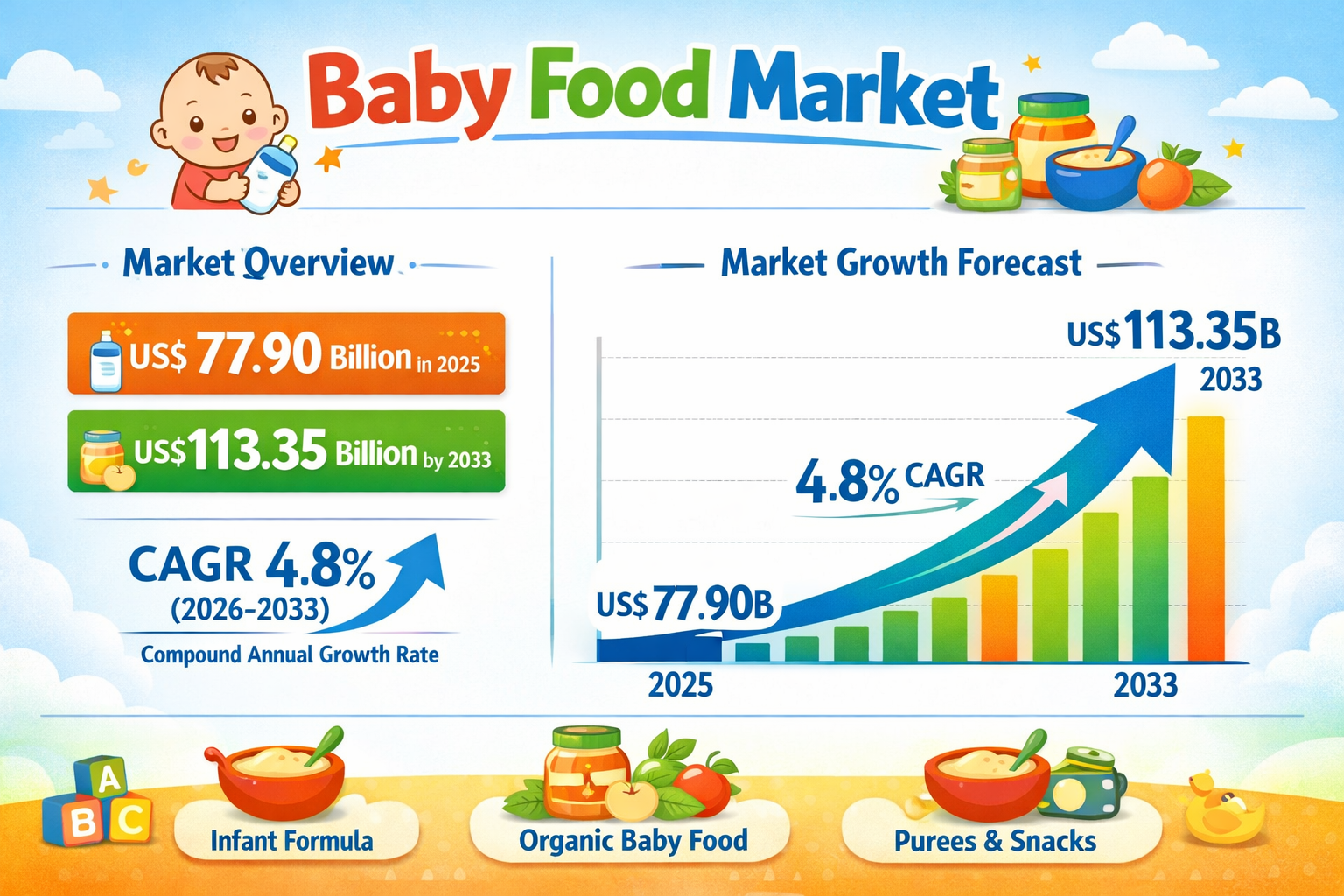
The global landscape of infant nutrition is undergoing a significant transformation, driven by shifting consumer preferences and a heightened focus on neonatal health. As parents increasingly prioritize nutrient-dense, convenient, and safe feeding options, the industry is seeing a robust surge in demand. According to recent industry analysis, the Baby Food Market size is expected to reach US$ 113.35 billion by 2033 from US$ 77.90 billion in 2025. The market is estimated to record a CAGR of 4.8% from 2026 to 2033.
This steady growth reflects the essential nature of the product category and the continuous innovation by manufacturers to meet the evolving dietary requirements of infants and toddlers worldwide. From organic purees to specialized infant formulas, the market is expanding its footprint across both developed and emerging economies.
Download PDF Report: https://www.businessmarketinsights.com/sample/BMIPUB00033683
Key Market Drivers: Fueling Growth in Infant Nutrition
Several socio-economic factors are propelling the expansion of the baby food sector. One of the primary drivers is the rising number of working women globally. As maternal employment rates increase, there is a growing dependency on prepared and "on-the-go" baby food products that offer convenience without compromising on nutritional integrity.
Furthermore, increasing awareness regarding the importance of the "first 1,000 days" of a child's life has led parents to seek high-quality, fortified food options. Modern parents are better informed about the role of DHA, probiotics, and essential vitamins in brain development and immune support. This shift from homemade to commercially prepared baby food—especially in urban areas—is a cornerstone of market growth.
Baby Food Market Drivers and Opportunities: The Organic and Premium Shift
The Baby Food Market Drivers and Opportunities are increasingly centered around the "premiumization" of the aisle. There is a massive opportunity for brands to tap into the organic and "clean label" segment. Modern parents are scrutinized labels more than ever, looking for products free from artificial preservatives, added sugars, and GMOs. This demand for transparency has opened doors for niche brands to compete with established giants by offering farm-to-table traceability.
Moreover, the expansion of e-commerce and specialized retail channels has made premium international brands accessible to a global audience. In emerging markets like Asia-Pacific and LAMEA, rising disposable incomes and rapid urbanization are creating a fertile ground for market players. The opportunity lies in developing region-specific flavors and affordable yet nutritious options to cater to the growing middle-class population.
Technological Innovations and Packaging Trends
Innovation in packaging is another vital driver. The shift from heavy glass jars to lightweight, BPA-free plastic pouches with re-sealable caps has revolutionized the portability of baby food. These innovations cater to the lifestyle of busy parents and reduce shipping costs for manufacturers. Additionally, advancements in food processing technologies, such as High-Pressure Processing (HPP), allow for the preservation of nutrients and flavor without the need for high heat, aligning with the demand for "fresh" commercial baby food.
Top Players in the Global Baby Food Market
The market is characterized by the presence of several established global players who are focusing on R&D and strategic acquisitions to maintain their market share. Key companies include:
Nestlé S.A.
Danone S.A.
The Kraft Heinz Company
Abbott Laboratories
Reckitt Benckiser Group plc (Mead Johnson)
Gerber Products Company
Hain Celestial Group
HiPP GmbH & Co. Vertrieb KG
Market Segmentation and Regional Outlook
The market is segmented by product type, including infant formula, baby cereals, and prepared baby food. While infant formula currently holds a dominant share due to its necessity for non-breastfed infants, the prepared baby food segment is witnessing the fastest growth due to the convenience factor. Geographically, North America and Europe remain mature markets with a high preference for organic products, while the Asia-Pacific region is expected to witness the highest CAGR due to high birth rates in countries like India and increasing health awareness in China.
Conclusion
The path toward 2033 for the baby food industry is paved with opportunities for innovation in health-centric and eco-friendly products. As the market moves toward a valuation of over US$ 113 billion, the focus will remain steadfast on safety, nutrition, and meeting the demands of the modern, time-constrained parent.
About Business Market Insights
Business Market Insights is a one-stop destination for industry reports and market analysis across various sectors, including Technology, Media, and Telecommunications, Chemicals and Materials, Food and Beverages, and Healthcare. We provide comprehensive market intelligence to help businesses make informed strategic decisions.
Contact us:
Phone: +1-646-491-9876
Email: sales@businessmarketinsights.com



