 English
 Arabic
 French
 Spanish
 Portuguese
 Deutsch
 Turkish
 Dutch
Dutch
 Italiano
 Russian
 Romaian
 Portuguese (Brazil)
 Greek
Greek

Luna V Phase: Key Resource Guide
Games |
2026-03-14 01:48:43
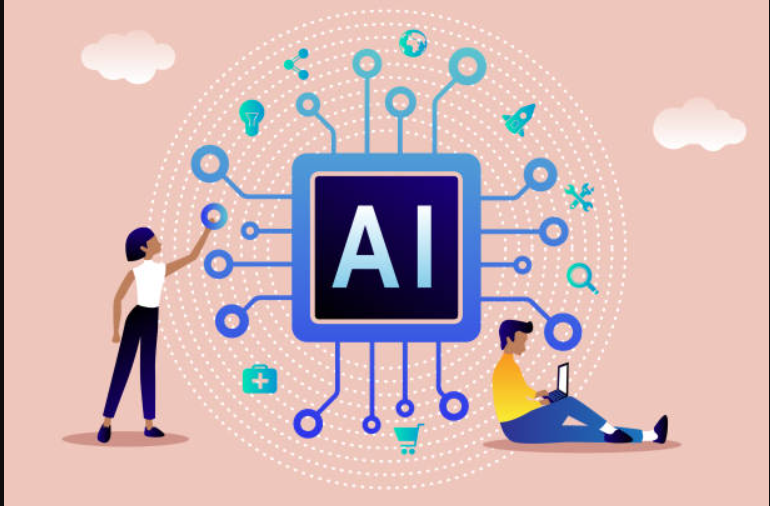
The traditional video production industry is currently undergoing a massive disruption. For decades, the process was slow, requiring huge teams, expensive cameras, and months of editing. However, the introduction of synthetic media has flipped the script. Now, high-quality video content can be generated from simple text prompts or reference files, allowing for a level of speed and creative freedom that was previously unimaginable for the average content creator.
This shift is driven by the need for brands to be "always on" across social media. Audiences today consume content at an incredible rate, and manual production simply cannot keep up with the demand. Generative models fill this gap by providing high-fidelity visuals that look and feel as though they were shot on a professional set. This efficiency allows creative teams to focus on the "why" and the "who" of their marketing, rather than getting bogged down in the "how."
At the heart of this movement is the veo model, which has quickly become the gold standard for high-fidelity video synthesis. What makes this technology so special is its ability to maintain consistency across long clips. It doesn't suffer from the "morphing" issues that earlier models faced. Instead, it produces stable, cinematic shots that follow the laws of physics. For a brand, this means their video content looks professional, grounded, and high-end, which is vital for maintaining a premium image.
The versatility of this model allows for a wide range of applications. From creating realistic digital avatars for corporate training to generating surreal, eye-popping visuals for music videos, the possibilities are endless. Because the system understands cinematic motion—such as slow pans, dolly zooms, and complex lighting—it acts as a virtual film crew. You don't need to know how to operate a camera to get a shot that looks like it was lensed by a professional cinematographer.
One of the most exciting aspects of modern video tech is the ability to build entire worlds from scratch. You no longer need to find the perfect location or wait for the "golden hour" to get the right light. You can simply define the environment in your prompt, and the AI will generate it with perfect global illumination and atmospheric effects. This level of control allows for a much more cohesive brand identity, as every visual element can be fine-tuned to match your specific aesthetic.
We are seeing the birth of a new type of professional: the AI creator. These individuals aren't just letting a machine do the work; they are directing it. By understanding how to write effective prompts and how to iterate on the output, they are producing work that is arguably better than traditional media. The machine handles the labor, while the human provides the taste, the vision, and the emotional resonance. This partnership is the future of all creative industries in the coming decade.
While video is powerful, the foundation of branding often starts with static imagery. Utilizing a professional image to image workflow allows you to maintain total control over your visual assets. You can take a successful photo and transform it into an oil painting, a futuristic 3D render, or a hyper-realistic lifestyle shot. This allows you to repurpose your existing library for new campaigns without the need for additional photo shoots, saving both time and thousands of dollars in production costs.
This technology is particularly useful for e-commerce brands that need to show products in various settings. Instead of shipping samples to different locations, you can digitally place your product into any environment imaginable. The AI ensures that the lighting on the product matches the new background perfectly, creating a composite that is indistinguishable from a real photograph. It’s an incredibly efficient way to build a massive catalog of high-quality visuals while keeping your overhead costs at a minimum.
Consistency: Ensure your product looks the same across every single platform and ad.
Speed: Go from an idea to a final, high-resolution render in under a minute.
Variety: Generate hundreds of variations of a single concept to find the one that performs best.
Control: Tweak every minor detail of an image without having to reshoot anything.
Innovation: Create visuals that are physically impossible to capture with a traditional camera.
Start with a clear vision of the emotional tone you want to achieve.
Use high-quality reference files to guide the AI's understanding of your brand's style.
Experiment with different cinematic keywords to see how they change the lighting and mood.
Always export in the highest possible resolution to maintain professionalism.
Combine AI-generated visuals with human-written copy for a truly resonant message.
The digital landscape is changing, and the tools we use to communicate must change with it. By integrating advanced motion models and realistic image transformation tools, you can build a brand that is both agile and visually stunning. This technology is about more than just efficiency; it's about expanding the horizons of what you can create. The era of high-cost, high-friction production is over. We are now in the age of intelligent creation, where the only limit is your own imagination.


