English
 Arabic
 French
 Spanish
 Portuguese
 Deutsch
 Turkish
 Dutch
Dutch
 Italiano
 Russian
 Romaian
 Portuguese (Brazil)
 Greek
Greek

Harry Potter Merchandise: 25th Anniversary Collection
Games |
2026-02-09 10:50:57
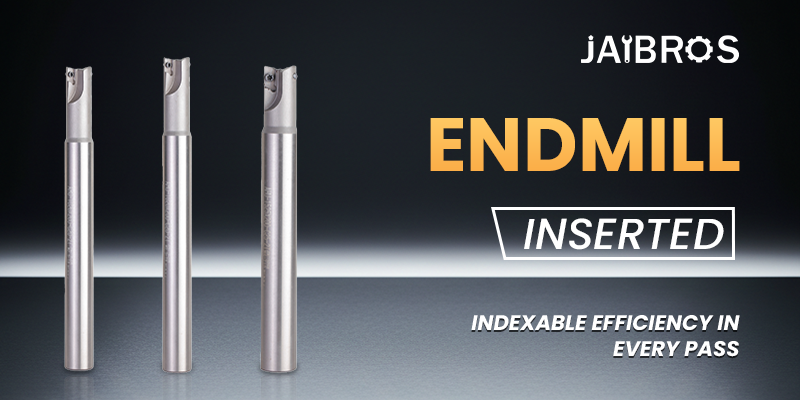
In the modern world of manufacturing, precision and efficiency are key. Whether the end product is automotive parts or aerospace components, the precision of the shape and the smoothness of the finish are directly related to the cutting tools involved in the manufacturing process. One of the most critical cutting tools involved in the process of milling is the endmill, which is instrumental in the process of shaping, cutting, and finishing the material involved in the CNC machining process.
Knowing the basics of the endmill and its application in the machining process could be helpful to machinists, engineers, and workshop owners in the process of increasing efficiency and precision.
An endmill cutter is a type of cutting tool involved in the process of material removal in the CNC machining process. While the drill is limited to cutting the material vertically, it is capable of cutting the material sideways, diagonally, and vertically, making it one of the most versatile cutting tools involved in the machining process.
This cutting tool is commonly applied in the CNC machining process in the following ways:
Slotting
Profiling
Contouring
Face milling
Plunging
There are different types of cutters, and they are used for different operations. The type of cutter to be used depends on the material and the operation to be carried out.
This type of cutter is used for general-purpose milling. It is used for producing sharp edges and flat surfaces.
This type of cutter is used for 3D contouring and for machining curved surfaces. It is most commonly used for mold and die work.
This type of cutter combines the advantages of flat and ball nose cutters. It makes the cutters stronger and less prone to wear.
The ability of a tool to perform well depends on the material it is made of.
High-Speed Steel (HSS)
Affordable and flexible
Best for working with softer materials
Not very durable when compared with carbide
Carbide Tools
A carbide end mill is recognized for its hardness and ability to withstand high temperatures. The tool is best used in high-speed operations and with hard materials such as stainless steel and titanium.
A carbide endmill cutter is the most sought-after tool in CNC machining because of its long-lasting ability and accuracy.
The process of CNC machining involves using programmed instructions to control cutting tools with high precision. In this process, the endmill rotates at high speeds to remove material from the workpiece.
Some of the common operations that can be performed using an endmill include the following:
This process is used to cut grooves or slots in the material with high precision.
The tool cuts the material from the sides to shape it in accordance with the design requirements.
This process is used to make complex shapes.
This process helps in making flat surfaces with smooth finishes.
This cutter, though primarily used for milling, can also be used for drilling.
All these operations make it an essential tool in the process of CNC machining.
The selection of the tool is of utmost importance in order to attain the best possible outcome. Some of the factors to consider are as follows:
The type of tool to be used on a particular material can vary significantly. For example:
Aluminum - Sharp and polished tools
Steel - Strong tools with heat resistance
Carbide end mills are recommended for use with harder materials due to their durability.
The tool coating enhances the tool’s performance by reducing friction and heat. The most common coatings used on tools are:
TiN (Titanium Nitride)
TiAlN (Titanium Aluminum Nitride)
This enhances the life of the carbide cutter.
The flutes are the cutting edges of the tool.
Fewer flutes—better chip removal
More flutes—smooth finish
The selection of the number of flutes is of utmost importance.
The cutting speed and feed rate settings should be appropriate in order to attain the best possible outcome.
The tool should be compatible with the machine. A high-quality tool for a CNC machine should be used to attain stability, accuracy, and precision in operations.
The benefits of using an appropriate tool in CNC machining include:
Precision and accuracy
Smooth surface finish
Versatility in cutting action
Reduced machining time
Increased productivity
The use of a carbide end mill cutter increases these benefits with longer tool life.
Experienced machinists may also be affected by this. The common mistakes that may occur when machining with the wrong tool are:
Using the wrong speed for cutting
Using the wrong tool material
Failure to consider tool wear
Failure to consider the right flute design
Failure to consider the right tool for the application
By avoiding these mistakes, the quality of machining can be greatly improved.
Jaibros Tools Pvt. Ltd. is a renowned name in the Indian market for offering high-quality industrial tools and machining solutions. The company deals in a variety of industrial tools, including precision cutting tools, measuring instruments, and accessories for CNC machines. Being a renowned brand for offering high-quality tools, competitive pricing, and quality support, the company is offering trusted solutions for the needs of the industry, including high-quality cutting tools for machining operations.
The significance of the endmill in the process of CNC machining needs to be understood in order to be precise and efficient in the process of manufacturing. Every step, starting from the selection of the right material and coating to the selection of the right tool itself, is important in the process.
Whether it is simple milling operations or complex designs that need to be made, the right endmill and the right tool in the process of CNC machining are important. Investing in the right tools, such as the carbide end mill or the carbide end mill cutter, is important.
1. What is the main purpose of a cutter?
This cutter is used for cutting, shaping, and finishing materials in a CNC machining operation.
2. What is the difference between HSS and carbide tools?
HSS tools are less expensive, but a carbide endmill provides greater durability and heat resistance.
3. Can a cutter be used for drilling?
Yes, it can perform a small amount of drilling and plunging, but it is not used for drilling.
4. How do I choose the right CNC tool?
One should consider the material, coating, flute count, and machine compatibility of the tool.
5. Why is a carbide endmill best for a CNC machining operation?
This cutter is best for a CNC machining operation because it allows for greater precision, durability, and performance.