


Automation in Building Construction: Transforming Efficiency and Growth
What is Automation in Building Construction?
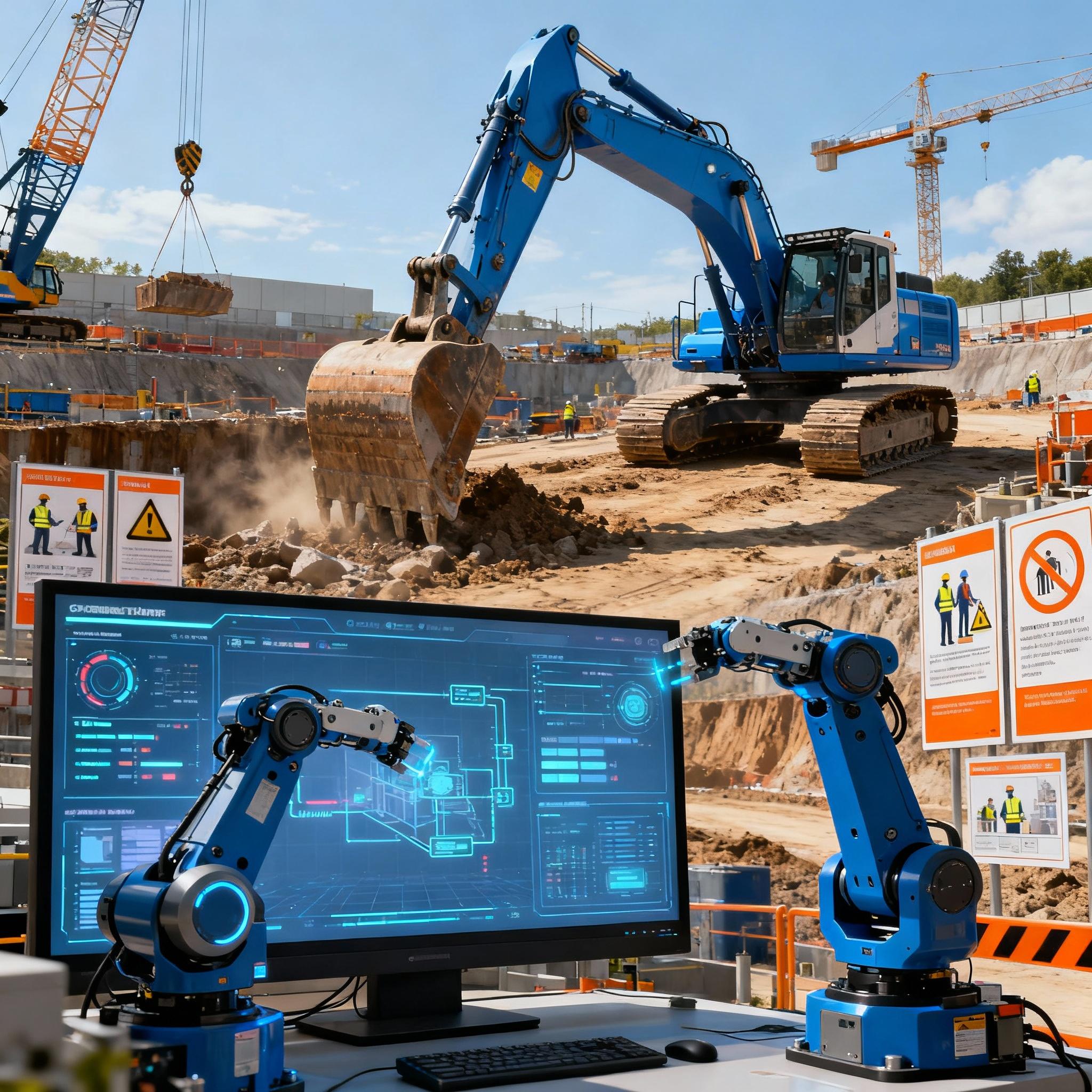
Automation in building construction refers to using technology to simplify and speed up repetitive tasks, allowing teams to focus more on actual building and less on manual admin work. It does not just mean robots or 3D printing homes; more importantly, it includes digital tools that automate approvals, document handling, billing, safety checks, and reporting. This kind of automation helps reduce human error, save time, and enhance project accuracy across building projects.
Construction companies often imagine automation as machines laying bricks or drones flying over sites. While those are exciting developments, the immediate benefits come from software-based automation that streamlines workflows like purchase order approvals and invoice generation. This smart process automation has real, measurable advantages for any size construction firm.
Many companies find automation in building construction crucial in managing scattered project information, speeding up payments, and ensuring safety compliance. For example, automating purchase order approvals can change days-long processes into just a few hours. You can read more about these practical applications and benefits of automation in building construction here.
Key Benefits of Automation in Building Construction
Automation brings several proven benefits to the building construction industry, such as:
-
Improved Accuracy and Data Quality: Centralizing project data and automating document version control reduces confusion and errors by up to 90%.
-
Greater Efficiency in Billing and Payments: Automation can cut manual billing time by up to 85%, allowing companies to invoice and get paid much faster.
-
Enhanced Safety Compliance: Real-time tracking ensures that safety documents are read and acknowledged, avoiding workplace hazards and fines.
-
Faster Project Approvals and Updates: Automated workflows accelerate decision-making and keep all stakeholders informed instantly.
-
Scalability Without Proportional Headcount Increase: Automated processes allow businesses to grow without needing large jumps in admin staff.
For instance, an infrastructure firm reduced their project setup time by 90% and improved their data quality index to 95% by using automated document management. Similarly, landscaping contractors cut their billing hours from 30 to 4 hours weekly through connected workflows, leading to improved cash flow and operational visibility.
Examples of Automation in Building Construction
Here are some real-world automation solutions that deliver great value:
-
Automated Purchase Order Processing
Pain points like slow manual approval chains for supplies get replaced by digital forms automatically routed based on approval levels, notifying everyone in real-time, and sending orders directly to suppliers. The result is speeding up approval processes from days to hours. -
Timesheet to Invoice Automation
Construction workers clock in/out using mobile apps with GPS. Hours are automatically validated against budgets, triggering automatic invoice generation to clients, which drastically reduces disputes and processing time. -
Centralized Document Management
Scattered project documentation can be consolidated into one easy-to-navigate repository with automatic version control and permission management, making audits and compliance checks painless and error-free. -
Safety Reporting Automation
Instant reporting of safety incidents through mobile apps allows quick follow-ups, trend tracking, and regulatory compliance, dramatically reducing repeat incidents on job sites.
Automating these processes is easier than many expect, often using low-code platforms like Microsoft Power Automate and Power Apps. These solutions integrate well with existing systems and are accessible from anywhere, including mobile devices, ensuring field teams stay connected to automation in building construction.
How to Implement Automation in Building Construction
Getting started with automation in building construction involves a clear, step-by-step approach:
-
Identify Your Biggest Pain Point
Choose one manual process causing delays or errors—for example, purchase order approvals or timesheet processing—and document every step to know baseline times and error rates. -
Connect Your Data Sources
Most construction companies have data everywhere—in accounting, project management, emails. Connecting these "data islands" digitally is essential for effective automation. -
Build Simple Automated Workflows
Start with a high-volume, rule-based process that involves multiple departments. Use drag-and-drop tools to create digital forms, approval flows, notifications, and dashboards. -
Measure Success and Adjust
Track time savings, error reduction, and user satisfaction. Use feedback to improve and expand to other processes gradually. -
Scale Across the Organization
Once you prove success with one team or process, extend automation to other teams, as adding automation in an established ecosystem becomes faster and cheaper.
By following these practical steps, companies can automate without overwhelming their teams or budgets and achieve a significant return on investment within months.
Common Mistakes to Avoid in Automation Projects
Avoid these pitfalls when automating your building construction processes:
-
Trying to automate everything at once instead of starting small.
-
Implementing automation without involving end users and stakeholders.
-
Choosing complex or expensive solutions that your team cannot use.
-
Automating inefficient or broken processes without fixing them first.
-
Neglecting change management, training, and ongoing support.
Focusing on these areas will improve adoption and long-term success.
Technology Stack for Automation in Building Construction
Successful construction automation typically uses a cloud-based, mobile-first, integration-ready technology stack for broad accessibility and scalability. Key recommended tools include:
-
Microsoft Power Platform: Power Apps for custom apps, Power Automate for workflow automation, Power BI for reporting.
-
Microsoft 365: Teams for communication and SharePoint for document management.
-
Dynamics 365: Business Central for ERP, Field Service for work orders, and Customer Service apps.
This integrated ecosystem reduces complexity and enables seamless automation tailored to construction needs.
Cost and ROI of Automation in Building Construction
Initial investments range from $20,000 for basic automation of a few processes to over $150,000 for enterprise-wide automation. Typical return on investment timelines are:
-
1–3 Months: Implementation and training.
-
4–6 Months: Operational efficiency gains.
-
7–12 Months: Full ROI realized.
-
2+ Years: 3 to 10 times return on initial investment.
Real savings come from reduced labor hours, lower error rates, and faster payment collections. One landscaping client saved over $130,000 annually, achieving a 32% ROI within the first year and ongoing 132% annual ROI afterward.

 English
 Arabic
 French
 Spanish
 Portuguese
 Deutsch
 Turkish
 Dutch
Dutch
 Italiano
 Romaian
 Portuguese (Brazil)
 Greek
Greek