


Textile Recycling Market set for strong expansion through green investments and technological innovation
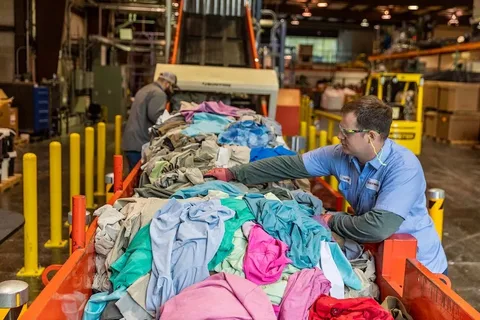
Textile Recycling Market is set for strong expansion through green investments and technological innovation that are reshaping how textiles are produced, reused, and repurposed. Governments, investors, and corporations are channeling capital into advanced recycling technologies, sustainable infrastructure, and circular business models. These developments are enabling efficient material recovery, reducing environmental impact, and driving long-term competitiveness in the global textile economy.
Surge in Green Investments
The increasing prioritization of environmental sustainability across industries has led to a surge in green financing initiatives. Institutional investors, private equity firms, and development banks are allocating substantial funds toward sustainable textile recycling projects.
These investments focus on scaling modern recycling facilities, adopting renewable energy sources, and supporting startups developing innovative recycling solutions. Green financing mechanisms, such as sustainability-linked loans and impact bonds, further reinforce financial commitment to reducing textile waste.
Technological Advancements in Recycling
Technology remains a central driver of progress in the textile recycling sector. Advanced mechanical and chemical recycling systems are improving fiber recovery efficiency, material purity, and process scalability.
Innovations such as automated sorting, robotic separation, and AI-based fiber identification are increasing recycling precision while reducing operational costs. Chemical recycling, in particular, enables the regeneration of high-quality fibers from blended materials that were previously difficult to process.
Integration of Digitalization and Automation
Digital technologies are optimizing textile recycling operations by enabling real-time monitoring, data-driven decision-making, and enhanced process control. Automated sorting lines and digital tracking systems improve throughput while minimizing contamination in waste streams.
Blockchain-based traceability platforms ensure transparency in recycled material sourcing, allowing manufacturers to verify sustainability claims and maintain compliance with environmental regulations. The combination of digitalization and automation is making large-scale recycling more efficient and reliable.
Role of Circular Economy Policies
Governmental support through circular economy frameworks is accelerating the development of textile recycling infrastructure. Policies promoting waste minimization, extended producer responsibility (EPR), and material recovery are encouraging industry-wide adoption.
Tax incentives, recycling mandates, and research grants are also motivating companies to invest in sustainable practices. As policy alignment strengthens globally, the textile recycling industry is gaining both regulatory and financial stability.
Growing Participation of Global Brands
Major apparel and textile companies are expanding their recycling initiatives to align with sustainability targets. By collaborating with recyclers and technology providers, brands are ensuring closed-loop systems where discarded textiles are transformed into new products.
These corporate initiatives are backed by long-term investment commitments in renewable materials, sustainable design, and eco-friendly manufacturing processes. As a result, recycling is becoming a cornerstone of brand identity and operational strategy.
Environmental and Economic Impact
Green investments in textile recycling contribute to both environmental preservation and economic growth. By reducing waste generation and resource depletion, these projects help cut greenhouse gas emissions and conserve natural inputs.
At the same time, recycling initiatives create new employment opportunities, stimulate industrial innovation, and enhance trade competitiveness. This dual benefit reinforces the market’s importance within global sustainability agendas.
Emerging Recycling Hubs and Industrial Ecosystems
Countries across Europe, Asia, and North America are becoming leading hubs for textile recycling. Governments are partnering with private companies to establish regional recycling clusters equipped with state-of-the-art processing facilities.
These ecosystems integrate collection networks, recycling plants, and manufacturing units within a single framework, ensuring efficient material flow and waste reduction. The clustering model supports economies of scale and drives technological diffusion across sectors.
Collaborative Research and Innovation Networks
Universities, research institutions, and private organizations are forming collaborations to advance recycling technologies and material science. Research focuses on developing eco-friendly solvents, enzymatic recycling methods, and hybrid systems capable of processing mixed textile waste.
Such collaborative frameworks promote shared innovation and accelerate the commercialization of next-generation recycling technologies, expanding the market’s overall potential.
Future Prospects and Market Outlook
The future of the textile recycling market is defined by continuous technological innovation and sustained investment flows. Green financing trends are expected to intensify, supporting widespread adoption of advanced recycling technologies.
As circular economy models become mainstream, textile recycling will evolve into a vital component of sustainable manufacturing systems. The integration of digital tools, renewable energy, and advanced material recovery processes will ensure both environmental responsibility and economic viability.
In the coming decade, the textile recycling market is positioned to become one of the most dynamic sectors within the global sustainability landscape, driving progress toward a waste-free, resource-efficient, and technologically empowered textile industry.

 English
 Arabic
 French
 Spanish
 Portuguese
 Deutsch
 Turkish
 Dutch
Dutch
 Italiano
 Russian
 Romaian
 Greek
Greek