


First Indian bowler to take 600 Test wickets
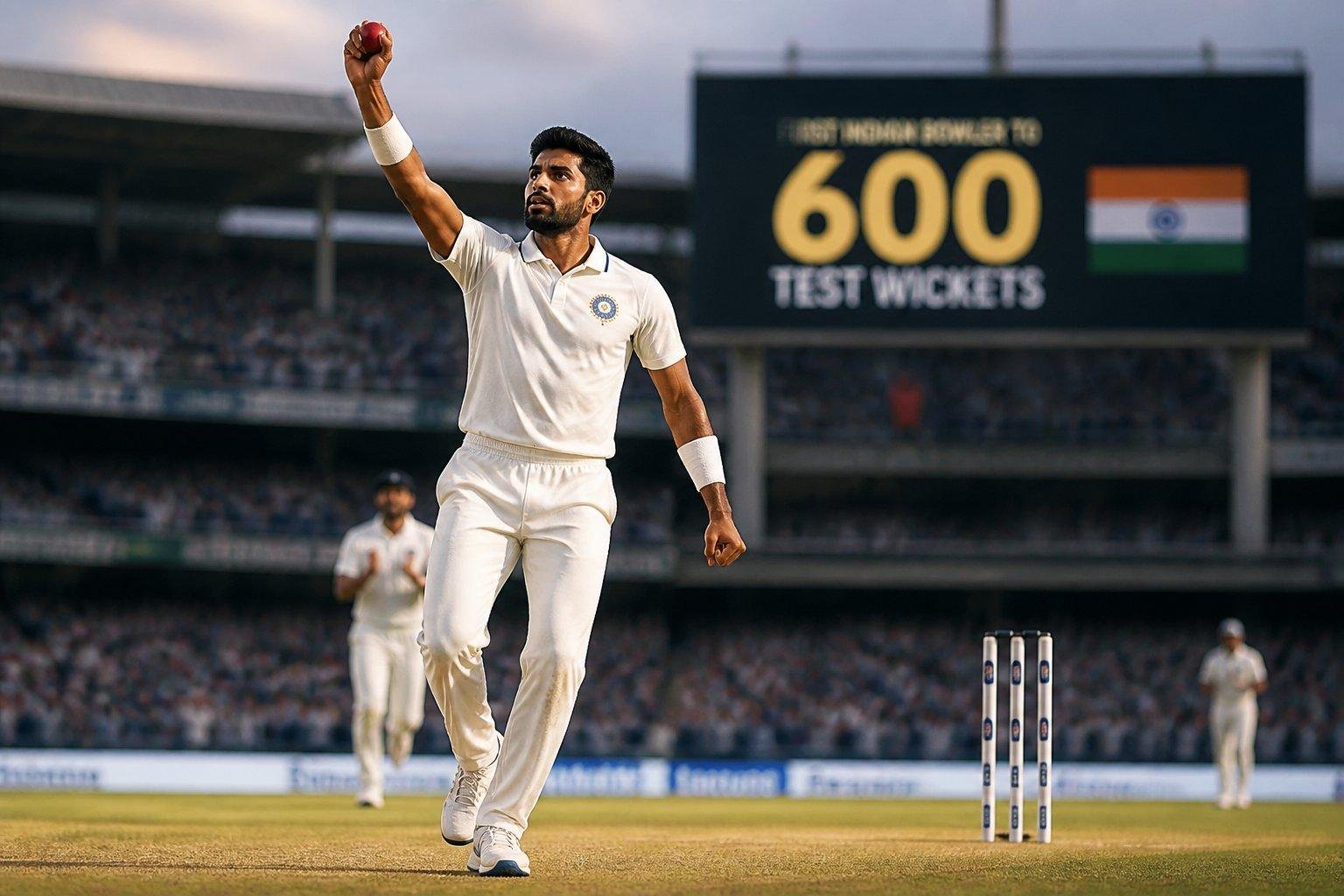
The Night a Leg-Spinner Rewrote Indian Cricket History
There's a particular kind of quiet that falls over a cricket ground when a bowler is closing in on something historic. You could feel it building around Anil Kumble every time he ran in during the back half of the 2000s. He wasn't the quickest, he didn't spin the ball miles like the wrist-spinners fans dreamed about, and he never really looked like the kind of bowler who'd end up owning a piece of cricket history. And yet, on the 10th of August 2008, in a Test against Australia in Delhi, Kumble became the first Indian bowler to reach 600 Test wickets. He eventually finished his career with 619, a number that, even now, sits untouched by any other Indian bowler.
Why This Number Actually Means Something
Six hundred wickets sounds like a big round number, the kind that gets thrown around in highlight reels without much thought. But sit with it for a second. A Test match lasts five days, and even then, a bowler might only get two real opportunities to take wickets in a match if the pitch is flat and the batters are set on grinding it out. To get to 600, you need years of fitness, years of selectors trusting you, and years of turning up on pitches that sometimes give you nothing to work with. Kumble played 132 Test matches to get there. That's not a number built on one purple patch or one dream season. That's a career.
The Bowler Nobody Could Quite Categorize
Kumble never fit neatly into the traditional idea of an Indian spinner. Growing up watching cricket in India, you're taught to expect leg-spinners and off-spinners to loop the ball, deceive batters with flight, and turn it big off the surface. Kumble did none of that in the way people expected. He bowled quicker through the air than most spinners, his googly barely turned, and batters often said facing him felt more like facing a fast-medium bowler who happened to spin the ball a little. That unpredictability, more than sharp turn, was his real weapon. Batters who prepared for a traditional leg-spinner found themselves undone by pace and bounce instead.
The Jaw That Wouldn't Let Him Stop
If you want one moment that defines who Kumble was as a cricketer, it's not even from his 600th wicket. It's from a Test against West Indies in 2002, when he fractured his jaw during the match. Instead of sitting out, he came back out onto the field with his jaw heavily bandaged and bowled 14 overs anyway, taking the wicket of Brian Lara in the process. That single image tells you more about how he built his career than any statistic can. Getting to 600 wickets isn't just about skill. It's about a mindset that refuses to treat pain or fatigue as a good enough reason to stop.
What the Journey to 600 Actually Looked Like
Kumble didn't arrive at 600 wickets through one dramatic spell. It was built patchily, over more than a decade, through Test series in India, Australia, England, South Africa, and everywhere in between. There were entire tours where he barely got recognition, playing second fiddle to India's more celebrated batting stars. There were injuries, dips in form, and periods where critics wondered if his methods, so different from classical spin bowling, would eventually be found out by better batting lineups. Every time that happened, he found a way to adjust and come back with a fresh trick, a new variation, a sharper plan for a specific batter.
The Perfect Ten
Any conversation about Kumble's wickets has to include the day he took all ten wickets in a single Test innings, against Pakistan in Delhi in 1999. Only one other bowler in the history of Test cricket, Jim Laker, had ever managed that feat before him. Kumble did it on a pitch that was turning, against a strong Pakistan batting lineup, and he did it with the calm efficiency that became his trademark. That spell alone would have been enough to secure his place in cricket folklore. Combined with everything else, it becomes just one chapter in a much longer story.
Captaincy and Leading by Example
Kumble also captained India during a difficult period, including the infamous "Monkeygate" series against Australia in 2007-08, where tensions between the two teams boiled over both on and off the field. As captain, he was known for speaking plainly and standing up for his players, even when it meant confrontation with a much more dominant Australian side. That willingness to hold his ground, without theatrics or excessive emotion, mirrored exactly how he bowled: steady, precise, and unwilling to back down regardless of the conditions or the opposition in front of him.
Reaching the Number in Delhi
When Kumble finally got to 600, dismissing Andrew Symonds in that Delhi Test against Australia, the celebration on the field wasn't wild or over the top. It matched his personality: a raised arm, a quiet acknowledgment from his teammates, and then straight back to work. There was no lap of honor, no extended pause in play. For a man who built his entire career on relentless consistency rather than flashes of brilliance, that muted reaction felt exactly right. He wasn't chasing a milestone for its own sake. The milestone simply arrived because he kept doing the same disciplined work, over and over, for more than a decade.
Why No One Has Matched Him Since
Since Kumble's retirement in 2008, India has produced plenty of excellent bowlers, but none have come close to touching 600 Test wickets. Part of that is simply the changing nature of cricket, with shorter formats pulling talented bowlers away from the patience required for Test cricket. Part of it is also that longevity at the very top, the kind Kumble managed, is genuinely rare. It requires a body that holds up, a mind that stays sharp through inevitable dry spells, and enough trust from selectors and captains to keep getting picked even when results aren't going your way. Kumble had all three, for over a decade, which is why his record has stood untouched for so long.
A Legacy Built on Persistence, Not Flash
What makes Kumble's story worth returning to isn't just the number 600, or even the eventual 619 he retired with. It's the reminder that some of the greatest achievements in sport come not from natural brilliance alone, but from sheer persistence. He wasn't the bowler people expected to dominate Test cricket for as long as he did. He simply kept showing up, kept adjusting, kept working, and by the time people looked up, he'd quietly become the first Indian bowler to reach a number that still stands alone in the record books today.

 English
 Arabic
 French
 Spanish
 Portuguese
 Deutsch
 Turkish
 Dutch
Dutch
 Italiano
 Romaian
 Portuguese (Brazil)
 Greek
Greek