


How Much Is a Cricket Kit? Full Cost Breakdown
Why the Price Range Is So Wide
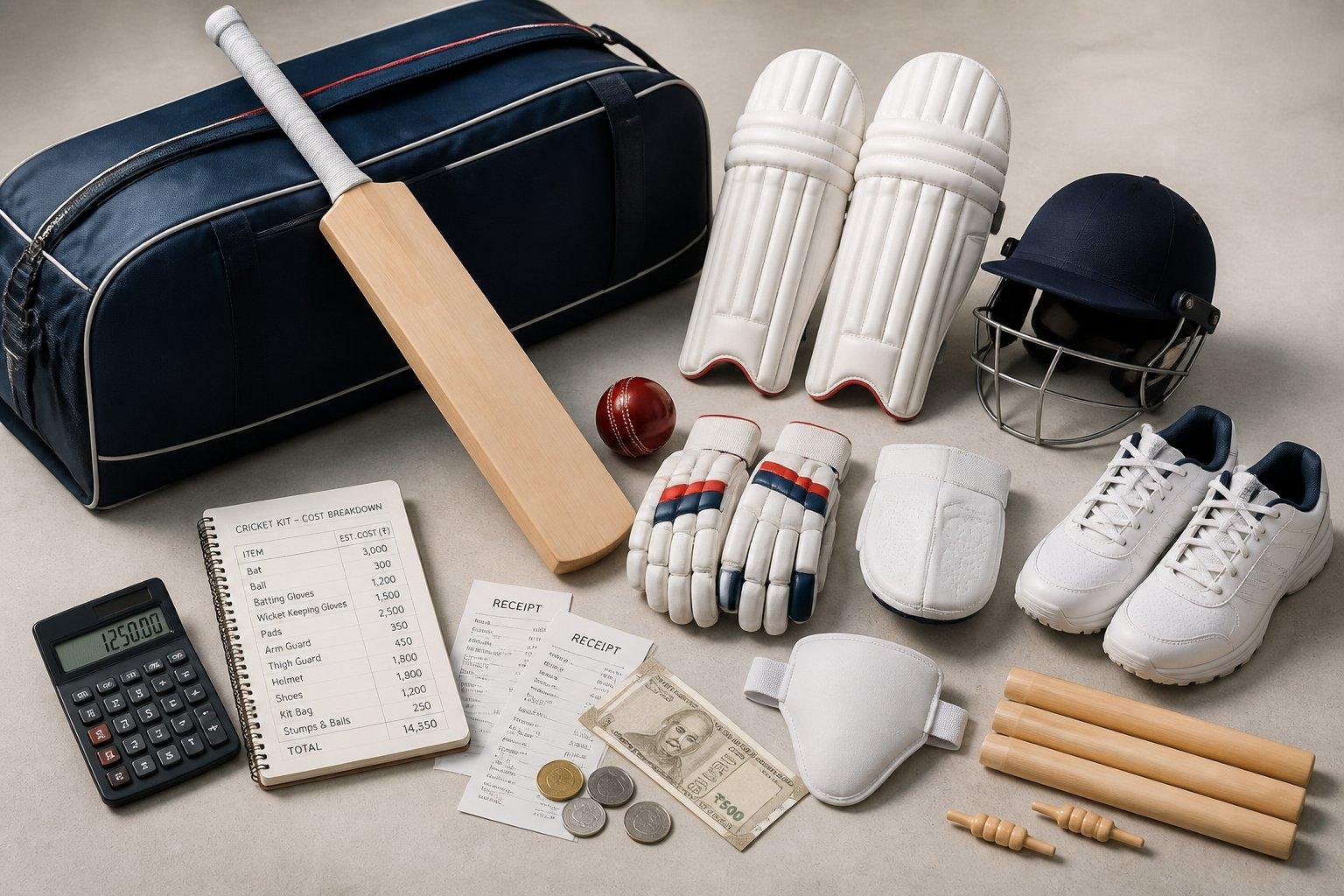
If you've started shopping for a cricket kit, you've probably noticed something frustrating: one website says you can get fully equipped for $80, and another is showing bats alone for $400. Both are telling the truth. Cricket gear spans an enormous range because you're not buying one product, you're buying eight or nine separate pieces, and each one comes in beginner, club, and professional grades. A full kit can cost anywhere from about $150 for a basic starter set to well over $1,000 if you're chasing the same gear international players use. The trick isn't finding "the price" of a cricket kit, it's understanding what you're actually paying for so you can decide where to spend and where to save.
The Bat: Your Biggest Single Expense
The bat is usually the most expensive item in the bag, and also the one where price differences are easiest to justify. Entry-level bats made from lower-grade willow, often marketed to kids or absolute beginners, run somewhere in the $30 to $70 range. Move up to a decent club-level English willow bat and you're looking at $150 to $300. Premium bats, the kind with tighter grain counts and hand-selected willow that top-order batters swear by, can easily cross $400 or $500. Here's the honest truth: a beginner will not feel the difference between a $60 bat and a $400 bat. What matters far more at that stage is picking up a bat that suits your height and swing weight, not the price tag on the sticker.
Pads and Gloves: Protection That Adds Up Fast
Batting pads (leg guards) typically cost between $25 and $80 depending on whether they're basic foam-filled models or higher-end ones with better shock absorption and lighter materials. Batting gloves sit in a similar range, usually $20 to $60 a pair, and they wear out faster than almost anything else in your kit because of how much friction and impact they absorb. Don't skimp too much here purely on price. Cheap pads and gloves tend to fall apart within a season of regular play, meaning you end up buying twice.
Helmet: The One Item Worth Splurging On
A cricket helmet can cost anywhere from $40 for a basic model to $150 or more for one with a titanium grille and better ventilation. This is genuinely the one place in your kit where spending a bit extra makes sense. Helmets that meet current safety standards (look for British Standard or Australian Standard certification) protect against serious head and face injuries, and cutting corners here isn't really a smart way to save money. If your budget is tight elsewhere, tighten it elsewhere, not on your helmet.
Bag, Box, and the Small Stuff
Beyond the big-ticket items, there's a long list of smaller purchases that quietly add up. A kit bag to carry everything runs from $30 for a basic wheelie bag to $100+ for a large, well-organized one with separate compartments. An abdominal guard (box) is one of the cheapest items, usually $10 to $20, but it's non-negotiable for batters and wicketkeepers. Thigh guards, arm guards, and inner gloves are optional extras that many club players add over time, typically $15 to $40 each. None of these feel expensive on their own, but together they can add another $100 to $200 to your total.
Shoes Deserve Their Own Line Item
Cricket shoes often get forgotten in cost estimates, but they shouldn't be. Casual trainers work fine for beginners just starting out, but once you're playing on grass regularly, proper cricket shoes with rubber studs or spikes make a real difference in grip and injury prevention. Budget cricket shoes start around $40, while performance models used by serious players can reach $150 or more. If you're only playing indoor or synthetic-pitch cricket occasionally, you can reasonably delay this purchase.
Putting Together a Full Kit: Three Realistic Budgets
A beginner kit, covering a basic bat, pads, gloves, a helmet, a box, and a simple bag, generally lands between $150 and $300. This is a completely reasonable starting point for someone testing whether they'll stick with the sport, especially for junior players who will outgrow their gear within a year or two anyway. A mid-range club kit, with better materials across the board and shoes included, typically costs $400 to $700. This is where most regular club players end up settling, since it balances durability with cost. A premium kit, built around a high-end bat and top-tier protective gear, can run $900 to $1,500 or more, and this is really only worth it once you're playing at a competitive level where the gear's performance edge actually matters.
New vs. Second-Hand: An Underrated Way to Save
One thing worth mentioning: cricket gear holds up reasonably well, and buying second-hand, particularly for pads, bags, and even bats, can cut your total cost by 40 to 60 percent. Many clubs have gear swaps or hand-me-down systems for junior players, and it's worth asking around before buying everything new, especially if you or your child are still growing. Gloves and helmets are the exceptions here. Those are worth buying new for hygiene and safety reasons.
What Actually Determines the Price You Pay
A few factors drive most of the price variation you'll see while shopping. Brand reputation plays a role, with well-known names charging a premium partly for marketing and partly for genuinely tighter quality control. Materials matter too. English willow bats cost more than Kashmir willow, and premium leather gloves cost more than synthetic ones. Age category is another big one, since junior kits are priced lower not just because they're smaller but because manufacturers expect them to be replaced as the player grows. Finally, where you're buying from changes things substantially. Specialty cricket stores tend to charge more than general sporting goods retailers, though they often offer better fitting advice, which can be worth the extra cost for a first-time buyer.
The Bottom Line
If you're just starting out, don't feel pressured to buy the most expensive gear available. A solid beginner kit in the $150 to $300 range will serve you well while you figure out your position, your grip, and whether cricket is something you want to invest more in long-term. As your skills develop and you find your role on the team, you can gradually upgrade individual pieces, usually starting with the bat and helmet, rather than replacing everything at once. That approach spreads the cost out naturally and means you're only paying for performance upgrades once you actually need them.

 English
 Arabic
 French
 Portuguese
 Deutsch
 Turkish
 Dutch
Dutch
 Italiano
 Russian
 Romaian
 Portuguese (Brazil)
 Greek
Greek