


How long cricket pitch in feet?
How Long Is a Cricket Pitch in Feet?
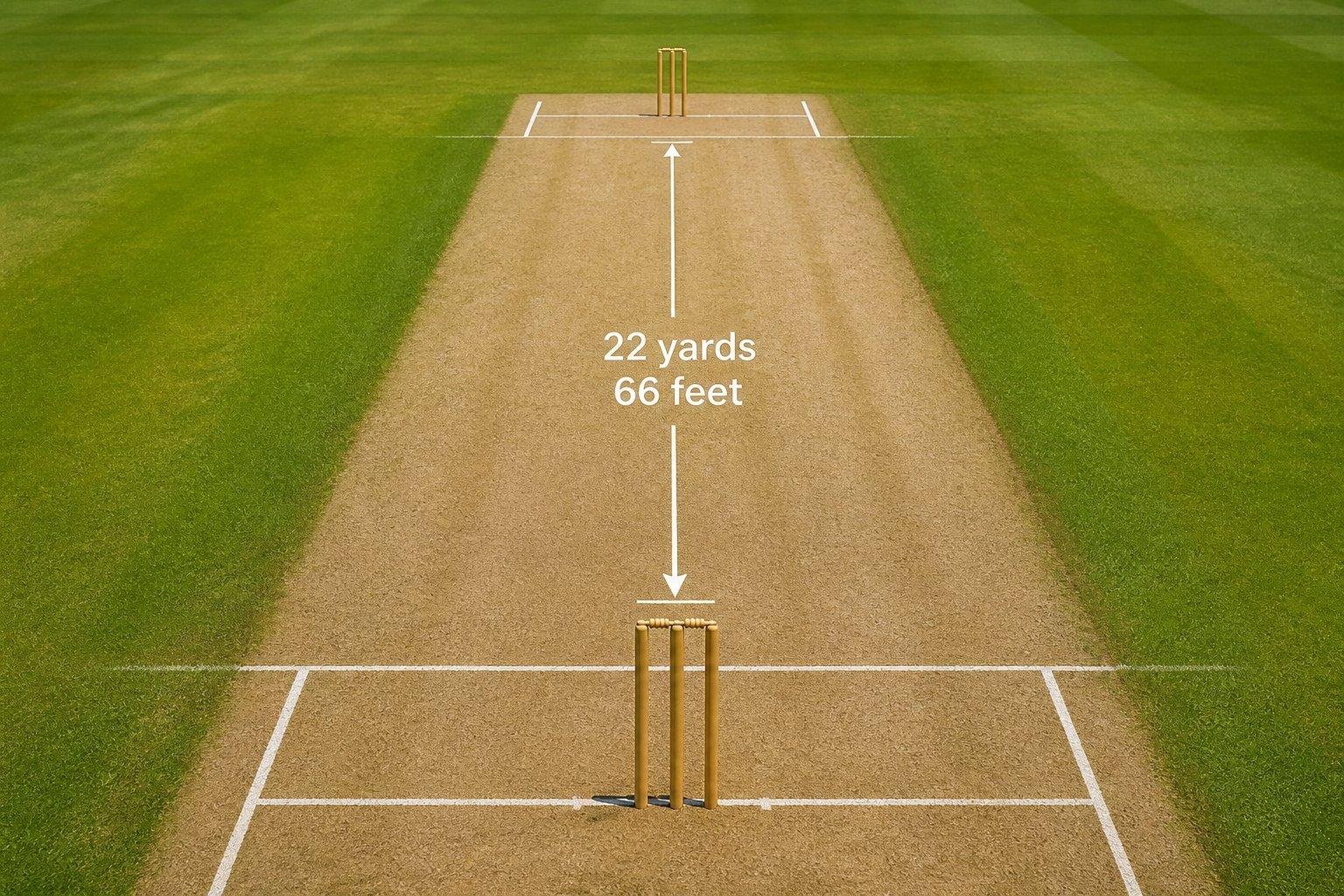
If you've ever stood at one end of a cricket pitch and looked toward the other end, you've probably wondered just how far that gap really is. The answer is simple on paper: a cricket pitch measures 66 feet from one set of stumps to the other. But there's a lot more to that number than a single measurement, and understanding it can change the way you watch or play the game.
The Basic Number: 66 Feet
The official length of a cricket pitch, as set out in the Laws of Cricket, is 66 feet between the two sets of stumps. That's the distance a bowler has to cover mentally when they're planning a delivery, and it's the distance a batter has to react across when the ball is coming at them. In metric terms, this works out to 20.12 meters, but feet is the unit most commonly used when people talk about pitch dimensions in casual conversation, especially in countries where cricket has deep historical roots.
It helps to picture this distance in everyday terms. Sixty-six feet is roughly the length of two and a half school buses parked end to end, or about the height of a six-story building lying on its side. When you're standing at the non-striker's end watching a fast bowler run in, that gap can feel surprisingly short once the ball is actually released and traveling toward the batter at high speed.
Where Does the 66-Foot Measurement Come From?
This number isn't arbitrary. It traces back to an old English unit of measurement called the "chain," which was historically used for surveying land. One chain equals exactly 66 feet, and it was a standard unit long before cricket became the organized sport we know today. When the rules of cricket were being codified in the 18th and 19th centuries, this familiar unit of land measurement was adopted for the pitch length, and it has stuck ever since.
It's a nice piece of trivia because it connects cricket to older systems of measuring farmland and property. A chain was part of a broader set of units used by surveyors, including furlongs and acres, and cricket's pitch length is one of the few places where that old system still shows up in modern sport. So the next time someone asks why the pitch is exactly 66 feet and not a rounder number like 60 or 70, you can tell them it's because of surveying history rather than anything specific to cricket itself.
Is the Pitch Length the Same for Every Format?
Yes, the 66-foot distance is constant across all recognized forms of the game. Whether you're watching a five-day Test match, a One Day International, or a fast-paced Twenty20 game, the pitch length between the stumps never changes. This consistency is part of what makes cricket comparable across formats. A bowler's pace, a batter's reaction time, and the general rhythm of the game all rely on this fixed distance staying the same no matter the occasion or the level of competition.
This also applies across age groups and skill levels in adult and senior cricket. Recreational club matches, school competitions for older students, and international fixtures all use the same 66-foot pitch. The only real exceptions come in the form of scaled-down versions of the game designed specifically for young children, where shorter pitches are used to make the sport more manageable for smaller players who are still developing their skills.
What Happens at Each End of the Pitch
At each end of the 66-foot pitch sits a set of three wooden stumps topped with two small pieces of wood called bails. These stumps mark the target for the bowler and the boundary the batter is trying to defend. Just in front of each set of stumps is a line called the crease, which matters for a number of rules, including how a batter can be given out and where a bowler's front foot needs to land during a legal delivery.
The area between the two creases, and a bit beyond them, is where all the real action takes place. The bowler runs in from behind their crease, releases the ball, and it travels the 66 feet toward the batter standing at the other end. The batter then has a fraction of a second to judge the pace, line, and length of the ball before deciding how to respond. Given how short that reaction window is, it's remarkable how much skill professional players display in reading the ball almost instantly.
Why the Distance Feels Different Depending on the Bowler
Even though the 66-foot measurement never changes, the way it feels can vary enormously depending on who's bowling. A fast bowler delivering at high speed can send the ball down the pitch in well under half a second, giving the batter very little time to react. A spin bowler, by contrast, sends the ball at a much slower pace but relies on it changing direction or bouncing unpredictably off the pitch surface, which adds a different kind of challenge over that same fixed distance.
This is part of why the condition of the pitch itself matters so much in cricket. The surface between the two ends can be dry and cracked, damp and soft, or somewhere in between, and this affects how the ball bounces and moves as it travels those 66 feet. A pitch that looks identical in length from one match to the next can play completely differently depending on weather, soil composition, and how much it has been used.
Comparing the Pitch to Other Sports
If you're coming to cricket from another sport, it can help to compare the pitch length to something more familiar. In baseball, the distance from the pitcher's mound to home plate is 60 feet 6 inches, which is remarkably close to cricket's 66 feet. Both sports involve a person throwing or bowling an object toward another person standing a fixed distance away, so it makes sense that the measurements land in a similar range, even though the two sports developed independently and have very different rules around how the ball can be delivered.
Understanding this comparison can make cricket feel a little less foreign to newcomers who already have a sense of what a 60-foot gap looks like from watching baseball. It's not an exact match, but it's close enough to give a useful mental picture.
A Small Number With a Big Impact
Sixty-six feet might seem like just a technical detail, but it shapes nearly every aspect of how cricket is played. It determines how fast a bowler needs to be to trouble a batter, how much time a batter has to make split-second decisions, and how pitch conditions can turn a match in one direction or another. Next time you watch a game, take a moment to really look at that stretch of ground between the two sets of stumps. It's a fixed, unchanging distance, but within it lies almost everything that makes cricket the tense, skillful, and unpredictable sport that so many people love.

 English
 French
 Spanish
 Portuguese
 Deutsch
 Turkish
 Dutch
Dutch
 Italiano
 Russian
 Romaian
 Portuguese (Brazil)
 Greek
Greek