


Supply Chain News: Resilience Takes Priority Over Efficiency in 2025
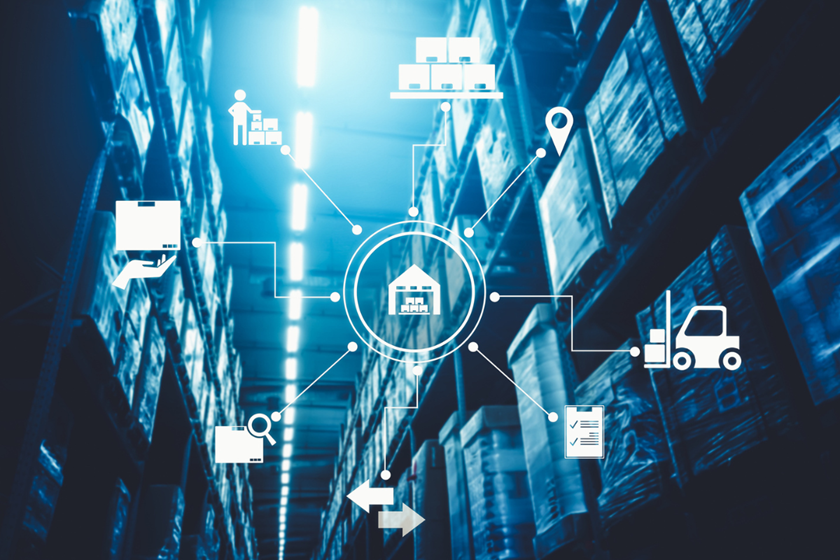
The efficiency era of global supply chains is giving way to one defined by resilience. The latest supply chain news shows that after years of cost optimization and lean operating models, enterprises are shifting toward redundancy, flexibility, and control as the new measures of performance.
From semiconductor producers to consumer goods manufacturers, companies are redesigning supply networks to absorb disruption rather than merely respond to it. In 2025, resilience isn’t a defensive posture — it’s a strategic investment in continuity, agility, and trust.
1. The End of the Just-in-Time Orthodoxy
For decades, “just in time” was the gold standard of efficiency. That model has cracked under the strain of geopolitical instability, climate volatility, and digital disruption.
-
Inventory Rebuilds: Companies are increasing safety stock levels across key categories to guard against transport and production shocks.
-
Dual Sourcing: Single-source dependencies are being phased out as multi-supplier contracts become the new norm.
-
Buffer Capacity: Manufacturers are holding unused plant or warehouse capacity to enable rapid scale-up during crises.
According to recent supply chain news, this shift marks the first structural redefinition of efficiency since the 1990s — from minimizing cost to maintaining continuity.
2. Geopolitics Becomes a Core Design Variable
Geopolitical risk is now central to network planning.
-
Tariff Reconfiguration: The latest U.S. and EU tariff expansions are forcing procurement teams to recalculate total landed costs.
-
Regionalization Accelerates: Companies are spreading production across multiple regions — often under “China+1” or “Europe+Near” strategies.
-
Friendshoring Momentum: Trade alliances and political stability increasingly guide supplier selection.
As reported in supply chain news, multinational manufacturers are embedding geopolitical resilience directly into sourcing algorithms — creating adaptive, regionally balanced networks that can withstand policy shocks.
3. Visibility and Predictive Intelligence Take Center Stage
Resilience depends on foresight, not hindsight.
-
Control Tower Platforms: Global companies are integrating real-time visibility across suppliers, carriers, and customers.
-
Predictive Analytics: AI models forecast disruptions — from port congestion to supplier distress — before they materialize.
-
Digital Twins: Simulated networks test the impact of demand spikes, labor shortages, or route closures under different conditions.
Recent supply chain news highlights that predictive visibility has become the leading resilience metric — replacing static KPIs like inventory turnover or lead time reduction.
4. Resilience Meets Sustainability
The resilience agenda is merging with sustainability goals, creating shared priorities across procurement and ESG teams.
-
Localized Supply Chains: Shorter trade routes cut both emissions and exposure to disruption.
-
Circular Logistics: Reverse flows for repair and reuse improve resource efficiency and buffer supply constraints.
-
Green Energy Sourcing: Renewable-powered manufacturing hubs offer stability against volatile fossil fuel markets.
According to supply chain news, the intersection of resilience and sustainability is redefining long-term competitiveness — making responsible sourcing both a risk management tool and a brand differentiator.
5. The Financial Case for Resilience Strengthens
CFOs are no longer viewing resilience spending as an operational overhead.
-
Risk-Adjusted ROI Models: Finance teams are quantifying the cost of disruption and the payback period of preventive investments.
-
Insurance Incentives: Some insurers now offer lower premiums for companies with verified resilience programs or digital visibility systems.
-
Investor Expectations: Capital markets increasingly reward supply chain stability as part of ESG and governance ratings.
The latest supply chain news shows that the financial community now views supply chain resilience as a tangible asset — one that protects margins, valuation, and reputation in volatile markets.
6. Workforce Agility Becomes a Core Capability
Technology alone cannot deliver resilience — people must adapt just as quickly.
-
Cross-Training Models: Operations teams are being trained across multiple roles to maintain throughput during shortages or shutdowns.
-
AI-Assisted Decisioning: Generative AI copilots are helping planners simulate tradeoffs and scenario outcomes in real time.
-
Resilient Culture: Companies are institutionalizing post-crisis reviews and lessons-learned processes into standard governance.
As covered in supply chain news, resilience is now being built into the human architecture of supply chains — ensuring adaptability extends beyond systems and infrastructure.
7. Redefining Efficiency: From Speed to Stability
The new efficiency is measured in stability and recovery speed rather than cost compression.
-
Elastic Networks: Flexible logistics providers, digital brokerages, and multimodal transport options are becoming baseline expectations.
-
Data-Driven Allocation: AI tools dynamically reroute orders and inventory in response to disruption.
-
Partnership Resilience: Stronger supplier collaboration and data sharing underpin continuity across tiers.
According to supply chain news, companies that can maintain consistent service levels amid turbulence now outperform those with purely cost-driven supply models.
8. Strategic Takeaways for 2025
From the latest supply chain news, eight imperatives define how leaders are prioritizing resilience over efficiency:
-
Diversify sourcing and manufacturing to minimize geopolitical exposure.
-
Invest in visibility platforms to predict and preempt disruptions.
-
Embed resilience into sustainability strategy to align ESG and risk goals.
-
Quantify resilience ROI to justify investment at the board level.
-
Leverage digital twins and AI for scenario-based planning.
-
Build redundancy into logistics networks through multi-modal capacity.
-
Develop agile workforce models capable of cross-functional redeployment.
-
Reframe efficiency metrics around continuity, responsiveness, and adaptability.
Conclusion: Resilience Becomes the New Efficiency
The latest supply chain news makes one thing clear: resilience is no longer the opposite of efficiency — it’s the next evolution of it. In 2025, leaders are treating resilience as a design principle, not a contingency plan.
Those that invest early — in predictive systems, diversified networks, and capable teams — will not only weather disruption but gain structural advantage from it. The supply chains that thrive in the next decade will be those that bend without breaking — and recover before others even react.

 English
 Arabic
 French
 Spanish
 Portuguese
 Turkish
 Dutch
Dutch
 Italiano
 Russian
 Romaian
 Portuguese (Brazil)
 Greek
Greek