


Database Design to Deployment – NET Full Stack Course in Telugu
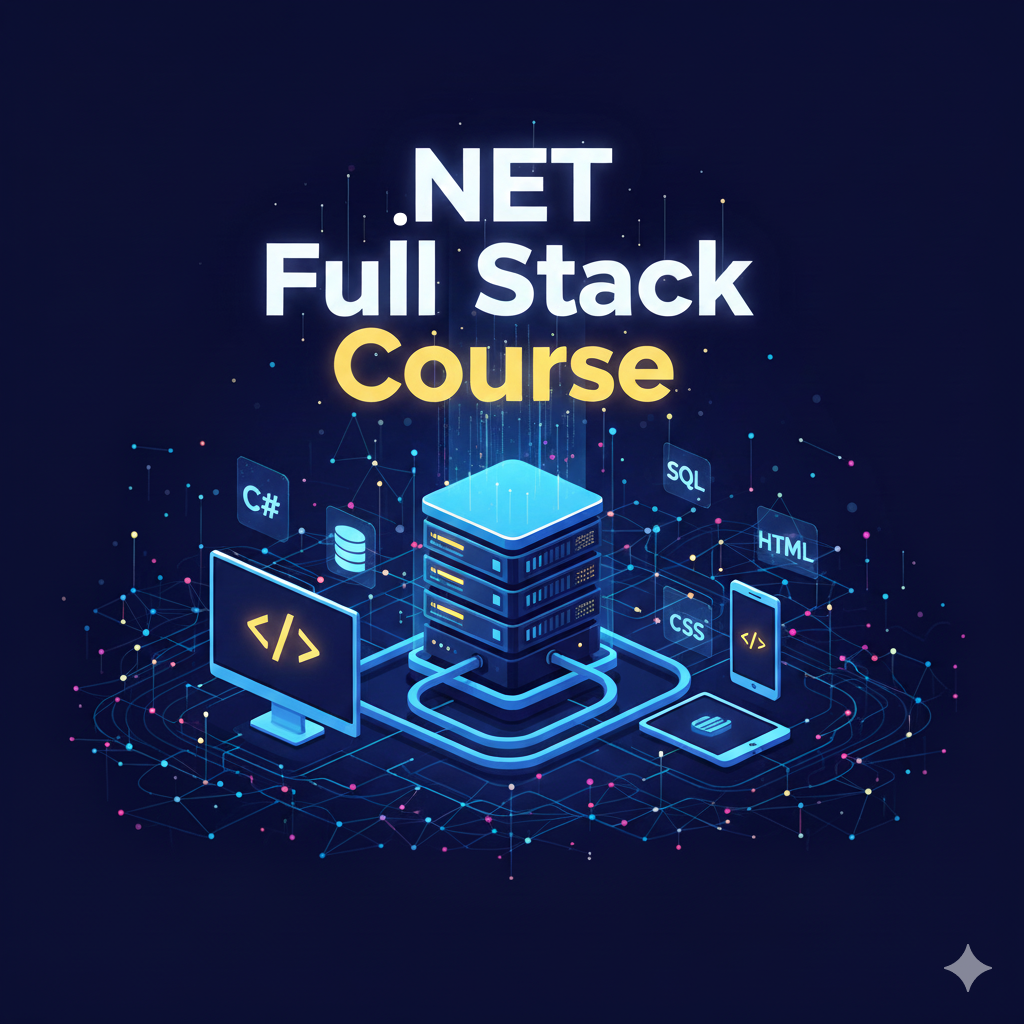
A competent full-stack developer must know how to design efficient databases, integrate them with backend services, and deploy the complete application effectively. The .NET Full Stack Course in Telugu provides a comprehensive journey from database design to deployment, ensuring Telugu-speaking learners acquire practical and industry-relevant skills. This blog details the complete flow covered in the course, empowering you to build scalable applications end-to-end.
Importance of Database Design in Full Stack Development
Databases store application data securely and are vital for any dynamic web application. A well-designed database ensures data integrity, minimizes redundancy, and enhances query performance. Mastering this starting point is crucial for backend reliability and a smooth user experience.
Course Journey: From Database Design to Deployment
1. Understanding Database Fundamentals
The course starts with database concepts: relational vs. non-relational databases, normalization, keys, and relationships (one-to-many, many-to-many). Telugu explanations simplify complex theory into actionable steps.
2. Designing the Database Schema
Learn to:
-
Identify entities and attributes relevant to the application domain.
-
Define relationships and enforce referential integrity with foreign keys.
-
Apply normalization rules to avoid data anomalies.
-
Use design tools or ER diagrams for visual schema representation.
3. Setting Up SQL Server
-
Install and configure SQL Server.
-
Create databases and tables manually with SQL.
-
Secure databases with user roles and permissions.
4. Connecting Database with .NET Backend
Using Entity Framework Core (EF Core):
-
Opt for code-first or database-first development.
-
Define C# entity classes mapping to database tables.
-
Set up DbContext to manage database sessions.
-
Implement migrations to evolve schemas without data loss.
Practical coding sessions teach how to perform CRUD operations asynchronously using EF Core with clean, maintainable code.
5. Advanced Database Operations
-
Transactions to handle multiple operations atomically.
-
Stored procedures and parameterized queries to enhance performance and security.
-
Indexing strategies and query optimization for faster data retrieval.
-
Full-text search and data caching techniques.
6. Backend API to Frontend Data Flow
-
Build RESTful APIs that communicate with the database.
-
Implement paging, filtering, and sorting on large data sets.
-
Use JSON for frontend-backend data exchange.
-
Secure API endpoints using JWT and role-based access.
7. Integrating Frontend with Backend
Understand how modern frontend frameworks (React, Angular, Blazor) consume backend APIs to build interactive and responsive user interfaces. The course covers:
-
AJAX and fetch calls.
-
Managing app state based on API responses.
-
Form handling, validation, and error messaging.
8. Real-Time Update Implementation
Use SignalR to provide live updates.
-
Notify users of database changes instantly.
-
Manage connection groups and events.
9. Application Deployment
Learn deployment strategies:
-
Containerize the application with Docker for consistent environments.
-
Deploy backend and frontend on Azure App Services.
-
Set up an Azure SQL database with security and backups.
-
Implement CI/CD pipelines for automated build & release.
-
Configure monitoring and logging tools for application health.
10. Best Practices and Testing
-
Database seeding and migration strategies.
-
Unit and integration testing of data access layers.
-
Backup and disaster recovery plans.
Practical Projects Reinforce Learning
-
Design inventory and sales database schema.
-
Build APIs managing product catalogs, orders.
-
Create frontend apps for inventory management.
-
Deploy complete applications live on the cloud.
Why Learn in Telugu?
The native language instruction bridges technical gaps, allowing deeper understanding and retention. Familiar examples and explanations boost confidence and mastery faster than traditional methods.
Career Impact
Mastering database design to deployment within the .NET ecosystem arms you for roles such as:
-
Backend Developer
-
Full Stack Developer
-
Database Administrator
-
Cloud Solutions Architect
These skills increase your versatility and hiring value.
Conclusion
The .NET Full Stack Course in Telugu offers a thorough, practical path from database design principles to app deployment and maintenance. This end-to-end expertise ensures you develop robust, efficient applications ready for real-world scenarios. Learning in Telugu enhances comprehension and learning speed, making it an ideal choice for aspiring developers.


 English
 Arabic
 French
 Spanish
 Portuguese
 Deutsch
 Dutch
Dutch
 Italiano
 Russian
 Romaian
 Portuguese (Brazil)
 Greek
Greek