 English
 Arabic
 French
 Spanish
 Portuguese
 Deutsch
 Turkish
 Dutch
Dutch
 Italiano
 Russian
 Romaian
 Portuguese (Brazil)
 Greek
Greek

Implant Dentistry Toronto: A Complete Guide to Dental Implants in Yorkville, ON
Other |
2026-02-23 11:38:33
Designed with durability and performance in mind, Australis Water Purifiers provide dependable filtration solutions for homes and offices. Their water filters and purifiers work quietly and efficiently, improving water clarity and taste while helping reduce reliance on bottled water and supporting a more sustainable lifestyle.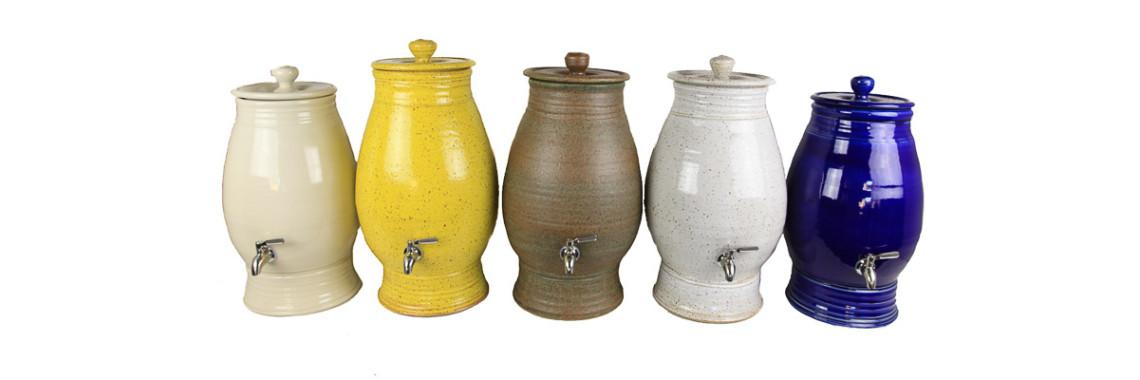
A water filter works by physically trapping contaminants or chemically binding them so they can’t pass through. The most common system uses activated carbon. Carbon filtration is highly effective at removing chlorine, unpleasant odors & many organic compounds. It improves taste almost immediately. That’s why it’s popular in both residential kitchens and workplace installations.
Sediment filters operate differently. They’re designed to catch visible particles—sand, rust flakes, debris from aging pipes. Think of them as the first line of defense. They protect the rest of the system & extend the life of finer filtration stages.
Then there are multi-stage systems, which combine sediment removal, carbon filtration & sometimes advanced membrane technology. These systems don’t just improve flavor, they elevate water clarity and consistency.
Australis Water Purifiers approach filtration as a layered process rather than a single-device solution, water is complex, treating it should reflect that complexity.
Filtration is a way to make water better. Purification is a way to make it even better. A purifier generally employs methods such as reverse osmosis, ultraviolet sterilization, or ultrafiltration membranes, which are able to get rid of the tiniest contaminants, bacteria, viruses, dissolved salts & heavy metals.
Reverse osmosis is a process where water is forced through a semi, permeable membrane under pressure. Water molecules are the only ones that can pass through without difficulty, the rest are washed away, the outcome is extremely pure, low, mineral water. This kind of purification is very helpful in places where there is a high total of dissolved solids (TDS), the use of bore water, or properties with unstable supply quality.
But purification doesn't always mean going for the extremes. Sometimes it's about being very accurate. Water used in medical clinics, laboratories, hospitality venues, as well as high, end residential properties, has to meet a stricter standard. The main thing is to find the right solution for the real need. Overengineering a system leads to wastage of resources. Under engineering leads to compromised results.
People often ask whether filtered water is healthier. The answer depends on context. If a water supply already meets regulatory standards, filtration may not dramatically change safety. What it does change is exposure to residual chemicals and trace impurities. Over time, that matters.
Chlorine-free water is gentler on skin & hair. Reduced heavy metals lower long-term accumulation risks. Fewer dissolved solids mean less strain on kidneys for those sensitive to mineral intake.
Then there’s hydration itself. When water tastes better, people drink more of it. That alone shifts daily health patterns. In offices, filtered water systems quietly encourage employees to choose water over sugary beverages, in homes, children reach for a glass without hesitation, it sounds small, but habits build from small changes.
Water doesn’t just pass through people. It passes through machines. Hard water leaves scale in kettles, coffee machines, dishwashers & industrial equipment. Scale reduces efficiency & shortens lifespan, heating elements work harder, energy bills rise, a properly designed filtration or softening system minimizes mineral buildup. Appliances last longer. Maintenance schedules become predictable instead of reactive.
For commercial clients, this is often the turning point. The cost of untreated water shows up in service calls & equipment replacement long before anyone connects it back to water quality. Australis Water Purifiers often begin commercial consultations by examining equipment rather than taps, the evidence is usually there.
No two properties are identical. Yet many water systems are sold as if they are, water pressure varies, incoming TDS levels differ, usage volume changes between a family of three & a corporate office with fifty staff members. Installation space can be tight or expansive.
That’s why system design matters. A proper water assessment considers source quality, daily consumption, plumbing layout & long-term maintenance requirements. It also accounts for budget—not just upfront, but ongoing filter replacements & servicing.
Australis Water Purifiers place emphasis on tailored configuration. Not because customization sounds impressive, but because misaligned systems either underperform or cost more than necessary. Water treatment should integrate quietly into daily life, no noise, no disruption, just consistent performance.
A high-quality filter that isn’t maintained properly becomes ineffective. This is where many water systems fail—not in design, but in follow-through.
Carbon filters saturate over time. Membranes clog. UV lamps lose intensity. Without scheduled servicing, performance declines gradually, often unnoticed. Professional installation should always be paired with a clear maintenance schedule. Replacement intervals depend on usage & water quality, not arbitrary timelines.
Australis Water Purifiers structures service plans to align with real-world usage patterns. It’s practical. It keeps systems operating at intended efficiency & it protects the investment. Water purification is not a one-time purchase. It’s an ongoing process.
Additionally, we cannot forget the environmental aspect. The use of bottled water keeps increasing worldwide, even though people are becoming more and more aware of the plastic waste problem. By setting up a dependable filtration or purification system, one can drastically cut down the need for bottled water, and the environmental effects can be clearly seen. In a few months there will be less waste, a smaller carbon footprint from transport, and less need for storage.
There is no denying that reverse osmosis units make wastewater during the process, and this is often why people consider it a disadvantage. Nevertheless, contemporary models are getting more and more efficient and thus the amount of water used for rinsing is lower in new units than in old ones. Choosing a suitable system in an environmentally conscious way means making a compromise between water quality and environmental impact.
The priorities shift depending on the setting . In homes, taste, health, and convenience dominate the discussion. Under-sink systems, whole-house filters & compact purifiers are common choices. In commercial spaces, reliability & capacity take precedence. Systems must handle peak usage without pressure loss. Downtime isn’t acceptable. Filtration often integrates with ice machines, coffee systems & industrial appliances.
Australis Water Purifiers work across both sectors, but the mindset differs. Residential installations focus on lifestyle. Commercial projects focus on operational continuity, both require precision.
Water is one of those things people only question when something feels off. A strange taste. Scale in a kettle. A service technician pointing out buildup inside an expensive machine, but waiting for a problem isn’t the best strategy.
Filtering and purifying water isn’t about chasing perfection. It’s about control. It’s about understanding what flows through your property every day and deciding that “good enough” isn’t the standard you want to settle for, when water is treated properly, you don’t notice it & that’s exactly the point.


