English
 Arabic
 French
 Spanish
 Portuguese
 Deutsch
 Turkish
 Dutch
Dutch
 Italiano
 Russian
 Romaian
 Portuguese (Brazil)
 Greek
Greek

Saint Petersburg State University – MBBS Fees, Admission Guide, and Medical Study Overview
Other |
2026-02-13 07:31:59
You’ve got a bold idea for a software application or mobile app. You know you need to find the right development partner. The smartest move is to issue a solid software development RFP, and yet, many RFPs go off-track before a single line of code is written.
It happens because one small misstep early on can cost weeks of rework, unclear vendor proposals, scope creep, and a wasted budget.
In this blog, I’ll walk you through 10 common mistakes to avoid when creating an RFP, how to avoid each one, and what to do instead. Plus, you’ll get a free downloadable software development RFP template so you can get your RFP right from the start.
Whether you’re a startup founder, enterprise procurement lead, or product owner, this article is for you, helping you create an RFP for mobile app development that attracts the right vendors, not just any vendor.

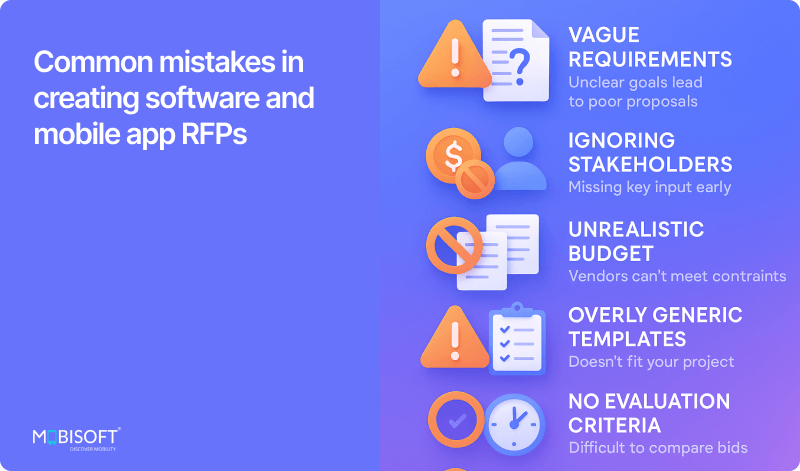
Imagine issuing an RFP for software development where you got 15 proposals, and each one interpreted your brief differently. Some thought you meant web only, others mobile and web; some ignored integrations; others forgot analytics.
The result? You’ll spend extra time clarifying, extending the deadline. Worse, you may end up selecting a vendor who delivers something you didn’t ask for.
Studies of large software procurement show that incomplete requirements and poor RFP documents lead to budget overruns and delays. appliedclinicaltrialsonline.com+1
For decision-makers like you, the pain points are clear:
By avoiding the right mistakes early, you’ll gain better proposals, faster vendor shortlisting, and stronger alignment on delivery. Learn more about how a mobile app development company can help you define clear goals and build solutions aligned with your business vision.

You write, “We want an app to improve customer engagement.” But that means different things to different vendors. What’s “improve by how much”? When?
You’ve probably come across those RFPs for mobile app or software projects that open with lines like “we want to improve user experience” or “modernize our app.” They sound reasonable at first glance, but they say almost nothing. Vendors read that and start guessing what you actually want. Once guessing enters the picture, assumptions start steering the process.
Some vendors go overboard and pitch something far beyond what you asked for, which looks impressive until the costs land on your desk. Others swing the other way and deliver a bare-minimum version, skipping over what truly matters to your users.
In web or mobile projects, this kind of vagueness hides the real intent. Are you aiming for quicker page loads, fewer user drop-offs, or better conversion from free to paid users? Without measurable objectives like these, vendors are left without direction. They can’t align their proposals with your actual goals, and what you’ll get instead is a pile of irrelevant bids that miss the mark entirely.
Read More: https://mobisoftinfotech.com/resources/blog/business-management/mistakes-to-avoid-in-software-and-mobile-app-rfp?utm_source=mobile-app-development-company-page&utm_medium=internal-link&utm_campaign=related-blog