Sugar is one of the most widely consumed commodities globally, forming an essential ingredient in both household kitchens and industrial food production. Despite its ubiquity, ensuring the consistent quality of sugar from production to packaging is a complex process that requires precision, scientific expertise, and rigorous testing standards. Professional testing plays a pivotal role in guaranteeing that sugar meets regulatory standards, maintains safety, and delivers optimal performance for consumers and industries alike.
In this article, we explore the critical role of professional testing in the sugar industry, examining each stage from production to packaging and highlighting how quality assurance processes protect both manufacturers and consumers.
Understanding Sugar Production and Its Challenges
Sugar is derived primarily from sugarcane or sugar beet, which undergo a series of extraction and refinement processes. These processes involve multiple steps, including crushing, juice extraction, purification, crystallization, drying, and packaging. Each stage presents unique challenges that can affect the final product’s quality if not monitored and tested professionally.
During production, impurities such as soil particles, plant residues, or microorganisms can compromise sugar quality. In addition, variations in raw material composition, processing conditions, and storage can lead to inconsistencies in color, taste, and crystallinity. Hence, maintaining quality is not merely about adhering to a visual or taste standard but involves scientific assessment at multiple stages.
The Role of Professional Testing in Raw Material Assessment
Professional testing begins even before sugar processing starts, with a thorough assessment of raw materials. For sugarcane and sugar beet, key quality parameters include sucrose content, moisture levels, fiber content, and potential contaminants such as pesticides or heavy metals.
Sugarcane and Sugar Beet Quality Testing
- Sucrose Analysis: The core purpose of sugar production is to extract sucrose efficiently. Testing ensures that the raw material has sufficient sugar content to justify processing. Techniques such as polarimetry are used to accurately measure sucrose concentration.
- Moisture Content: High moisture in raw materials can affect extraction efficiency and increase microbial growth. Professional labs use precise moisture analyzers to ensure optimal levels.
- Contaminant Screening: Pesticide residues or heavy metals can compromise both product safety and regulatory compliance. Advanced analytical methods like high-performance liquid chromatography (HPLC) and atomic absorption spectroscopy (AAS) detect these impurities.
By ensuring that only high-quality raw materials enter the production line, professional testing sets the foundation for superior sugar quality.
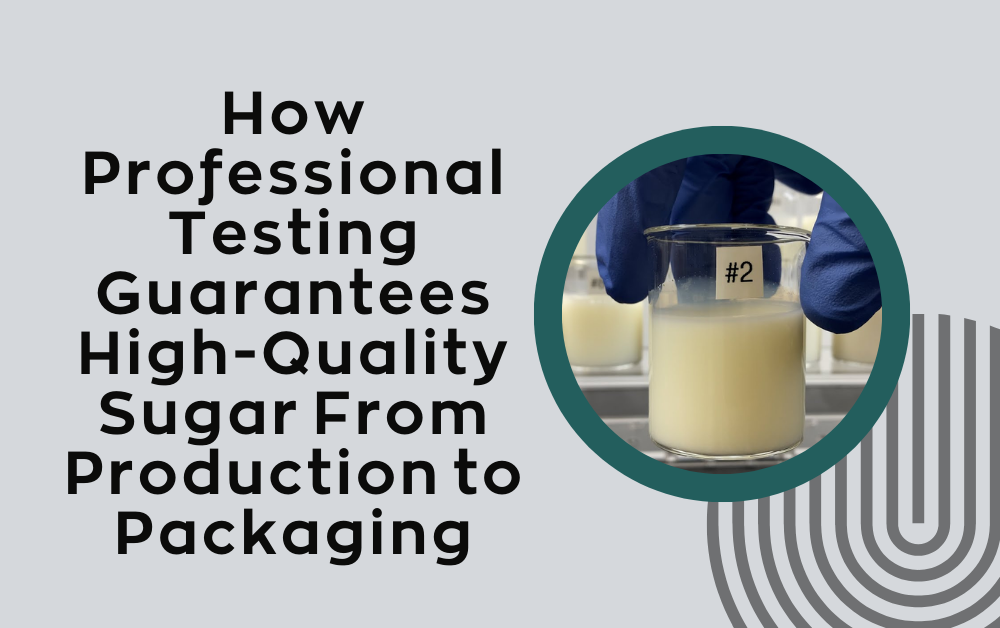
NOTE:- Samples were thoroughly tested at the Sugar Analysis Lab In UAE, and Holistic International Testing Services FZ LLC ensured accuracy and reliability. Each analysis followed strict protocols, providing clients with dependable results. Past projects showcased excellence in testing. Contact Holistic International Testing Services FZ LLC for your sugar testing needs.

Quality Control During Processing
Once raw materials pass initial testing, they undergo a series of processing stages. Each stage can introduce potential quality deviations, which is why continuous monitoring and testing are critical.
Extraction and Clarification
After crushing, sugarcane or beet juice is extracted and clarified to remove impurities. Professional testing during this stage ensures that the juice has the right pH, minimal turbidity, and optimal sugar concentration. If not addressed, high levels of impurities can lead to off-flavors, discoloration, and lower yield.
Crystallization Control
Crystallization transforms liquid sugar into solid crystals, the form most consumers recognize. Here, professional testing monitors factors such as crystal size, purity, and moisture content. Proper crystal formation ensures consistent sweetness, easy solubility, and desirable texture.
Microbial Safety Testing
Processing environments can inadvertently introduce microorganisms that may compromise sugar quality or safety. Microbiological testing identifies any bacterial or fungal presence early, allowing corrective actions before the product reaches consumers.
Laboratory Testing for Chemical and Physical Properties
Professional sugar testing laboratories play a vital role in evaluating the chemical and physical properties of sugar to ensure compliance with national and international standards.
Chemical Composition Analysis
Sugar quality is heavily influenced by its chemical composition. Laboratories analyze sucrose content, reducing sugar levels, ash content, and potential contaminants.
- Sucrose Purity: High-purity sugar is crucial for both taste and processing. Purity tests determine the proportion of sucrose relative to other sugars and non-sugar components.
- Reducing Sugar Assessment: Excess reducing sugars can affect shelf life, color, and taste. Regular testing ensures optimal composition.
- Ash Content: Ash represents the mineral content left after burning sugar. Monitoring ash levels helps maintain the desired quality and prevent potential processing issues.
Physical Property Evaluation
Beyond chemical composition, sugar’s physical characteristics influence its functionality and consumer acceptance. Key tests include:
- Granule Size and Uniformity: Uniform granules ensure even sweetness and solubility.
- Color Measurement: Using colorimeters, laboratories ensure sugar meets visual standards, which is especially critical for white sugar production.
- Moisture and Flow Properties: Proper drying and flow characteristics prevent clumping and enhance shelf life.
Ensuring Safety Through Contaminant Detection
Sugar is generally considered a low-risk product regarding contamination, but professional testing ensures that it remains safe for consumption. Contaminants can be chemical, physical, or biological:
- Heavy Metals: Elements such as lead or cadmium, if present in raw materials, can accumulate in sugar. Sensitive tests detect trace amounts, ensuring safety limits are not exceeded.
- Pesticide Residues: Even trace amounts of pesticides in sugarcane or sugar beets can be harmful. Testing ensures compliance with food safety regulations.
- Foreign Particles: Physical contaminants like dust, stones, or plant residues are identified and removed during processing.
By maintaining rigorous contaminant testing, sugar manufacturers uphold consumer trust and regulatory compliance.
Quality Assurance During Packaging
Packaging is the final stage where sugar quality must be preserved. Even the highest-quality sugar can deteriorate if the packaging is inadequate. Professional testing ensures that packaging materials and processes maintain product integrity.
Moisture and Seal Integrity Testing
Sugar absorbs moisture easily, which can lead to clumping, microbial growth, or reduced shelf life. Packaging is tested for barrier properties, airtightness, and resistance to environmental conditions.
Shelf-Life and Storage Assessment
Professional labs conduct accelerated shelf-life studies to predict how sugar quality changes over time. This includes monitoring crystallization, color, and microbial stability under various storage conditions.
Traceability and Label Accuracy
Testing also ensures that product labels accurately reflect composition, grade, and regulatory compliance. Traceability systems allow manufacturers to track batches and respond quickly to any quality concerns.
Advanced Technologies in Professional Sugar Testing
Recent advances in analytical technologies have significantly enhanced the accuracy and efficiency of sugar quality testing. These include:
- Near-Infrared Spectroscopy (NIR): Enables rapid, non-destructive analysis of sugar content and moisture levels.
- High-Performance Liquid Chromatography (HPLC): Precisely measures sugar composition and detects contaminants.
- Automated Microbial Monitoring Systems: Provide real-time data on microbial contamination risks.
These tools help manufacturers maintain high standards while reducing manual errors and testing time.
Benefits of Professional Testing for Manufacturers and Consumers
Professional testing in sugar production delivers multiple advantages across the supply chain.
For Manufacturers
- Ensures consistent product quality and regulatory compliance.
- Reduces wastage and increases processing efficiency.
- Enhances brand reputation by delivering reliable, high-quality sugar.
For Consumers
- Guarantees the safety and purity of the sugar consumed.
- Provides consistent taste, texture, and solubility.
- Builds trust in branded sugar products, encouraging loyalty and repeat purchases.
Challenges and the Future of Sugar Quality Testing
Despite advances, the sugar industry faces ongoing challenges in quality assurance:
- Global Supply Chain Variability: Raw material quality can vary based on region and season.
- Regulatory Changes: Manufacturers must stay abreast of evolving food safety standards.
- Sustainability Pressures: Testing protocols are increasingly incorporating environmental impact assessments, including energy use and chemical waste generated during production.
Looking forward, integrating artificial intelligence, machine learning, and IoT-based monitoring could enable predictive quality control, further enhancing reliability and efficiency in sugar production.
Conclusion
Professional testing is not merely a regulatory requirement but a cornerstone of producing high-quality sugar from the field to the consumer’s table. By systematically assessing raw materials, monitoring processing stages, analyzing chemical and physical properties, and ensuring safe packaging, manufacturers can guarantee that sugar remains pure, safe, and consistent in quality.
The adoption of advanced analytical technologies, rigorous laboratory protocols, and continuous monitoring practices ensures that the sugar industry meets the growing expectations of modern consumers. Ultimately, professional testing safeguards not only the product but also the brand reputation, consumer trust, and public health.
By embracing comprehensive quality assurance processes, sugar producers demonstrate their commitment to excellence, ensuring that every crystal of sugar delivers the purity, taste, and performance that consumers expect.
 English
 Arabic
 French
 Spanish
 Portuguese
 Deutsch
 Turkish
 Dutch
Dutch
 Italiano
 Russian
 Romaian
 Portuguese (Brazil)
 Greek
Greek