 English
 Arabic
 French
 Spanish
 Portuguese
 Deutsch
 Turkish
 Dutch
Dutch
 Italiano
 Russian
 Romaian
 Portuguese (Brazil)
 Greek
Greek

Best Road Trips from Indore
Other |
2026-02-09 07:04:02
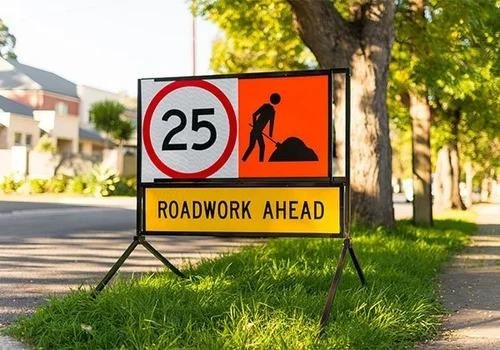
Infrastructure upgrades, construction works, utility installations, and road maintenance projects all share one common challenge — managing traffic safely and efficiently. Without a clear strategy in place, worksites can quickly become hazardous for workers, motorists, cyclists, and pedestrians alike. That’s why professional Traffic Management Planning plays such a critical role in ensuring safety, compliance, and smooth project delivery.
A well-prepared traffic management plan does more than redirect vehicles. It anticipates risks, minimizes disruptions, and ensures that projects meet local council and regulatory requirements.
Effective Traffic Planning begins long before cones and signage are placed on-site. It involves a detailed assessment of:
Road classifications and speed limits
Traffic volumes and peak-hour patterns
Pedestrian and cyclist access
Nearby businesses and residential impacts
Emergency vehicle access requirements
Professional planners evaluate how road users will interact with temporary changes. This ensures that diversions, lane closures, and signage placements are logical, visible, and compliant with safety standards.
Without proper planning, projects risk delays, penalties, and safety incidents — all of which can significantly increase costs.
For projects that impact public roads, a structured Traffic Guidance Scheme is essential. A TGS outlines how traffic will be controlled around a worksite, including signage layouts, barrier placements, and transition zones.
Specialists in TGS Traffic Management design site-specific guidance schemes tailored to the unique requirements of each project. Rather than using generic templates, experienced planners consider real-world site conditions to develop practical and compliant solutions.
Whether it’s short-term roadworks or long-duration infrastructure upgrades, properly developed traffic guidance schemes help maintain order and reduce confusion for all road users.
Traffic conditions vary significantly between regions. Urban environments, particularly in high-density areas, require a deeper understanding of council regulations and traffic behavior.
Engaging professionals experienced in TGS Melbourne ensures that plans align with Victorian road authority standards and local council requirements. Local knowledge is crucial when dealing with:
Tram and public transport routes
School zones and pedestrian-heavy areas
High-volume arterial roads
Complex intersections
A locally informed traffic management approach reduces approval delays and ensures smoother project coordination.
Heavy vehicles, construction equipment, and oversized loads require careful movement analysis. This is where swept path analysis australia becomes essential.
Swept path analysis evaluates how vehicles maneuver through intersections, tight turns, loading zones, and temporary access roads. Using advanced modelling tools, planners can determine whether vehicles can safely navigate a site without mounting curbs, colliding with barriers, or encroaching into opposing lanes.
This analysis is especially important for:
Construction site access design
Warehouse and industrial developments
Subdivision planning
Temporary detour routes
By identifying potential movement conflicts early, swept path assessments prevent costly on-site modifications and improve overall safety outcomes.
Hiring experienced traffic planners provides multiple advantages:
Clear signage, compliant layouts, and risk assessments reduce the likelihood of accidents.
Well-prepared documentation speeds up council and road authority approvals.
Proactive planning prevents unexpected compliance issues.
Meeting regulatory standards minimizes liability risks.
Efficient traffic flow reduces frustration for motorists and nearby communities.
Professional planning ensures that safety isn’t compromised for convenience.
Traffic management is highly regulated. Standards frequently update, and compliance requirements vary by location and project type. Attempting to prepare plans without professional expertise can result in rejected applications or unsafe site conditions.
Working with specialists like OnPoint TGS Plans ensures that every project benefits from:
Industry-compliant traffic management plans
Detailed traffic guidance schemes
Comprehensive risk assessments
Accurate swept path analysis
Clear documentation for authority approvals
Their structured and detail-oriented approach ensures that projects remain safe, efficient, and fully compliant from start to finish.
From small civil works to large infrastructure projects, professional traffic management services scale to meet varying project demands. Whether managing a temporary lane closure or coordinating complex multi-stage roadworks, experienced planners develop strategies that prioritize safety without sacrificing productivity.
Effective traffic management isn’t just about placing signs and cones — it’s about protecting lives, maintaining mobility, and supporting smooth project delivery.
Every construction or road-related project carries inherent traffic risks. Without a structured, professionally developed plan, those risks can escalate quickly. Investing in expert Traffic Management Planning ensures that safety, compliance, and efficiency remain at the forefront of every stage.
By partnering with trusted professionals like OnPoint TGS Plans, project managers can confidently navigate regulatory requirements while maintaining safe, organized traffic conditions.
Because when traffic is managed correctly, projects move forward — safely and successfully.

